
Why Is There Black Soot Around My Fireplace?
Black soot around a fireplace can point to smoke escaping the firebox, poor draft, damp wood, or a combustion or venting problem. Learn when to stop using it and what an inspection can show.
The short answer
Black soot around a fireplace means combustion residue is reaching a surface where it should not be accumulating. A small amount inside a wood-burning firebox or on glass can occur during use, but new soot on the mantel, wall, ceiling, or outside the opening can point to smoke spillage, weak draft, damp wood, a restricted flue, an operating problem, or an installation defect. Stop using the fireplace if smoke enters the room, a carbon-monoxide alarm sounds, you smell gas, or the deposit appears suddenly or grows quickly. A chimney sweep can remove serviceable soot and creosote from an approved wood-burning scope, but cleaning alone cannot diagnose or repair every draft, appliance, masonry, fuel, or venting problem.
Three real AirDuctVet field photos
These authentic AirDuctVet job photos were selected for this topic. We do not use repeated AI artwork or stock photography.
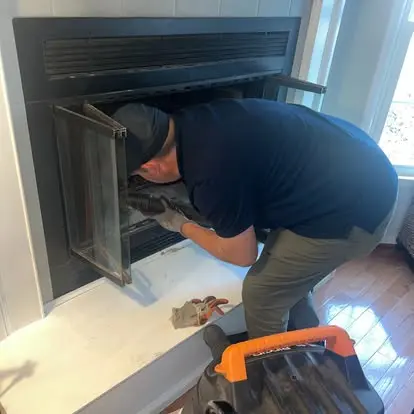 Real AirDuctVet photo
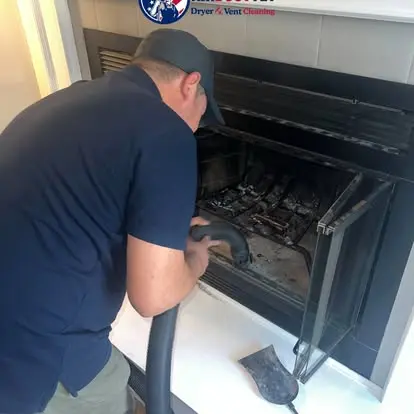 Real AirDuctVet photo
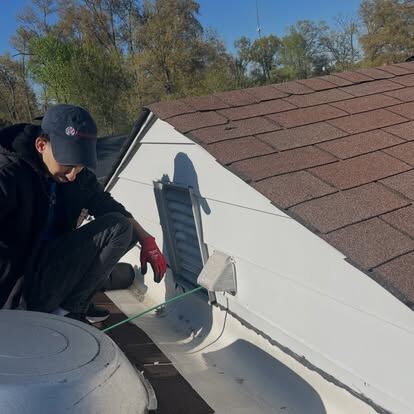 Real AirDuctVet photo
Clear, practical guidance: General education cannot replace an on-site inspection. We separate routine maintenance from conditions that need an HVAC, appliance, chimney, mold, or restoration specialist.
Soot outside the firebox is a warning to find the source
Soot is a fine carbon-rich residue created by incomplete combustion. In a wood-burning fireplace, it can collect when smoke cools, the fire smolders, the wood is damp, or the chimney does not move exhaust upward effectively. EPA guidance explains that restricted airflow and unseasoned wood can increase smoke and creosote formation. The exact cause cannot be identified from the color of a stain alone.
Location matters. Residue limited to the inside of fireplace glass is different from soot above the opening, on the mantel, around a door gasket, or on nearby walls and ceilings. A pattern outside the firebox can indicate that smoke is spilling into the room or escaping at a joint. Do not paint over or wipe away the only evidence before taking clear photographs and noting when it appears.
Stop using the fireplace when smoke, gas, heat, or alarms are involved
Extinguish the fire safely and stop using the system if smoke enters the room, a carbon-monoxide or smoke alarm sounds, you smell fuel gas, you see glowing material in the chimney, or the fireplace or surrounding finish becomes unusually hot. Leave the building and contact emergency services or the gas utility from a safe location when fire or a gas leak is suspected. Carbon monoxide has no smell, so the absence of an odor does not prove that a fuel-burning system is safe.
CPSC advises opening the fireplace damper before lighting a fire and keeping it open until the ashes are cool. USFA recommends professional chimney inspection and cleaning as part of heating-fire prevention. Those general safety recommendations do not replace the operating instructions for the specific fireplace, insert, stove, or gas appliance in the home.
- Do not keep relighting the fireplace to test a worsening soot or smoke problem.
- Do not use a household vacuum on hot ash, active embers, or suspected creosote.
- Keep combustible decorations, furniture, paper, and firewood away from the fireplace opening.
- Use a qualified gas-fireplace or appliance professional for fuel, burner, pilot, valve, or combustion concerns.
What to document before requesting service
Photograph the full fireplace, the opening, glass or doors, the soot pattern, the hearth, and any visible connector or exterior termination that can be viewed safely from the ground. Record whether the system burns wood, manufactured logs, pellets, gas, or another fuel; when the deposit first appeared; whether a door, window, kitchen exhaust, or whole-house fan was operating; and whether the home recently had roofing, chimney, insulation, or HVAC work.
For a wood-burning system, note whether the firewood was dry and seasoned and whether the fire was allowed to smolder. EPA recommends dry wood and a hot, well-managed fire because wet wood and restricted air can create more smoke. Do not climb onto the roof, dismantle a damper, or open a fuel-burning appliance to gather information.
Cleaning can remove deposits, but it cannot correct every cause
A chimney sweep may remove accessible soot and creosote from a serviceable wood-burning flue and document visible conditions within the approved scope. That work can reduce existing deposits, but it does not by itself correct a blocked makeup-air path, damaged liner, undersized or poorly configured flue, negative pressure, masonry defect, roof leak, appliance fault, or improper installation.
If soot is coming from a gas fireplace or gas insert, the fuel and combustion system needs evaluation by an appropriately qualified gas-appliance professional. AirDuctVet does not service gas fireplace controls, burners, valves, fuel connections, or combustion settings. A cleaning visit must not be represented as proof that a gas appliance is operating safely.
What an AirDuctVet chimney visit can and cannot establish
AirDuctVet can evaluate an approved accessible wood-burning chimney and fireplace scope, perform qualifying sweep work, and document visible soot, creosote, blockage, animal debris, or access limitations. A camera may help view selected reachable areas, but a camera look is not automatically a complete Level 2 chimney inspection and cannot prove the condition of every concealed surface, joint, liner section, chase, or structural component.
Chimney repair, liner replacement, masonry reconstruction, roof repair, gas-appliance service, environmental sampling, and hidden-building diagnostics are not automatically included. Any additional work requires separate evaluation and written approval or referral to the appropriate qualified trade.
Air-duct cleaning is a separate service and does not automatically include mechanical diagnosis or repair, filter replacement, or fireplace work. Coil cleaning must be requested, evaluated, and separately approved. Neither chimney nor duct cleaning promises medical improvement, guaranteed utility savings, or elimination of an odor whose source has not been corrected.
Quick answers about black fireplace soot
Is black soot on fireplace glass normal? Some residue can form on the inside of wood-burning fireplace glass, especially during a cool or smoky fire. Rapid buildup, residue outside the firebox, or smoke entering the room needs evaluation.
Does black soot mean there was a chimney fire? No. Soot alone cannot prove that a chimney fire occurred. Loud roaring, visible flames or sparks from the chimney, intense heat, or fire damage requires emergency response and a professional inspection before reuse.
Can wet firewood cause more soot? Yes. EPA explains that unseasoned wood can create more smoke and creosote because energy is used to drive off moisture before the wood burns effectively.
Will a chimney sweep stop soot from returning? Only if removable deposits were the complete cause. Draft, fuel, appliance, pressure, liner, masonry, or installation problems can make soot return until the underlying condition is corrected.
Should I clean the soot before the appointment? Leave representative evidence in place when safe, and send clear photos. Do not disturb hot ash, suspected creosote, a damaged appliance, or a condition involving smoke, gas, or alarms.
Sources and further reading
Official guidance informs the general information above. AirDuctVet's included services are defined by your written quote; local requirements and manufacturer instructions may differ.