
Condo owners and tenants
Tell us the unit floor, dryer location, appliance configuration, known outlet location, symptoms, and any association or landlord rules. We will confirm whether the request can be handled as an individual appointment.
Condo and apartment dryer vent cleaning requires more planning than a typical single-family appointment. AirDuctVet confirms who controls the vent, how the dryer can be reached, where the exhaust terminates, and whether management authorization or common-area access is required before service.
We review the property, access, systems, and requested outcome before confirming the equipment, work plan, and free quote.
Authentic AirDuctVet field photos show professional dryer vent tools, lint removal, appliance connections, and exterior access from real service appointments.
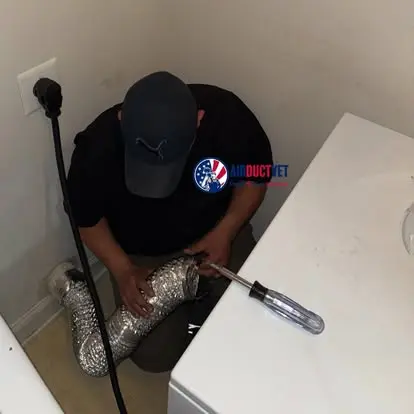 Real AirDuctVet photo
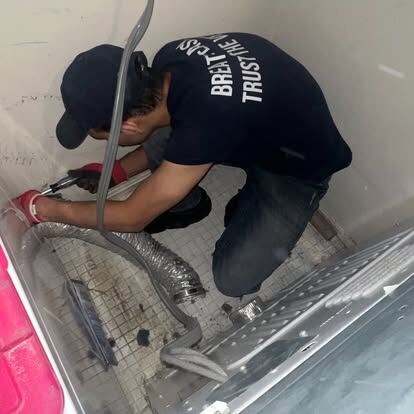 Real AirDuctVet photo
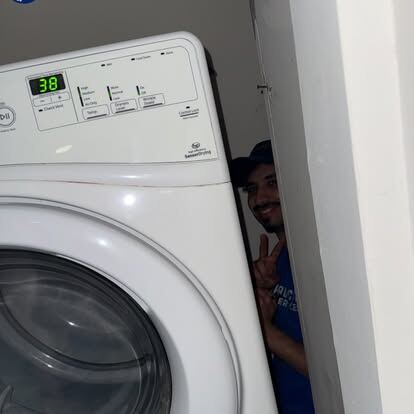 Real AirDuctVet photo
A condo owner or apartment resident may need service for one dryer, while an association or property manager may need a coordinated plan for an entire building. In both cases, the vent route can involve a stacked appliance, a tight laundry closet, a long vertical run, a booster fan, a high-wall outlet, a roof termination, or a shared exhaust system. AirDuctVet reviews these details first so the quote, access plan, cleaning method, and documentation match the actual property.
For recurring airflow warnings, weak exterior exhaust, difficult shared-building routes, or symptoms that remain after cleaning, review the dryer vent inspection and airflow diagnosis process before assuming another cleaning will solve the issue.
Individual-unit service and building-wide maintenance solve the same lint restriction problem, but they require different permissions, scheduling, and records.
Tell us the unit floor, dryer location, appliance configuration, known outlet location, symptoms, and any association or landlord rules. We will confirm whether the request can be handled as an individual appointment.
Stacked appliances and narrow closets can limit safe disconnection and tool access. Photos and clearance measurements help determine whether the dryer can be moved and reconnected within the approved scope.
Associations can coordinate unit rosters, resident notices, roof or facade permission, common-area access, missed units, insurance documentation, and the agreed completion format.
Managers can organize building and unit identifiers, keys or resident access, maintenance contacts, work windows, termination information, exceptions, and recurring annual service plans.
Share the address, building name, unit number, floor, dryer type, laundry location, symptoms, and exterior or roof termination information when known.
Confirm whether the vent serves only the unit or connects to a shared or association-controlled system, and identify the person authorized to approve access.
Review appliance clearance, parking, elevators, loading, keys or resident entry, roof permission, work hours, and any certificate-of-insurance requirements.
Clean the accessible qualifying route with the appropriate tools, check accessible airflow and termination movement, and document any blockage, damage, or access limitation.
For building-wide projects, record completed units, missed units, exceptions, and the agreed service documentation for the authorized property contact.
Dryer vent cleaning removes accessible lint and ordinary blockages from a qualifying exhaust route. Building ownership, appliance access, route construction, and safe termination access determine what can be completed.
Often, yes. First confirm whether the vent serves only your unit and whether management controls the exterior, roof, shaft, or work hours. Send the unit floor, dryer location, appliance photos, and known outlet information so AirDuctVet can evaluate the request.
It depends on clearance, appliance weight, connections, floor protection, and safe access to the vent. Send clear photos of the full appliance, closet opening, side clearances, and connection area. Some installations require an appliance mover or another access plan before vent cleaning.
Yes, for qualifying properties. A building-wide plan can include unit rosters, resident notices, work windows, roof or exterior access, completion tracking, missed units, exceptions, and agreed service documentation.
Provide the property address, building and unit count, dryer locations, known vent routes and terminations, booster-fan information, access rules, parking or elevator requirements, insurance instructions, preferred work window, and the authorized decision-maker.