
Why Is There Condensation Around My HVAC Air Vents?
Condensation around HVAC air vents usually means humid air is meeting a cold register or duct surface. Learn what to dry, measure, inspect, and repair.
The short answer
Condensation around an HVAC air vent usually forms when humid indoor air touches a cold register, boot, or nearby wall or ceiling surface. High indoor humidity, missing or damaged duct insulation, air leakage around the boot, restricted airflow, or an air-conditioning drainage or performance problem can all contribute. Dry the area promptly and correct the moisture source. Air duct cleaning can remove accessible dust and debris when cleaning is warranted, but it does not repair insulation, seal leaks, clear a condensate drain, or fix HVAC equipment.
Three real AirDuctVet field photos
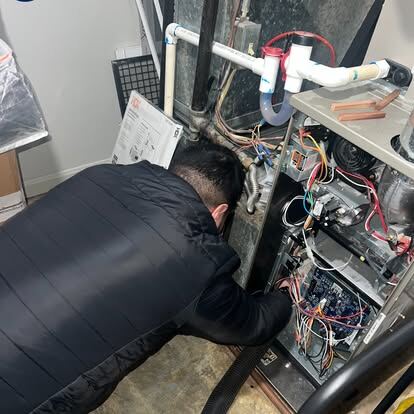
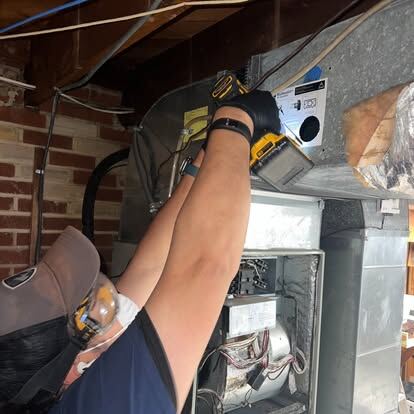
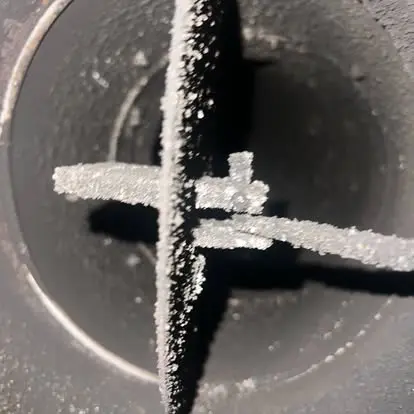
These authentic AirDuctVet job photos were selected for this topic. We do not use repeated AI artwork or stock photography.
 Real AirDuctVet photo
 Real AirDuctVet photo
 Real AirDuctVet photo
Clear, practical guidance: General education cannot replace an on-site inspection. We separate routine maintenance from conditions that need an HVAC, appliance, chimney, mold, or restoration specialist.
Condensation is a moisture warning, not proof that the duct is dirty
A cold supply register can drop below the dew point of the surrounding room air. When that happens, water vapor becomes liquid on the metal face, inside the register opening, or on the nearby paint and drywall. The same basic process causes water to collect on the outside of a cold glass.
Dust may make the wet area look dark, but appearance alone cannot identify mold, prove contamination inside the duct, or show that cleaning is the solution. A technician should first distinguish surface condensation from a plumbing leak, roof leak, overflowing condensate pan, blocked drain, wet duct liner, or water traveling from another part of the building.
Dry the area and document when the moisture appears
Wipe the accessible surface dry, protect nearby finishes, and note whether the moisture appears only during cooling, after long run times, during humid weather, or even while the system is off. Photograph the register and the surrounding ceiling or wall before the condition changes. If water is actively dripping, staining is spreading, material feels soft, or moisture is near electrical equipment, arrange prompt evaluation by the appropriate HVAC, plumbing, roofing, restoration, or building professional.
Use a reliable hygrometer to record indoor relative humidity near the affected room and elsewhere in the home. EPA guidance says indoor humidity should remain below 60 percent when possible, with 30 to 50 percent often cited as an ideal range. A single reading is not a diagnosis, but repeated measurements can help an HVAC professional understand the pattern.
- Record the room, register, time, outdoor weather, thermostat setting, and whether cooling was running.
- Check for visible gaps between the register boot and the wall or ceiling without opening concealed assemblies.
- Look for a dirty filter, blocked return, closed supply register, frozen line, standing water, or drain warning, but do not dismantle equipment unless qualified.
- Do not paint over, seal, or cover a wet surface before the source has been identified and the material has dried.
Common causes need different repairs
High indoor humidity can provide enough moisture for a cold register to sweat. Missing, compressed, or separated insulation around a metal boot or duct can make the surface colder. Air leakage at the boot can pull warm, humid attic or wall-cavity air toward the cold opening. Restricted airflow, an oversized system, a dirty coil, a drainage problem, or another mechanical condition can also change temperature and moisture behavior.
The U.S. Department of Energy explains that sealed, insulated metal ducts in unconditioned spaces help prevent condensation. EPA guidance also points to duct sealing and insulation, cooling-coil and condensate-pan conditions, and system sizing when moisture is present. These are building and HVAC questions. Cleaning is not a substitute for testing, sealing, insulating, drainage work, or mechanical repair.
When air duct cleaning may be relevant
Cleaning may be appropriate when an inspection also documents accessible loose dust, renovation debris, or other removable material within the approved duct scope. Source removal can address that material, but the moisture cause still has to be corrected or the wet condition can return.
If insulation or porous duct liner is wet, damaged, or visibly contaminated, routine cleaning may not be appropriate. The material may need drying, replacement, or evaluation by an HVAC, restoration, or qualified mold professional. AirDuctVet does not identify mold species, collect environmental samples, promise sterilization, or replace water-damage remediation.
What AirDuctVet can evaluate and what requires separate approval
AirDuctVet can review accessible registers, visible duct openings, and serviceable duct conditions while documenting where moisture or debris is observed. A Cobra inspection camera may help view selected reachable duct sections, but camera access cannot prove the condition of every concealed surface or locate every building leak.
Routine air duct service does not automatically include mechanical diagnosis or repair, duct sealing, insulation replacement, drain clearing, water-damage work, mold remediation, or filter replacement. Coil cleaning must be requested, evaluated, and separately approved. If condensation points to an active HVAC or building problem, that repair should be completed by the appropriate qualified professional before cosmetic work or optional odor-control treatment is considered.
No cleaning service can promise medical improvement, guaranteed utility savings, or a fixed routine cleaning interval. The written quote should identify the accessible cleaning scope and keep moisture correction and repair work separate.
Quick answers about sweating air vents
Does condensation mean there is mold in my air ducts? No. Moisture can support unwanted growth, but condensation by itself does not identify mold or show where growth is present. Correct the moisture source and obtain appropriate evaluation for visible or widespread growth.
Can a dirty HVAC filter cause a vent to sweat? A heavily restricted filter can affect airflow, but condensation has several possible causes. Filter replacement and mechanical diagnosis are not automatically included with routine duct cleaning.
Should I close the wet supply vent? Do not use a closed register as a permanent fix. Changing airflow can affect system balance. Dry the area and ask a qualified HVAC professional to evaluate the cause.
Will sanitizing stop the condensation? No. A treatment does not correct humidity, insulation, air leakage, drainage, or equipment performance. Moisture control comes first, and any separately approved product must be appropriate for a cleaned, compatible surface.
What should I send with a service request? Send the property ZIP code, HVAC system count, clear photos, humidity readings, when the moisture appears, and any history of leaks, drain problems, insulation damage, odors, or recent HVAC work.
Sources and further reading
Official guidance informs the general information above. AirDuctVet's included services are defined by your written quote; local requirements and manufacturer instructions may differ.