
Ashburn HOA Dryer Vent Cleaning: Who Is Responsible?
Ashburn HOA dryer vent cleaning starts by confirming who controls the private vent, exterior or roof outlet, access, and any shared exhaust system.
The short answer
Start with the governing documents and property manager. In an Ashburn HOA or condominium, do not assume that the resident or association controls every part of the dryer exhaust route solely because the dryer is inside the unit. Confirm whether the route serves one unit or more than one, who controls the exterior or roof termination, and who may authorize access or alterations. The three AirDuctVet photos below show real dryer-vent connections and exterior access from our field collection; they are planning examples, not an Ashburn case study.
Three real AirDuctVet field photos
These authentic AirDuctVet job photos were selected for this topic. We do not use repeated AI artwork or stock photography.
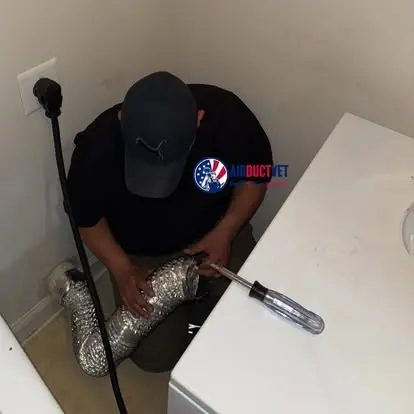 Real AirDuctVet photo
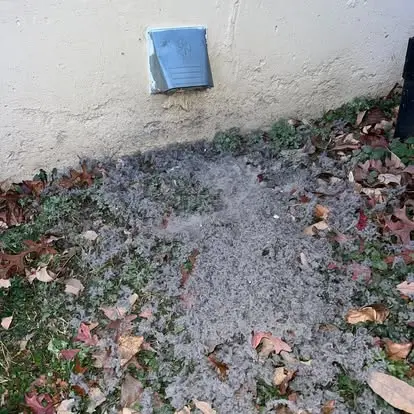 Real AirDuctVet photo
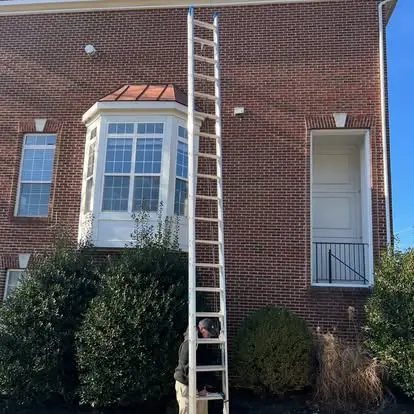 Real AirDuctVet photo
Clear, practical guidance: General education cannot replace an on-site inspection. We separate routine maintenance from conditions that need an HVAC, appliance, chimney, mold, or restoration specialist.
Confirm these five facts before anyone schedules the work
A booking request should identify more than the appliance location. The service route can pass behind a finished wall, through a shaft, across a common area, or to a high-wall or roof termination controlled by the association. A technician also needs to know whether the appliance can be moved safely and whether the property requires a certificate of insurance, reserved parking, elevator protection, a maintenance escort, or a limited work window.
Ask management for written confirmation instead of relying on a neighbor's experience. Two units in the same community can have different routes, terminations, appliance clearances, and access conditions. AirDuctVet can use the answers to distinguish a routine individual-unit request from a managed-building or shared-system project.
- Does the exhaust route serve only this unit, or does any portion serve multiple units?
- Where does the route terminate: an exterior wall, roof, common shaft, or another controlled area?
- Who may approve exterior, roof, shaft, mechanical-room, or common-area access?
- Is there a booster fan, central exhaust fan, fire damper, or other building-controlled component?
- What insurance, parking, elevator, notice, escort, and work-hour rules apply?
A private unit vent and a shared exhaust system need different scopes
An individual-unit route generally carries exhaust from one dryer to its own termination. A shared system can involve a common shaft, central fan, engineered controls, fire-rated assemblies, or multiple units. Cleaning one appliance connection is not the same as cleaning or certifying a whole shared system.
If any part of the route is shared or building controlled, the authorized property contact should define the system, provide available drawings or maintenance records, and approve the work area. AirDuctVet may need to prepare a building-wide or commercial scope, or refer an engineered, mechanical, or inaccessible condition to the appropriate qualified contractor. A unit appointment must not be represented as complete maintenance for the building.
Virginia law provides a framework, but the property documents still matter
Virginia Code § 55.1-1912 addresses ducts that cross unit boundaries: unless the condominium instruments provide otherwise, a portion serving only one unit is treated differently from a portion serving more than one unit or the common elements. Section 55.1-1955 assigns maintenance responsibilities for units and common elements, again subject to the condominium instruments.
That framework does not let a service company decide legal ownership from a photograph or floor plan. The declaration, plats, bylaws, rules, board resolutions, management instructions, lease, and maintenance records may affect who is responsible and who may authorize access. Owners and residents should obtain the association's written direction; a lawyer or qualified community-association adviser can address a disputed responsibility.
What AirDuctVet can evaluate for an Ashburn property
For a qualifying approved dryer-vent scope, AirDuctVet can review the accessible appliance connection, clean accessible lint and ordinary debris from a serviceable route, observe accessible airflow and termination movement, and document visible conditions. A Cobra inspection camera may be useful in selected reachable sections, but it cannot guarantee a complete view through every bend, fitting, shared shaft, or concealed area.
Roof, high-wall, common-area, and controlled-space access depend on written authorization, height, weather, surface condition, fall protection, and a safe work plan. A photograph of an outlet does not establish that the outlet is safely reachable or belongs to one unit. AirDuctVet will not enter restricted areas or alter the building without the required approval.
Cleaning does not automatically include repair or building work
Dryer-vent cleaning does not automatically include moving a difficult appliance, repairing the dryer, replacing a booster fan, opening a wall or ceiling, modifying a shared shaft, fire-stopping, roof repair, rerouting ductwork, or replacing a termination. Those conditions require a separate evaluation and approval, and some require an appliance, mechanical, roofing, restoration, or other qualified trade.
Routine air-duct service is also separate: it does not automatically include mechanical repair or filter replacement, and coil cleaning must be requested, evaluated, and separately approved. Neither dryer-vent nor air-duct cleaning promises medical improvement, guaranteed utility savings, code certification, or a fixed routine interval for every property.
Quick answers for Ashburn condo and HOA residents
Is the owner always responsible when the dryer is inside the unit? No. The appliance location alone does not establish control of the complete exhaust route. Review the condominium instruments or HOA documents and obtain management's written direction.
Can I schedule before the association responds? You can request information, but AirDuctVet may need management approval before confirming a visit that involves a roof, facade, common area, shared system, restricted work hours, or building insurance requirements.
Can the vent always be cleaned from inside the unit? No. Some routes require safe access to an exterior or roof termination, and a stacked or recessed appliance may not be movable within a routine cleaning scope.
Does a completed unit cleaning certify the whole building? No. It documents the approved accessible scope for that unit or project. It does not certify a shared shaft, central fan, appliance, fire-rated assembly, or code compliance unless a separate qualified scope expressly provides that service.
What should I send with the request? Include the Ashburn property address, unit and floor, dryer type, full appliance and connection photos, the known outlet location, symptoms, management contact, and written access or insurance requirements. Do not send private governing documents through an unsecured public channel; ask the office what limited information is actually needed.
Sources and further reading
Official guidance informs the general information above. AirDuctVet's included services are defined by your written quote; local requirements and manufacturer instructions may differ.