Three authentic AirDuctVet field photos selected for this service and optimized for fast loading.
Real AirDuctVet photo
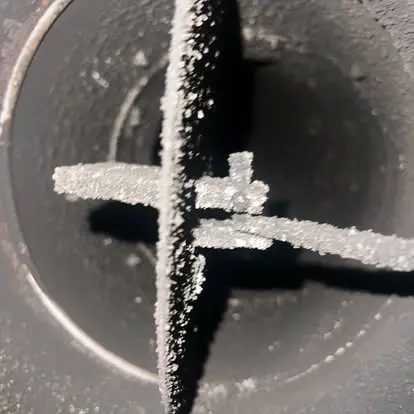
Round duct condition documented
Real AirDuctVet photo
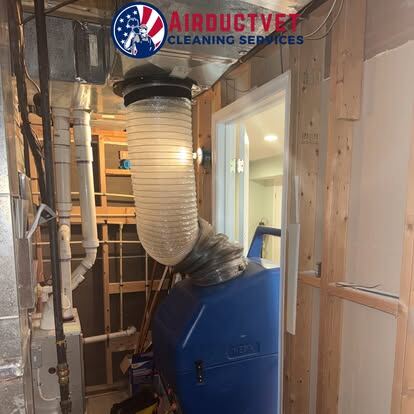
Commercial source removal
Real AirDuctVet photo
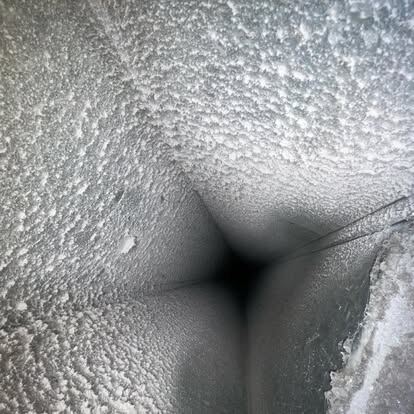
Documented duct condition
What the service does
Air Duct Mold & Odor Control: a practical approach with honest limits
Air duct mold and odor control begins by identifying what is visible, where an odor is strongest, and whether moisture or an HVAC problem is still active. When the condition is within our cleaning scope, we physically remove accessible dust and debris before considering a botanical ULV treatment. We do not perform mold sampling, diagnose mold species, promise sterilization, or substitute this service for structural mold remediation, water-damage work, leak repair, or mechanical HVAC service.
Updated service answer
How does AirDuctVet approach mold-like spotting and HVAC odors?
As of August 2026, AirDuctVet begins mold and odor work with the visible source, moisture history, duct material, and HVAC condition. Accessible dust and debris are physically removed before a botanical ULV odor-control treatment is considered. AirDuctVet does not identify mold species, collect environmental samples, promise sterilization, or replace water-damage repair, HVAC repair, or licensed mold remediation.
What is commonly included in air duct mold & odor control
Accessible duct and HVAC visual review
Physical source removal before treatment
Botanical ULV odor-control option when appropriate
Clear duct-material and moisture limitations
Before-and-after documentation when accessible
No medical, sterilization, or whole-building remediation claims
Local service planning
Check air duct mold & odor control availability by city
Use the closest city page for local building, access, office, and scheduling details. AirDuctVet confirms the exact address and scope before an appointment.
Duct cleaning, odor control, or mold remediation: how are they different?
The correct response depends on the material, amount of contamination, and whether moisture is still active. Treatment without source removal or moisture correction is not a complete solution.
Condition
AirDuctVet cleaning or odor-control scope
When another professional is needed
Loose dust and stale odor on accessible metal surfaces
Physical source removal may fit
HVAC evaluation if the odor continues
Compatible cleaned surface with a defined odor concern
Botanical ULV treatment may be considered
Product use remains limited to its label
Active leak, condensation, or drainage problem
Cleaning cannot correct the moisture source
HVAC, plumbing, roofing, or moisture-control repair
Widespread growth or contaminated porous material
Outside routine cleaning scope
Qualified environmental or remediation professional
When to schedule
Signs you may need air duct mold & odor control
1
A persistent musty or stale odor appears when the HVAC runs
2
Visible mold-like spotting is present on an accessible metal register or duct surface
3
The property was vacant, experienced a moisture event, or has a recurring condensate concern
4
Cleaning is already planned and an additional odor-control step is being considered
What to expect
Our air duct mold & odor control process
01
Review the odor history, visible condition, HVAC system count, duct material, and known moisture events.
02
Inspect accessible areas and explain whether the condition fits routine duct cleaning or needs an HVAC, environmental, or licensed remediation professional.
03
Remove accessible dust and debris using the approved source-removal method before applying any treatment.
04
When appropriate, apply the botanical ULV odor-control treatment and provide ventilation, moisture-control, and follow-up guidance.
Questions about air duct mold & odor control
Air Duct Mold & Odor Control questions before you book
Is air duct mold and odor control a replacement for duct cleaning?+
No. Accessible physical dust and debris should be removed first. An odor-control treatment is considered only after the cleaning scope and the likely source have been reviewed.
Does AirDuctVet provide mold testing or whole-building mold remediation?+
No. We do not identify mold species, collect environmental samples, provide clearance testing, demolish contaminated building materials, or perform whole-building mold remediation. Significant growth, porous contaminated duct liner, sewage, water intrusion, or widespread contamination requires the appropriate qualified or licensed professional.
Will treatment prevent mold from returning?+
No treatment can guarantee that mold-like growth or odors will not return. Leaks, condensation, drainage, humidity, wet insulation, and HVAC performance must be corrected because ongoing moisture can cause the condition to recur.
Can every duct material be cleaned and treated the same way?+
No. Bare metal, flex duct, duct board, and internally lined ductwork have different limitations. Wet, damaged, or visibly contaminated porous material may require replacement rather than cleaning or treatment. We explain accessible conditions before proceeding.
Is the odor-control product chemical-free?+
We offer a botanical product and explain what is being applied. Chemical-free would be an inaccurate absolute claim because all products consist of chemical substances, so we describe the option accurately as botanical.