
Does an Electric Dryer Need Vent Cleaning?
A conventional vented electric dryer needs its exhaust route inspected and cleaned when lint or restriction is present. Learn how this differs from a ventless heat-pump dryer.
The short answer
Yes, if it is a conventional vented electric dryer. The appliance may use electricity rather than gas to create heat, but it still moves warm, moisture-laden air and lint through a duct to an outdoor termination. That exhaust route can collect lint, become crushed, separate, or be blocked at the exterior hood. A truly ventless electric dryer, such as many heat-pump models, has no outdoor exhaust duct for a dryer-vent cleaner to service. Confirm the exact model and connection before booking, because electric does not automatically mean ventless.
Three real AirDuctVet field photos
These authentic AirDuctVet job photos were selected for this topic. We do not use repeated AI artwork or stock photography.
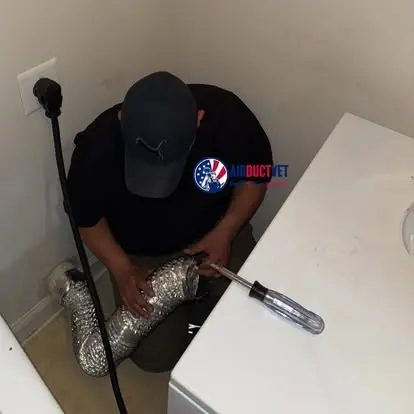 Real AirDuctVet photo
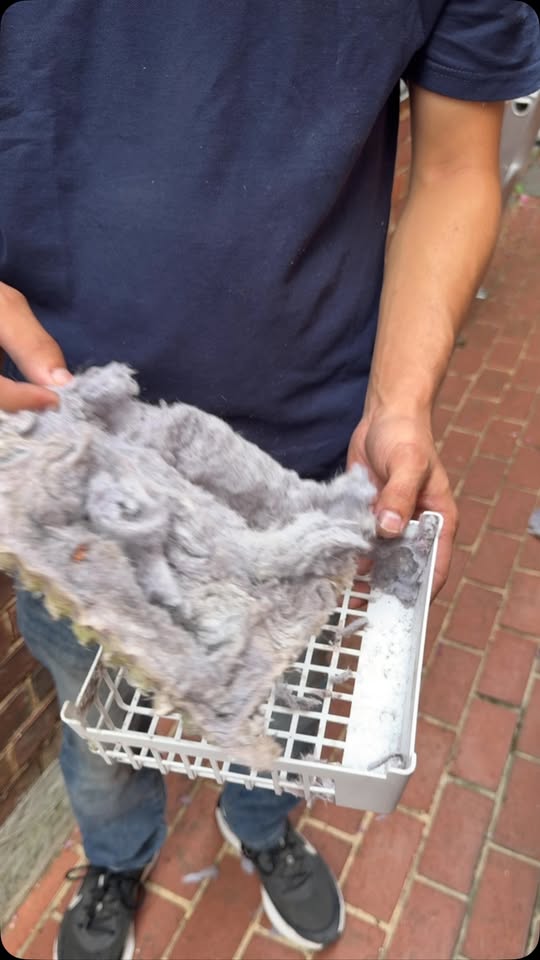 Real AirDuctVet photo
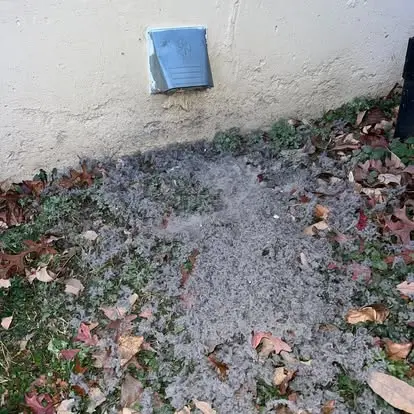 Real AirDuctVet photo
Clear, practical guidance: General education cannot replace an on-site inspection. We separate routine maintenance from conditions that need an HVAC, appliance, chimney, mold, or restoration specialist.
Why does a vented electric dryer still need an exhaust route?
A conventional electric dryer heats air, moves it through wet laundry, and sends the resulting heat, moisture, and lint outdoors. The fuel source changes how the appliance produces heat, but it does not eliminate the need for exhaust airflow. Lint can collect in the transition connector, concealed duct, elbows, joints, exterior hood, or areas where the route is crushed or damaged.
The U.S. Fire Administration advises cleaning the lint filter, checking the venting behind the dryer for crushing or restriction, and confirming that the outdoor covering opens while the dryer operates. USFA also identifies failure to clean as a leading factor contributing to home clothes-dryer fires. Those recommendations apply to the exhaust path of a conventional vented dryer, including an electric model.
How can I tell whether my electric dryer is vented or ventless?
Start with the full model number and the manufacturer's installation manual. A conventional vented model normally has an exhaust outlet connected to a duct that leads outdoors. A ventless heat-pump or condenser model manages moisture inside the appliance and may use a water tank or drain instead of an outdoor exhaust duct. Do not rely on the words electric, compact, stackable, combination, or high efficiency by themselves.
ENERGY STAR describes heat-pump dryers as closed-loop appliances that reuse heated air and do not require outdoor ventilation. That does not make every electric dryer ventless. If a duct is connected to the back of the dryer or an exterior hood opens when it runs, identify what that route serves before scheduling. In a condominium or apartment, also confirm whether the duct is private, shared, or controlled by the building.
- Find the complete model number on the appliance label.
- Read the installation manual's venting or drainage section.
- Photograph the accessible connection without moving a heavy appliance.
- Identify the exterior termination from a safe location when possible.
- Ask the property manager who is responsible for a shared or concealed route.
What signs justify an electric dryer vent inspection?
Longer drying times, clothes that remain damp, unusual heat in the laundry area, a check-vent or airflow warning, a damper that barely opens, lint around the connection or outdoor hood, a crushed transition, or an unexplained shutdown can justify an inspection. These signs do not prove that lint is the only cause. Load size, cycle selection, a coated lint screen, power-supply issues, moisture sensors, heating elements, blower problems, and other appliance faults can produce similar symptoms.
Whirlpool advises checking for crushed venting, a blocked exterior hood, excessive route length, and too many elbows when airflow or drying performance is poor. The manual for the exact dryer controls the permitted duct material, diameter, route length, elbows, clearances, and diagnostic steps. Do not keep running test cycles if there is smoke, sparking, a persistent burning odor, visible overheating, or another urgent warning sign.
What can dryer vent cleaning correct, and what requires repair?
Professional cleaning can remove qualifying lint and removable material from an accessible exhaust route. It may also reveal a crushed connector, separated joint, inactive nesting material, damaged termination, or route limitation that was hidden by buildup. A stronger exterior exhaust or freely moving damper after service is useful evidence, but it does not certify every concealed joint or diagnose the appliance.
Cleaning cannot repair a heating element, motor, blower, control board, sensor, electrical circuit, or internal dryer passage. It also cannot reconnect concealed ductwork, straighten a crushed route, replace unsafe material, shorten an unsuitable installation, or correct a blocked shared shaft without an approved repair scope. If the accessible vent is confirmed clear but the symptom remains, follow the manufacturer's troubleshooting process or contact a qualified appliance or installation professional instead of repeating the same cleaning.
What does AirDuctVet check for a vented electric dryer?
For an approved service, AirDuctVet reviews the accessible dryer connection, planned exhaust route, exterior termination, appliance clearance, route length and bends when known, outlet height, and property-access limits. The crew selects a route-appropriate brush, vacuum, or compressed-air method, removes qualifying lint, and checks available exhaust airflow and damper movement after cleaning. A Cobra inspection camera may document selected reachable areas, but it cannot see through every bend or blockage or certify the full concealed installation.
The blue Air-Care TurboJet Max II HEPA equipment is used only for approved air-duct cleaning and is never used for dryer vent service. Dryer-vent cleaning does not automatically include moving an unsafe or inaccessible appliance, appliance disassembly or repair, electrical work, connector replacement, roof repair, concealed-duct reconstruction, or work on a building-controlled shared shaft. Any additional work requires evaluation and separate approval.
Air-duct cleaning is a separate service. Coil cleaning must be requested, evaluated, and separately approved. Routine duct service does not automatically include mechanical diagnosis or repair, filter replacement, or dryer vent work. The written quote defines the included route, access, completion checks, and documentation.
Quick answers about electric dryer vent cleaning
Do electric dryers create lint? Yes. Lint comes mainly from textiles and laundry, not from the fuel used to heat the dryer.
Does an electric dryer avoid every fire concern associated with a gas dryer? No. It has no gas connection or combustion exhaust, but lint accumulation, restricted airflow, overheating, damaged electrical components, and improper installation still require attention.
Does a ventless heat-pump dryer need outdoor vent cleaning? No, not for the appliance itself. Follow its model-specific filter, heat-exchanger, water-tank, and drain instructions instead.
How often should the vent be cleaned? There is no single interval that fits every property. Follow the manufacturer, monitor drying performance and exterior airflow, and consider route length, bends, usage, pets, appliance changes, building requirements, and prior findings.
What should I send with an estimate request? Share the ZIP code, full dryer model, laundry floor, whether the unit is stacked, photos of the accessible connection and outdoor termination, known route details, recent symptoms or codes, and any ladder, roof, HOA, or building-access restrictions.
Sources and further reading
Official guidance informs the general information above. AirDuctVet's included services are defined by your written quote; local requirements and manufacturer instructions may differ.