
Can a Duct Camera Find Leaks or Holes in Air Ducts?
A duct camera may document visible holes, open joints, crushed sections, or disconnections, but it cannot measure every air leak. Learn when pressure testing or repair is still needed.
The short answer
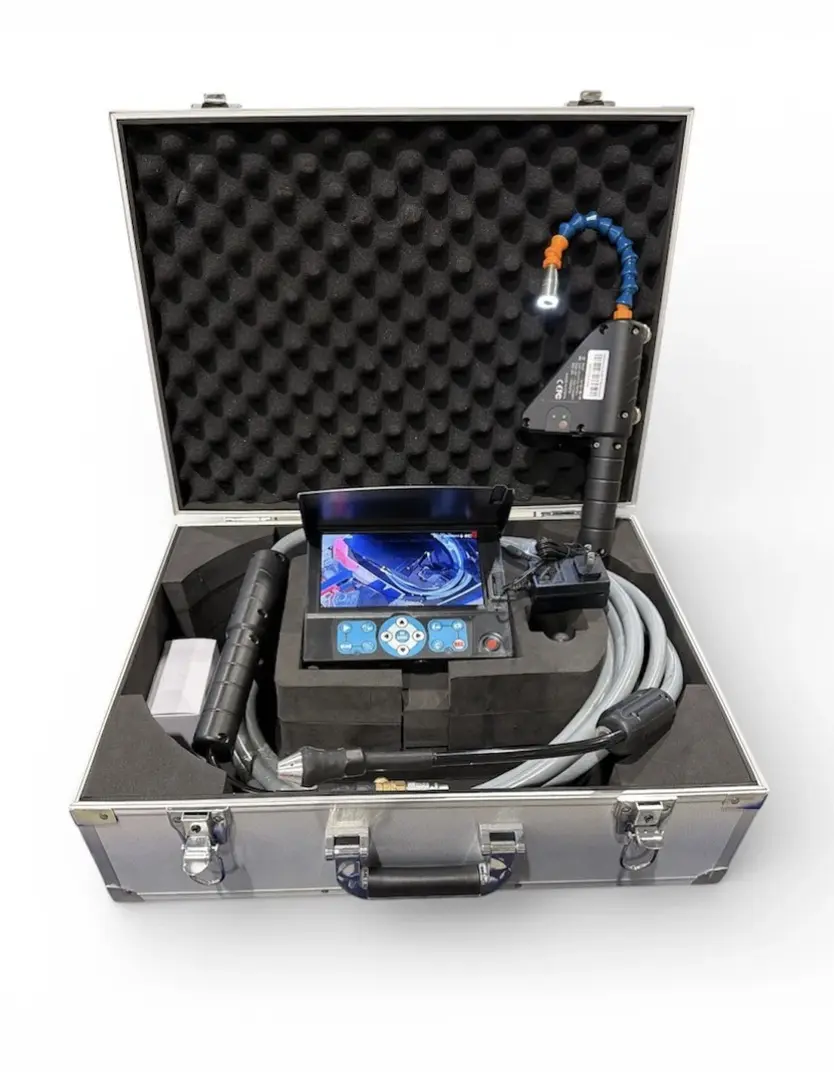
Sometimes, but not conclusively. A duct camera can document a visible hole, open joint, crushed section, loose connection, damaged liner, or complete disconnection when the defect is within a reachable section and the lens has a clear view. It cannot measure total leakage, see through walls, prove that every concealed joint is intact, or replace a whole-system leakage test. AirDuctVet may use a Cobra inspection camera to document selected accessible conditions during an approved air-duct scope, but cleaning does not seal or repair ductwork, and AirDuctVet does not provide Aeroseal service.
Three real AirDuctVet field photos
These authentic AirDuctVet job photos were selected for this topic. We do not use repeated AI artwork or stock photography.
 Real AirDuctVet photo
 Real AirDuctVet photo
 Real AirDuctVet photo
Clear, practical guidance: General education cannot replace an on-site inspection. We separate routine maintenance from conditions that need an HVAC, appliance, chimney, mold, or restoration specialist.
What can a duct camera actually find?
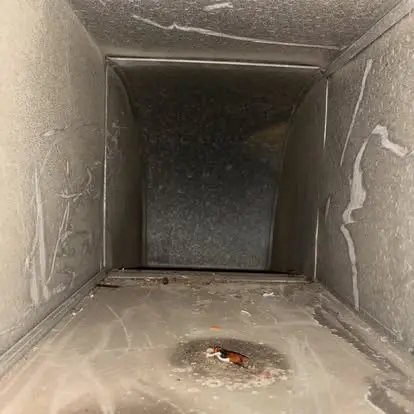
A camera is most useful for visible, location-specific defects. It may show a separated round-duct joint, a torn or crushed flexible duct, an opening in accessible sheet metal, damaged internal liner, construction material, a foreign object, or a branch that ends unexpectedly. The technician should identify where the image was taken and explain whether the condition is in a supply, return, trunk, branch, boot, plenum, attic, crawlspace, or other accessible section.
The image should be treated as documentation, not a diagnosis by itself. Dust, shadows, foil seams, fasteners, insulation, and changes in duct shape can look like damage from one angle. A useful assessment records more than a close-up: it connects the image to the room or duct section, notes the direction of travel, and states what remained out of view.
- Photograph the register or service opening that the camera entered.
- Record the approximate location and distance of the observed condition.
- Ask whether the suspected defect is accessible for direct confirmation.
- Keep before-and-after images with any repair or testing report.
Why can a clean camera view still miss leakage?
Residential duct systems contain bends, dampers, takeoffs, flexible sections, branch connections, equipment cabinets, and transitions that may stop or redirect a camera. Other portions can be concealed above finished ceilings, inside walls, below floors, behind fire-rated construction, or beyond a blocked or sharply turning route. A clear image from one branch says nothing certain about the joints the camera did not reach.
Small gaps can leak while remaining difficult to see. A joint may open only when the blower changes pressure, and leakage around a boot, plenum, filter rack, air handler, or inaccessible return can occur outside the camera's field of view. That is why a camera cannot produce a whole-system leakage rate or certify that a duct system is airtight.
What symptoms suggest an inspection, but do not prove a leak?
Uneven room temperatures, weak airflow, dust near one register, whistling, an unusually warm or cold attic or crawlspace, visible crushed flex duct, or a disconnected-looking boot can justify further evaluation. ENERGY STAR also identifies difficult-to-condition rooms and ducts in attics, crawlspaces, or garages as reasons to investigate duct performance. None of these symptoms proves that leakage is the only cause.
A dirty filter, closed damper, blocked coil, undersized return, equipment problem, balancing issue, insulation defect, closed register, or ordinary duct contamination can create similar complaints. Do not authorize cleaning, sealing, or replacement solely from a symptom or a utility bill. The scope should separate visible inspection, airflow evaluation, leakage testing, cleaning, and mechanical diagnosis.
When is a duct leakage test the better next step?
Use a qualified HVAC, home-performance, or duct-testing professional when the question is how much the system leaks, whether leakage is occurring to outdoors, whether repair improved performance, or whether a project must meet a code, program, or contract requirement. DOE's Building Science Education resources distinguish total duct leakage from leakage to outdoors and describe purpose-built test equipment. SMACNA publishes procedures for air-duct leakage testing in its technical standard.
A pressure test and a camera answer different questions. Testing can quantify leakage under a defined pressure but may not identify every exact hole. A camera can show a reachable defect but cannot quantify the system. On more complex projects, the appropriate professional may combine visual inspection, pressure testing, airflow measurements, smoke or other approved diagnostic methods, and direct access to develop a repair plan.
Does air-duct cleaning repair or seal a leak?
No. Air-duct cleaning removes qualifying dust and removable material from approved accessible HVAC surfaces. It does not reconnect a separated branch, patch a hole, straighten or replace crushed flexible duct, seal boots and plenums, repair an air handler, add insulation, or certify duct tightness. EPA advises correcting underlying causes before cleaning, retrofitting, or replacing ducts when a condition would otherwise recur.
ENERGY STAR recommends having damaged and disconnected ducts repaired and leaks and connections sealed by an appropriate contractor. The repair method depends on the duct material, access, fire and mechanical requirements, and the responsible professional's evaluation. AirDuctVet does not provide Aeroseal, and a camera review should not be represented as an Aeroseal assessment, code inspection, or completed leakage test.
What can AirDuctVet document during an approved scope?
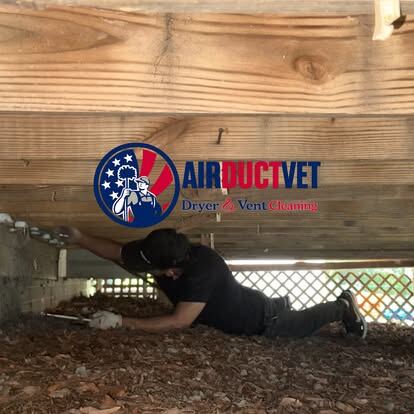
AirDuctVet can visually review accessible registers, returns, service openings, selected duct interiors, and visible attic or crawlspace sections that are safe and included in the quote. A Cobra inspection camera may help document selected reachable surfaces. If the team sees a possible hole, open joint, crush, disconnection, wet material, or another out-of-scope condition, the useful result is a location-specific image and a clear referral or separate-scope recommendation.
The blue Air-Care TurboJet Max II HEPA equipment is used only for approved air-duct source-removal work. It is not a leakage-testing or sealing machine and is never used for dryer vent cleaning. AirDuctVet does not promise that a camera can inspect every concealed branch or that cleaning will correct a pressure, comfort, or energy problem.
Coil cleaning must be requested, evaluated, and separately approved. Routine duct service does not automatically include mechanical diagnosis or repair, filter replacement, leakage testing, duct sealing, insulation replacement, environmental testing, or restoration work. The written quote defines the included areas and documentation.
Quick answers about camera inspections and duct leaks
Can a camera see a duct disconnection behind a wall? Only if the camera can safely reach the area and has a clear view. Finished construction, bends, dampers, liners, and obstructions may prevent access.
Does dust around a register prove the duct is leaking? No. Dust patterns can also come from room air moving around the register, filtration, moisture, surface deposits, or another airflow issue.
Can a camera measure how much air is escaping? No. Quantifying leakage requires a defined test performed with suitable equipment and procedures.
Should ducts be cleaned before leakage testing? Not automatically. The testing professional should decide whether the existing condition affects the test or whether repair, cleaning, or access work should happen first.
What should I send with an estimate request? Share the property ZIP code, HVAC system count, affected rooms, photos of accessible ducts or registers, known attic or crawlspace access, recent construction or HVAC work, and the exact symptom. Do not open equipment panels or enter an unsafe space to gather information.
Sources and further reading
Official guidance informs the general information above. AirDuctVet's included services are defined by your written quote; local requirements and manufacturer instructions may differ.