
Should You Clean the Dryer Vent Before Installing a New Dryer?
Check and clean the existing dryer exhaust route before a new dryer is connected when lint, restriction, damage, or unknown maintenance history may affect airflow.
The short answer
Yes, the existing dryer vent should be checked before a new dryer is connected, and it should be cleaned when lint or another removable restriction is present. A replacement appliance does not replace the exhaust route inside the wall, ceiling, attic, crawlspace, or roof. Connecting a new dryer to a restricted, crushed, disconnected, damaged, or unsuitable vent can carry the old airflow problem into the new installation. Cleaning is only one part of the decision: damaged materials, unsafe routing, inaccessible joints, or an exterior termination that cannot open require repair or installation work by the appropriate qualified professional.
Three real AirDuctVet field photos
These authentic AirDuctVet job photos were selected for this topic. We do not use repeated AI artwork or stock photography.
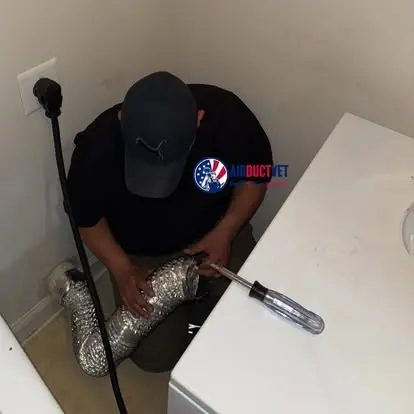 Real AirDuctVet photo
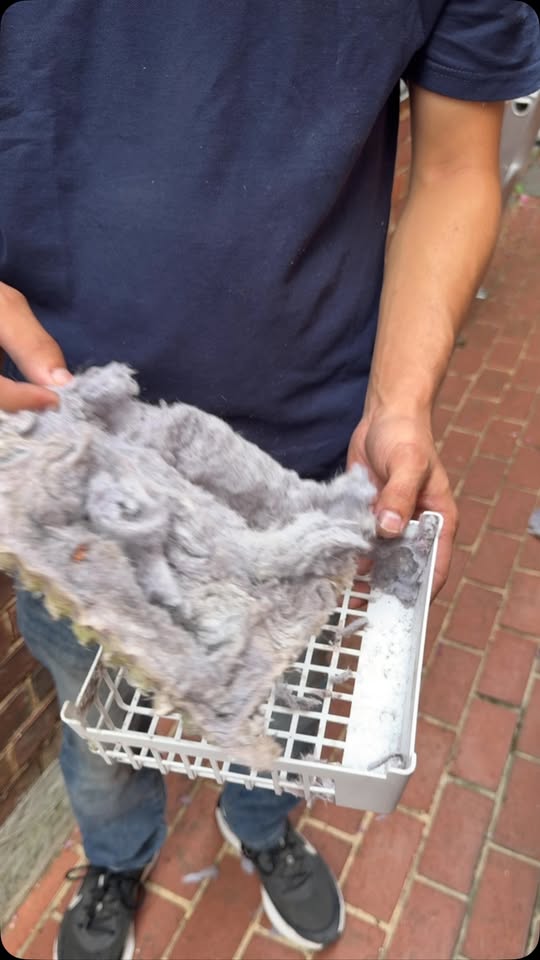 Real AirDuctVet photo
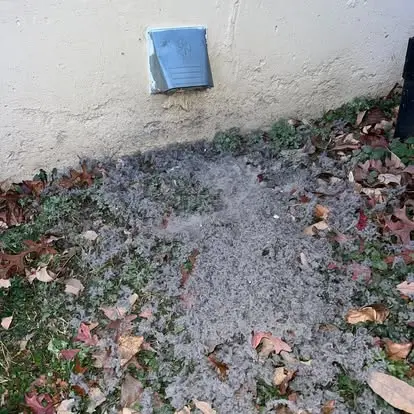 Real AirDuctVet photo
Clear, practical guidance: General education cannot replace an on-site inspection. We separate routine maintenance from conditions that need an HVAC, appliance, chimney, mold, or restoration specialist.
Why can a new dryer inherit an old vent problem?
The appliance and the building exhaust route are separate components. Replacing the dryer usually leaves the concealed duct, transition connection, exterior hood, and any lint or damage in those parts unchanged. Whirlpool notes that a new dryer connected to existing house venting can still have long drying times when that route needs attention.
CPSC explains that lint in the dryer or exhaust duct can restrict airflow and contribute to excessive heat. USFA advises checking the venting behind the dryer for damage, crushing, or restriction and confirming that the outdoor covering opens during operation. Those checks matter before the installer assumes that a new appliance will correct an airflow symptom.
What should be checked before the installer connects the dryer?
Start with the exact installation instructions for the new model and the property conditions. The review should identify the fuel type, outlet and circuit or gas connection, dryer location, transition connector material, accessible joints, concealed route, route length and bends, exterior termination, damper movement, and any roof, attic, crawlspace, ladder, or building-access limits.
Look for lint at the wall connection and outdoor termination, a connector that is crushed or sharply kinked, a loose or separated joint, an outlet covered by a lint-trapping screen, bird nesting material, moisture, or a termination that cannot open. Do not climb, reach into a moving damper, dismantle a gas connection, or energize an uninstalled appliance to perform a test.
- Keep the old dryer disconnected until the installer or appropriate professional confirms the work area is safe.
- Photograph the wall connection and exterior termination before they are covered or moved.
- Tell the installer about prior airflow codes, long drying times, overheating, water, odors, or repeated shutdowns.
- Confirm who is responsible for cleaning, connector replacement, concealed-duct repair, and the final airflow or duct-condition test.
Does dryer vent cleaning fix every installation problem?
No. Cleaning can remove qualifying lint and removable debris from an accessible exhaust route. It cannot reconnect a concealed joint, repair a crushed or torn duct, replace unsafe transition material, shorten an unsuitable route, correct an improper termination, provide missing fire-rated construction, repair the dryer, or change the electrical or gas installation.
CPSC advises replacing plastic or foil accordion-style ducting with rigid or corrugated semi-rigid metal duct because easily crushed materials can trap lint and reduce airflow. The exact connector and exhaust requirements still come from the new dryer's installation instructions and the qualified installer responsible for the work.
If the route is inaccessible or its condition cannot be established, the written scope should identify that limitation. Cleaning should not be represented as code certification, a complete installation inspection, or proof that every concealed joint is intact.
What should be verified after the new dryer is installed?
The installer should follow the manufacturer's startup procedure and any model-specific duct-condition or airflow test. Observe the exterior damper from a safe location, confirm that exhaust reaches outdoors, and check for an abnormal odor, smoke, excessive heat, a loose connection, or an airflow warning. Stop the appliance and contact the appropriate installer, appliance service provider, electrician, gas utility, or emergency service if a serious symptom appears.
Some dryers use airflow indicators or codes to identify possible restrictions. Those diagnostics are useful, but they do not inspect every concealed joint, prove that the route meets all installation requirements, or rule out a separate appliance fault. Keep the installation report, vent-service photos, model and serial information, and any diagnostic result together.
What can AirDuctVet inspect and clean?
AirDuctVet can review an approved accessible dryer exhaust route from the appliance connection toward the outdoor termination, select a route-appropriate brush, vacuum, or compressed-air method, remove qualifying lint or nesting material, and document accessible conditions. A Cobra inspection camera may help document selected reachable portions, but it cannot see through every bend or blockage, verify every concealed joint, or certify the installation.
The blue Air-Care TurboJet Max II HEPA equipment is reserved for approved air-duct cleaning and is not used for dryer vent service. Dryer vent repair, connector replacement, appliance installation, electrical work, gas work, roof work, and concealed-duct reconstruction require their own evaluation and approval.
Air-duct cleaning is a separate service. Coil cleaning must be requested, evaluated, and separately approved. Routine duct service does not automatically include mechanical diagnosis or repair, filter replacement, or dryer vent work.
Quick answers before a new dryer is connected
Can the appliance installer clean the whole vent? Not always. Installation and vent cleaning may be separate scopes, especially for long, roof-exiting, multi-unit, or inaccessible routes. Confirm responsibility before the appointment.
Should the old transition hose be reused? Follow the new dryer's instructions and the installer's evaluation. A crushed, torn, unsuitable, or heavily contaminated connector should not be hidden behind the new appliance.
Does a clean-looking wall opening prove the route is clear? No. It shows only the visible opening. The concealed route and exterior termination may still contain lint, damage, a blockage, or a closed damper.
Can a new dryer be tested before the vent is connected? Use the appliance only as the manufacturer and qualified installer direct. Do not run a vented dryer disconnected as a substitute for evaluating the exhaust route.
What information should I send with a service request? Share the property ZIP code, dryer make and model, fuel type, floor, outlet location, route information, photos of the wall connection and exterior termination, prior symptoms or codes, and any roof, attic, HOA, or access restrictions.
Sources and further reading
Official guidance informs the general information above. AirDuctVet's included services are defined by your written quote; local requirements and manufacturer instructions may differ.