
Should a Dryer Vent Be Tested After Cleaning?
A dryer vent should be checked after cleaning. Learn which airflow and route checks are useful, what they cannot prove, and when repair is needed.
The short answer
Yes. A dryer vent should receive reasonable completion checks after cleaning. The provider should confirm that the accessible connection is secure, observe whether the exterior hood or damper opens while the dryer operates, document the accessible route and removed debris, and report any warning code, weak airflow, damage, or access limit that remains. The exact test depends on the dryer manufacturer, route, and written scope. A moving flap or stronger hand-felt exhaust is useful evidence, but it does not certify every concealed joint, prove code compliance, diagnose the appliance, or guarantee that the route will remain clear.
Three real AirDuctVet field photos
These authentic AirDuctVet job photos were selected for this topic. We do not use repeated AI artwork or stock photography.
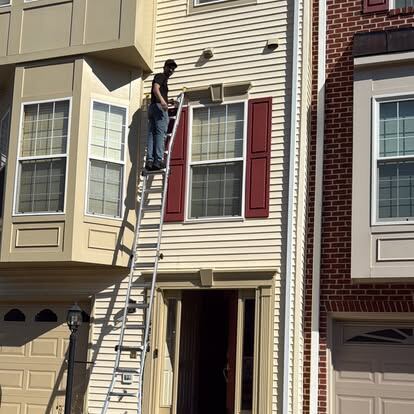 Real AirDuctVet photo
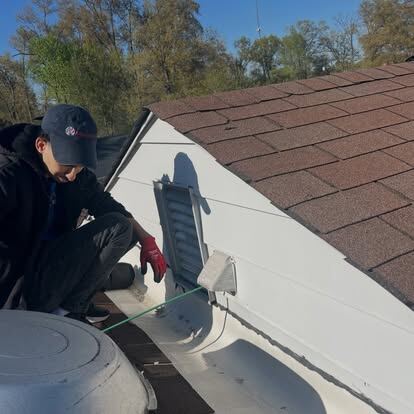 Real AirDuctVet photo
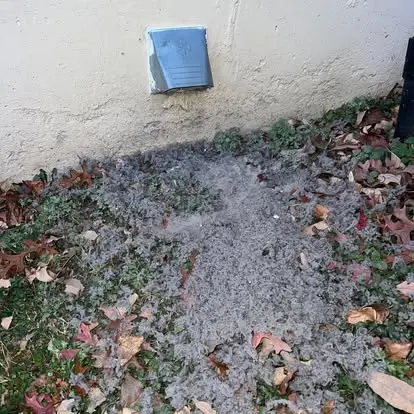 Real AirDuctVet photo
Clear, practical guidance: General education cannot replace an on-site inspection. We separate routine maintenance from conditions that need an HVAC, appliance, chimney, mold, or restoration specialist.
What should be checked after dryer vent cleaning?
A useful completion check starts at the appliance connection and ends at the outdoor termination. The provider should verify that accessible parts disturbed during service are reconnected, the dryer is not crushing or sharply kinking the transition connector, and the exterior hood is free of newly loosened debris. When the dryer can be operated safely within the approved scope, the outside damper should be observed for movement.
The U.S. Fire Administration advises homeowners to check that the venting behind the dryer is not damaged, crushed, or restricted and that the outdoor vent covering opens when the dryer operates. Whirlpool also identifies the lint screen, crushed connector, exterior hood, route length, elbows, and home venting line as separate points to check. A cleaning result should therefore be documented as more than a photograph of lint on the floor.
- Confirm the accessible dryer connection is secure and not crushed or sharply kinked.
- Check that the exterior termination is clear and the damper can open during operation.
- Record any airflow or vent warning before and after the approved service.
- Document removed lint, selected accessible route conditions, and areas that could not be reached.
- Identify damage, a shared system, booster fan, roof access, or another condition outside the cleaning scope.
An airflow check is evidence, not a whole-route certification
Air movement at the outside hood can show that exhaust is reaching the termination at that moment. It does not reveal every concealed elbow, disconnected joint, partial restriction, improper material, fire-stopping condition, or route-length issue. Weather, dryer settings, load condition, damper design, booster-fan operation, and the appliance blower can also affect what is observed.
A hand-felt comparison, moving flap, manufacturer diagnostic feature, or testing device may each provide useful information, but the method and limitations should be stated. A single result should not be presented as a building-code inspection, appliance diagnosis, or guarantee against a future blockage or fire.
A Cobra inspection camera may document selected reachable portions of a dryer route when access and geometry allow. It cannot see through every turn, prove that every joint is connected, or certify the full concealed system.
Why can a dryer warning remain after cleaning?
A remaining AF, Check Vent, Flow Sense, d80, d90, d95, or similar indication does not automatically mean the cleaning failed. Some dryers evaluate airflow only during certain cycles or sensing periods, and the exact reset or diagnostic procedure is model-specific. Follow the manual for the exact dryer rather than assuming that every brand interprets a code the same way.
The restriction may also be outside the portion that was cleaned. A crushed transition connector, excessive route length, many elbows, a stuck exterior damper, a screen that traps lint, a blocked shared shaft, an inactive booster fan, or a disconnected or damaged duct can continue to affect airflow. The dryer itself may have a blower, sensor, heating, control, power-supply, or lint-path problem that vent cleaning cannot diagnose or repair.
If the warning persists, document the code, cycle, load, elapsed time, and observable airflow. Reconcile the cleaning scope first, then involve the appropriate appliance, HVAC, duct, roofing, electrical, gas, or property-management professional instead of authorizing repeated cleaning without new evidence.
When should the dryer stay off after service?
Do not keep operating a dryer that produces smoke, sparks, a burning or gas odor, repeated overheating, a hot or damaged power connection, visible duct separation, or a severe airflow warning with little or no exhaust. Follow emergency instructions from the fire department, gas utility, alarm manufacturer, or emergency services when applicable. Dryer vent cleaning is not emergency response.
The dryer should also remain off when service reveals a crushed or torn connector that cannot be repositioned safely, an inaccessible blockage, an active bird nest that cannot legally or safely be disturbed, a damaged termination, or a shared exhaust condition that requires building approval. Cleaning cannot make damaged equipment or an unsafe installation acceptable.
International Residential Code provisions and the dryer manufacturer's instructions address exhaust materials, termination, clearances, route configuration, and other installation details. Local adoption and property rules vary, so repair or compliance questions belong with the appropriate qualified professional and authority having jurisdiction.
What AirDuctVet can document after cleaning
For an approved dryer-vent scope, AirDuctVet can review the accessible appliance connection and visible termination, clean qualifying accessible lint or debris through the approved route, document observable conditions, and perform reasonable completion checks within the service limits. The written quote controls the included route, access, cleaning method, and deliverables.
Routine dryer-vent cleaning does not automatically include dryer disassembly or repair, gas or electrical work, duct replacement or rerouting, opening finished surfaces, roof or structural repair, exterior-cap replacement, booster-fan service, shared-system work, permits, code certification, or wildlife removal that cannot be performed lawfully and safely. Additional work requires separate evaluation and approval.
Air-duct cleaning is a separate service. Coil cleaning must be requested, separately evaluated, and separately approved. Routine duct service does not automatically include mechanical repair or filter replacement. AirDuctVet does not promise medical improvement, guaranteed utility-bill savings, complete fire prevention, or a fixed routine cleaning interval.
Frequently asked questions
Should the exterior flap open after cleaning? It should be able to open when the dryer exhaust reaches it, but flap movement alone does not prove the entire route is correctly installed or unrestricted.
Is stronger airflow enough to prove the vent is clean? It is useful comparative evidence, especially when combined with route cleaning and documentation, but it is not a guarantee or whole-system certification.
Should an airflow code disappear immediately? Not always. The dryer may need the manufacturer-specified cycle or diagnostic process, and another vent or appliance condition may remain. Use the exact model instructions.
Can a camera verify the whole dryer vent? No. A camera documents only the reachable view. Turns, distance, blockage, and access may leave concealed sections unverified.
Do I need another cleaning if drying is still slow? Not automatically. First confirm what was cleaned, then evaluate the connector, termination, route, dryer settings, load, power supply, and possible appliance faults before repeating the same service.
Sources and further reading
Official guidance informs the general information above. AirDuctVet's included services are defined by your written quote; local requirements and manufacturer instructions may differ.