
Can a Camera Confirm Mold in Air Ducts?
A duct camera can document visible material, but it cannot confirm mold or inspect every concealed surface. Learn what the images can establish and what should happen next.
The short answer
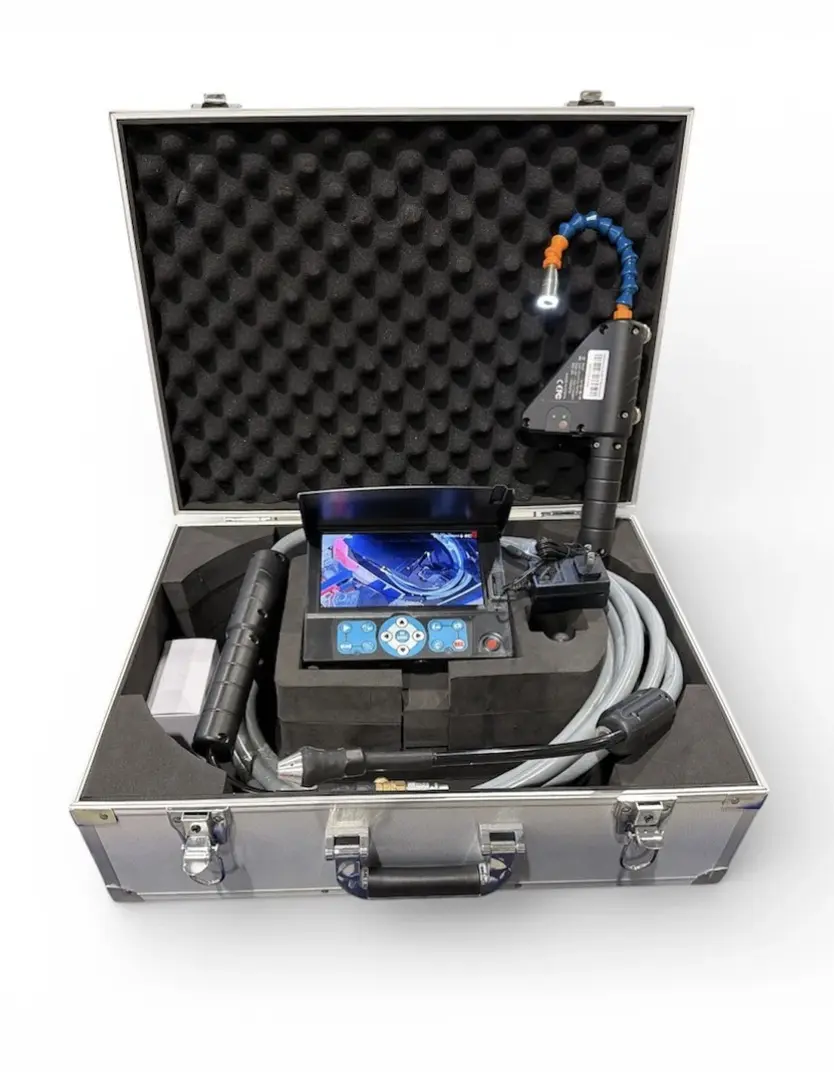
No. A camera view can document visible material on selected reachable duct surfaces, but it cannot confirm that the material is mold, identify a species, show every concealed branch, or define the complete remediation scope. The useful next step is to document where the material appears, determine whether moisture is present, and decide whether the affected surface is cleanable hard ductwork or wet porous material that may need replacement. AirDuctVet may use a Cobra inspection camera to support an accessible duct assessment, but camera footage is not laboratory analysis, environmental clearance, or proof that an entire HVAC system is free of mold.
Three real AirDuctVet field photos
These authentic AirDuctVet job photos were selected for this topic. We do not use repeated AI artwork or stock photography.
 Real AirDuctVet photo
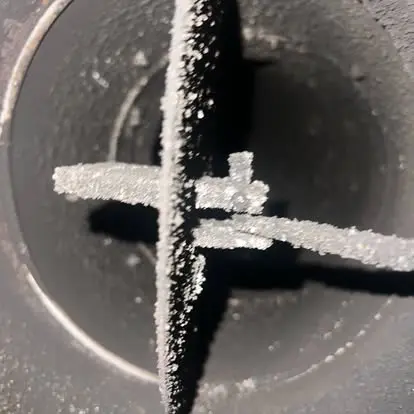 Real AirDuctVet photo
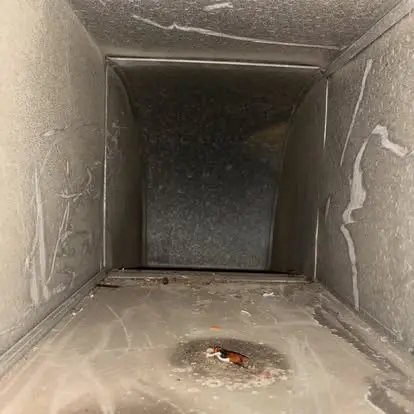 Real AirDuctVet photo
Clear, practical guidance: General education cannot replace an on-site inspection. We separate routine maintenance from conditions that need an HVAC, appliance, chimney, mold, or restoration specialist.
What a duct camera can actually show
A Cobra inspection camera can help document selected reachable sections of a duct, including discoloration, dust, debris, water droplets, staining, damaged liner, a loose joint, or a change in surface condition. That evidence can help a technician explain where a concern was observed and whether ordinary source-removal cleaning appears appropriate for the accessible area.
The image has important limits. A camera may not pass every bend, damper, branch, coil, liner transition, or obstruction. Lighting, focus, surface texture, dust, and condensation can also change how a spot looks. A dark or fuzzy area in a photograph is not a reliable species identification, and a clean-looking section does not prove that every concealed surface is clean and dry.
Why mold can develop in or near an HVAC system
Mold growth requires moisture. In an HVAC system, that moisture may come from condensation on a cold register or uninsulated duct, a leaking drain pan or condensate line, water intrusion, high indoor humidity, wet duct liner, a plumbing or roof leak, or equipment that is not draining or operating correctly. Dust can provide material for growth, but cleaning dust without correcting the moisture source does not prevent recurrence.
EPA guidance emphasizes moisture control and notes that cooling coils and drain pans deserve attention because they handle water during normal air-conditioning operation. Finding suspect material inside a duct should therefore trigger a source question: why did this surface become damp, and is it still becoming damp? Mechanical diagnosis, leak repair, insulation work, drainage correction, or structural drying may need to happen before or alongside any cleaning decision.
When an expert or laboratory confirmation may be useful
EPA explains that material can look like mold without being mold and that final confirmation may require an expert or laboratory analysis. A camera operator should describe a visible condition as suspect material unless there is a defensible basis for a stronger conclusion. AirDuctVet does not identify mold species, provide medical conclusions, or represent a camera image as a laboratory result.
Testing is not automatically necessary for every visible mold problem, and it should not delay correction of an obvious water source. It may be useful when the material is uncertain, the scope is disputed, a clearance decision is required, the building has a complex water event, or a qualified remediation or environmental professional needs objective information for a plan. The appropriate professional should select the sampling method and interpret the result.
Cleaning, replacement, and remediation are different scopes
Substantial visible growth on accessible hard-surface sheet-metal ductwork may support cleaning after the moisture source is corrected and the surrounding HVAC condition is evaluated. Physical source removal comes before any separately approved treatment. A sanitizer or deodorizer cannot repair a leak, dry wet insulation, replace damaged material, or make an unknown substance safe to disturb.
EPA states that wet or moldy insulated duct material generally cannot be effectively cleaned and should be removed and replaced by a qualified contractor. Widespread contamination, sewage or floodwater, damaged porous material, concealed building growth, or a large remediation area can require an appropriately qualified mold, restoration, HVAC, or environmental professional rather than routine duct cleaning.
The written scope should separate air-duct cleaning from mold remediation, duct or insulation replacement, water-damage restoration, mechanical repair, drain service, duct sealing, and environmental testing. AirDuctVet does not promise sterilization, medical improvement, guaranteed utility savings, or permanent odor removal when the source has not been corrected.
What AirDuctVet can document before a scope is approved
AirDuctVet can review accessible registers, service openings, selected reachable duct interiors, and visible HVAC conditions within the requested inspection or cleaning scope. The team can use real field photos and, when appropriate, a Cobra camera to show where material, moisture, debris, or damage was observed. Those images should be tied to a location and explained with their access limitations.
For qualifying hard-surface ductwork, AirDuctVet can propose physical source-removal cleaning after the moisture history and visible condition are reviewed. The blue Air-Care TurboJet Max II HEPA equipment is used only for approved air-duct work. It is not a dryer-vent cleaning tool, and its presence does not turn a routine cleaning into mold remediation or mechanical repair.
Coil cleaning must be requested, evaluated, and separately approved. Routine duct service does not automatically include mechanical diagnosis or repair, filter replacement, drain clearing, insulation replacement, environmental sampling, remediation, or restoration work. If the camera reveals a condition outside the approved scope, the team should pause and explain the appropriate repair, replacement, specialist, or separately authorized work.
Quick answers about cameras and suspected duct mold
Can a camera tell whether black material is mold? No. Color and appearance alone cannot confirm mold. The material may be dust, soot, adhesive, corrosion, insulation, staining, or microbial growth associated with moisture.
Can a clean camera image prove the whole system is mold-free? No. It represents only the surfaces the camera reached and recorded. Concealed branches, equipment components, liners, and areas beyond an obstruction may remain unseen.
Should the ducts be cleaned before the leak is fixed? Usually the moisture source should be identified and corrected first so the condition does not recur. Urgent water control, drying, repair, or professional remediation may take priority over routine cleaning.
Can wet fiberglass duct liner be cleaned? EPA guidance says wet or visibly moldy insulated duct material generally cannot be effectively cleaned and should be removed and replaced by a qualified contractor.
What should I send with a request? Share the property ZIP code, HVAC system count, clear photos, where and when the condition appears, any musty odor or visible moisture, leak or condensation history, duct material if known, and recent HVAC, roofing, plumbing, renovation, or water-damage work.
Sources and further reading
Official guidance informs the general information above. AirDuctVet's included services are defined by your written quote; local requirements and manufacturer instructions may differ.