
Can You Use Screws in a Dryer Vent? What to Know
Can you use screws in a dryer vent? Learn why protruding fasteners can catch lint, what code and appliance guidance say, and when cleaning is not a repair.
The short answer
Do not use screws or other fasteners that protrude into a dryer exhaust path. The 2024 International Residential Code limits how far a fastener may project inside the duct, while Whirlpool advises avoiding protruding screws at the vent hose because lint can snag on them. Follow the exact dryer instructions and locally adopted code. If a screw penetrates the airflow path, cleaning can remove accessible lint but does not approve or repair the connection.
Three real AirDuctVet field photos
These authentic AirDuctVet job photos were selected for this topic. We do not use repeated AI artwork or stock photography.
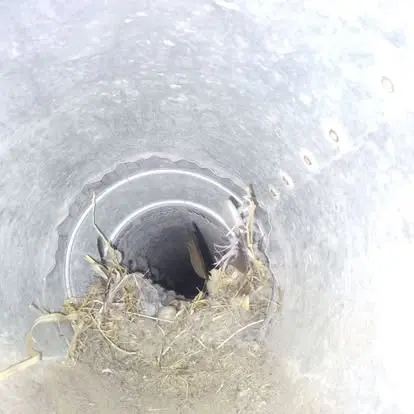 Real AirDuctVet photo
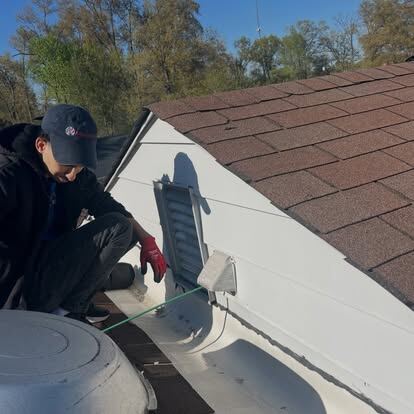 Real AirDuctVet photo
 Real AirDuctVet photo
Clear, practical guidance: General education cannot replace an on-site inspection. We separate routine maintenance from conditions that need an HVAC, appliance, chimney, mold, or restoration specialist.
Can you use screws in a dryer vent?
Do not use a screw that projects into the exhaust airflow beyond what the locally adopted code allows. Section M1502.4.2 of the 2024 International Residential Code says dryer exhaust ducts must not be joined with screws or similar fasteners that protrude more than 1/8 inch into the duct. Your jurisdiction may use a different code edition or amendment, and the dryer's installation instructions also apply.
For the transition connection behind the appliance, Whirlpool recommends a vent clamp or foil tape and specifically warns against screws or anything else that protrudes into the venting. The practical goal is a secure, supported connection with a smooth interior that does not create a lint-catching point.
Why can a protruding screw cause trouble?
Dryer exhaust carries warm, humid air and small lint fibers. A sharp point or threaded shank inside the duct can snag fibers as they pass. Buildup at one joint can narrow the opening, disturb airflow, and make a connection harder to clean completely.
A screw is not the only possible restriction. A crushed transition hose, reversed joint, excessive bend, damaged duct, long route, blocked exterior damper, or nest material can produce similar symptoms. Finding one fastener does not prove that it is the only problem, and removing lint does not verify the rest of a concealed route.
What should secure the vent connection?
Use the connection method specified for the dryer, transition duct, fittings, and locally adopted requirements. Whirlpool's general installation guidance describes vent clamps or foil tape for securing the transition vent to the wall outlet and dryer exhaust. Model-specific instructions take priority over a general guide.
Permanent metal duct sections must be supported, oriented, joined, and sealed as required for that installation. Do not substitute ordinary cloth duct tape, drywall screws, improvised wire, or an unlisted connector. If the route is concealed, shared, damaged, or difficult to access, have the appropriate qualified installer or repair trade evaluate it.
- Confirm the dryer's model number and read its installation instructions.
- Keep the transition connection short, supported, and free of crushing or sharp bends.
- Use only materials and fastening methods approved for that exact location.
- Make sure the exterior damper can open freely and has no lint-catching screen.
- Obtain required landlord, condominium, HOA, or property-management approval before altering a shared or concealed route.
What can you check without taking the vent apart?
Turn the dryer off before looking behind it. From a safe position, check whether the transition duct is crushed, loose, torn, or held to the outlet with a screw that enters the airflow path. Also note longer drying, dryer airflow warnings, abnormal heat, a burning odor, or an exterior damper that does not open normally.
Do not open electrical or gas components, move a gas dryer beyond the safe reach of its connector, enter an unsafe attic, or climb onto a roof. Photographs of the visible dryer connection and exterior outlet can help AirDuctVet distinguish routine cleaning access from installation or repair work.
Can dryer vent cleaning fix a bad connection?
No. AirDuctVet can clean qualifying accessible dryer vent sections and assess visible route, termination, and airflow conditions within the approved scope. A Cobra inspection camera may help document reachable sections, but it cannot see through every bend, prove every concealed joint is correct, or certify the installation against all local requirements.
Removing accessible lint is different from replacing a transition duct, correcting a joint, rerouting concealed ductwork, repairing an appliance, or modifying an exterior termination. Those items require a separate scope and may belong to an appliance technician, duct installer, roofer, building engineer, or other qualified trade.
What does AirDuctVet include and exclude?
The written quote defines the dryer vent cleaning path, access points, and approved exterior work. Routine service does not automatically include duct replacement, mechanical repair, appliance repair, electrical or gas work, roofing, or structural changes. Special roof, ladder, attic, crawl-space, or managed-building access must be reviewed before service.
Air-duct cleaning is a separate service. Coil cleaning is not included unless the customer specifically requests it and AirDuctVet separately approves it. Routine air-duct service also does not automatically include mechanical repair or filter replacement.
Frequently asked questions
Does code allow any screw inside a dryer duct? The 2024 IRC limits a screw or similar fastener to no more than 1/8 inch of protrusion inside the duct. Locally adopted rules and the appliance instructions control your installation.
Can I use a hose clamp behind the dryer? Whirlpool's general guidance includes vent clamps as one connection method. Confirm the clamp, transition duct, and method in the instructions for your dryer.
Can I use foil tape instead? Manufacturer-approved foil tape may be used in locations allowed by the instructions. Ordinary cloth duct tape is not a substitute.
Will a camera find every screw? No. A camera can document reachable sections but may not pass every bend or show every side of every concealed joint.
When should I stop using the dryer? Stop and seek appropriate qualified help if you notice smoke, sparks, a burning odor, a damaged gas or electrical connection, or abnormal heat. Do not manually alter a connection while the dryer is operating.
Sources and further reading
Official guidance informs the general information above. AirDuctVet's included services are defined by your written quote; local requirements and manufacturer instructions may differ.