
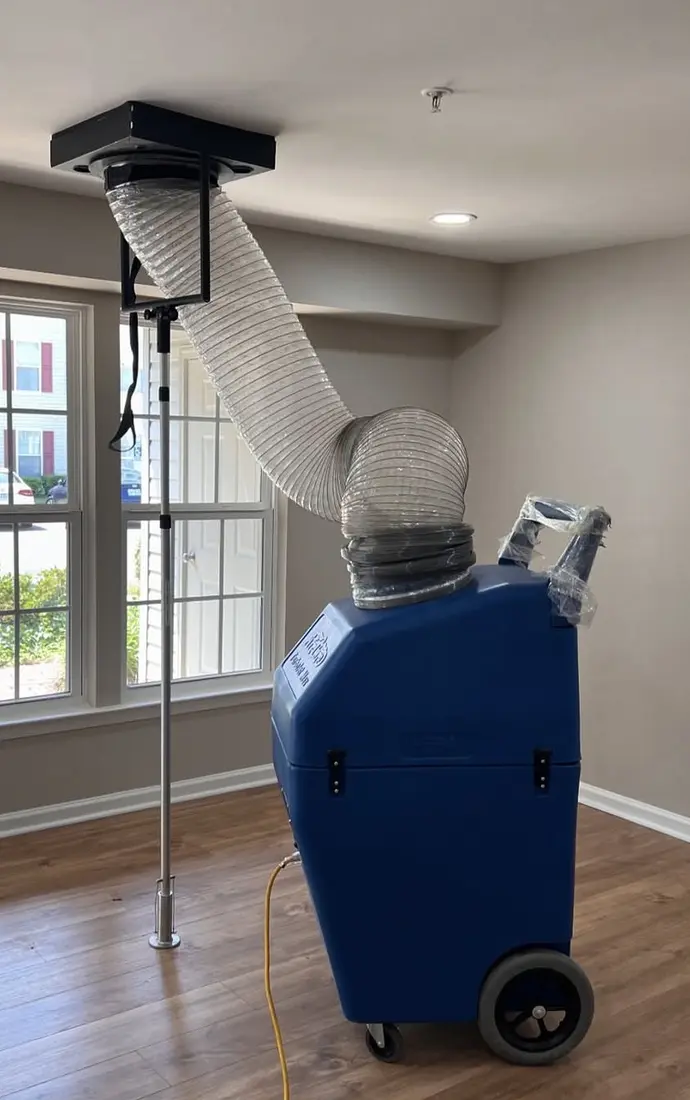
Professional equipment, selected for the propertyHEPA negative air, camera inspection, compressed-air agitation, and 40-foot rotating brushes
Air Duct Cleaning Equipment & Methods
AirDuctVet selects air duct cleaning equipment after reviewing duct material, buildup, access, system layout, and the service goal. A large vacuum alone does not clean every surface, and one method is not appropriate for every system.
Photographed on real jobs
Real AirDuctVet equipment working in real properties
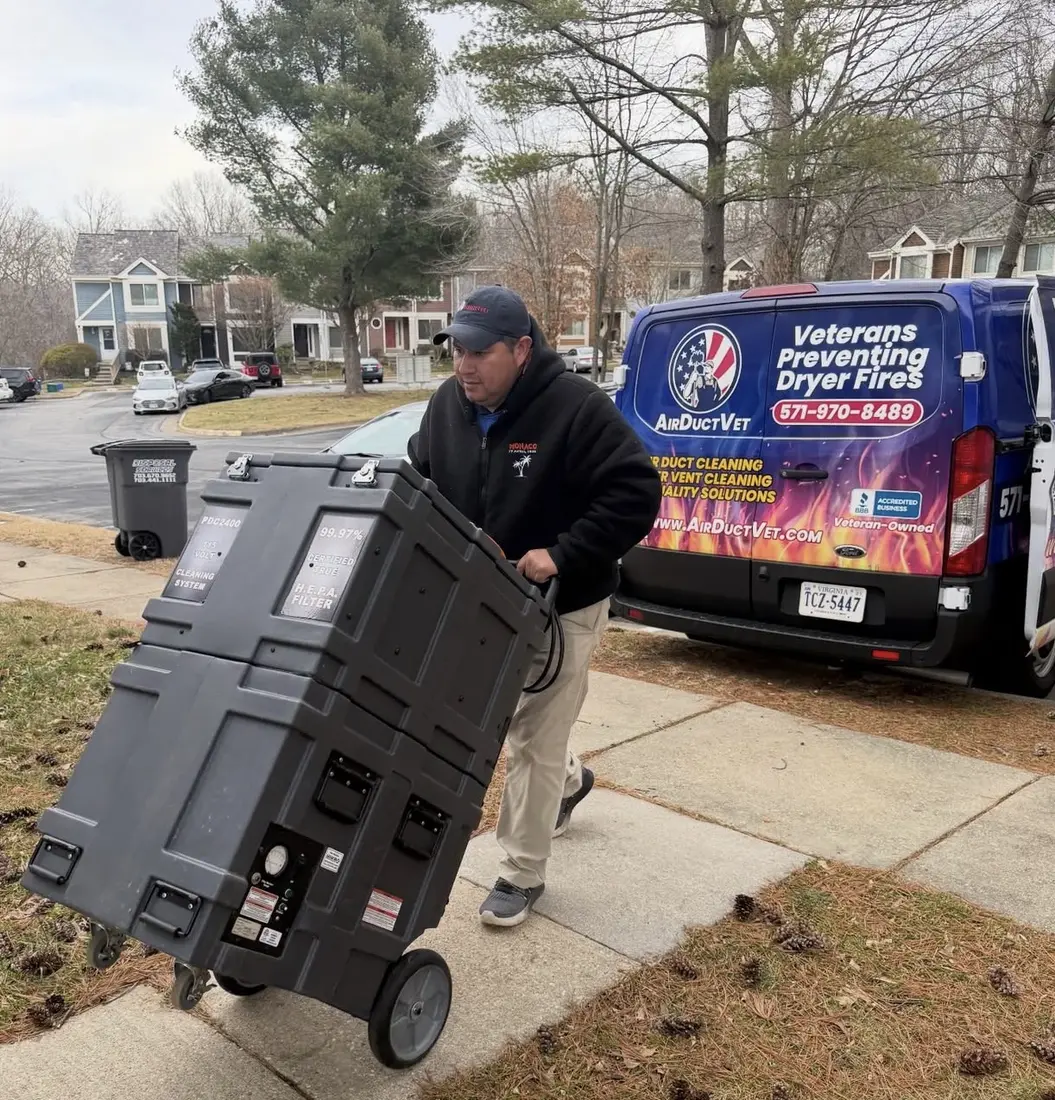
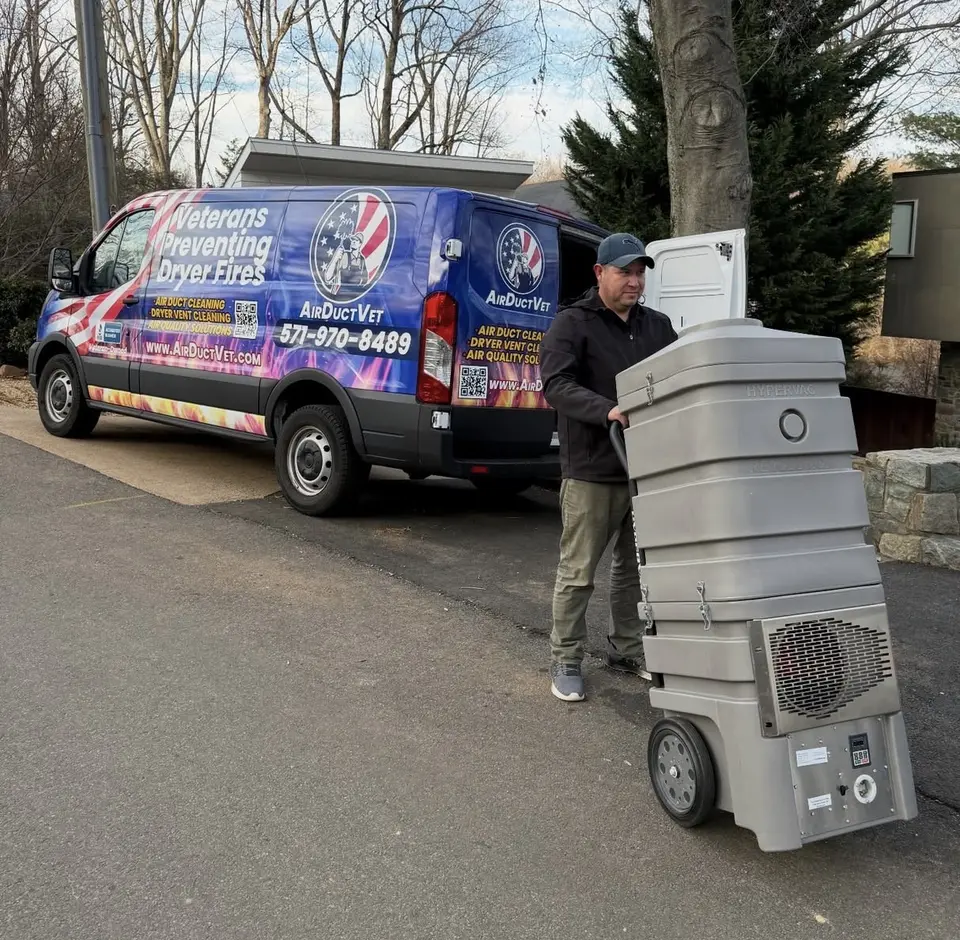
These field photos show AirDuctVet source-removal equipment, register access, and documented duct conditions during genuine service work.
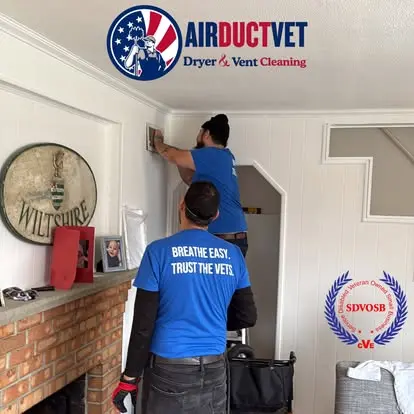 Real AirDuctVet photo
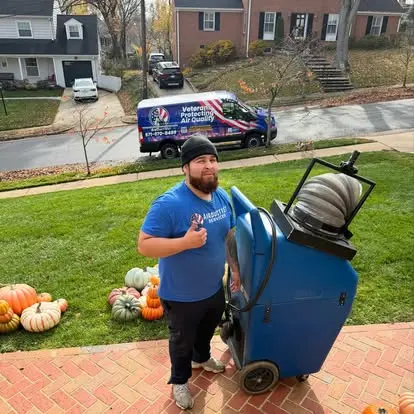 Real AirDuctVet photo
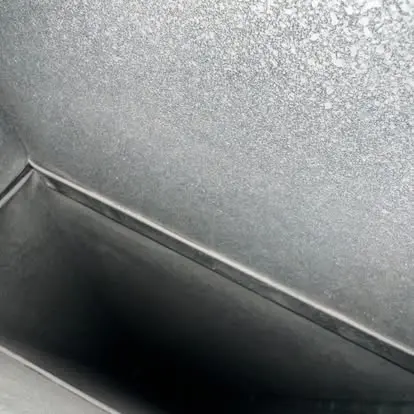 Real AirDuctVet photo
Source removal requires airflow, agitation, and control
Professional air duct cleaning combines negative pressure with a suitable way to loosen material from accessible duct surfaces. The vacuum establishes controlled airflow and collects loosened debris. Brushes or compressed-air tools provide agitation where the duct material and access allow. Inspection cameras help document accessible conditions before and after work. The selected combination depends on the property, not a one-size-fits-all package.
How to compare air duct and dryer vent cleaning quotes
Two quotes can describe very different jobs. Ask each company to put the systems, method, access and exclusions in writing, then compare the same scope. A machine’s advertised airflow or a low starting price does not tell you what will be cleaned.
- Which system and how many returns?
- Identify each HVAC system and the supply and return ducts included. AirDuctVet’s negative-air package includes unlimited supply vents and one return per approved HVAC system; additional returns are confirmed separately. A dryer exhaust is a separate system.
- What removes the buildup?
- Ask whether the quote covers HEPA negative-air cleaning for loose debris or extensive vent-by-vent brushing and compressed-air agitation. Heavy or adhered debris can require a different scope, selected for the duct material and condition.
- Are coils or treatments included?
- Coil cleaning is not included unless requested. Sanitizing is separately approved and does not replace physical debris removal or correcting a moisture source.
- Which dryer route and access method?
- Confirm the appliance connection, private vent route and termination. Ask about stacked dryers, booster fans, high-wall outlets, roof access and building permission. Cleaning and duct reconstruction or appliance repair are different jobs.
- What evidence and checks will I receive?
- Agree on photos or notes of accessible conditions, any inaccessible sections and the completion checks. For dryer service, include an airflow check; cleaning cannot guarantee that an unrelated appliance fault will disappear.
- What happens if the scope changes?
- Request the revised scope and price before approving extra work. AirDuctVet provides a 90-day workmanship warranty for cleaning-related issues; it does not replace repairs to damaged equipment or concealed ductwork.
Review AirDuctVet’s credentials and service standards, then use the quote form to describe your property and the systems you want included.
The equipment behind the cleaning plan
AirDuctVet maintains multiple systems so the crew can match airflow, filtration, agitation, and access to the specific job.
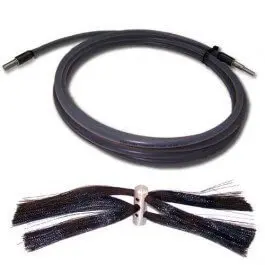
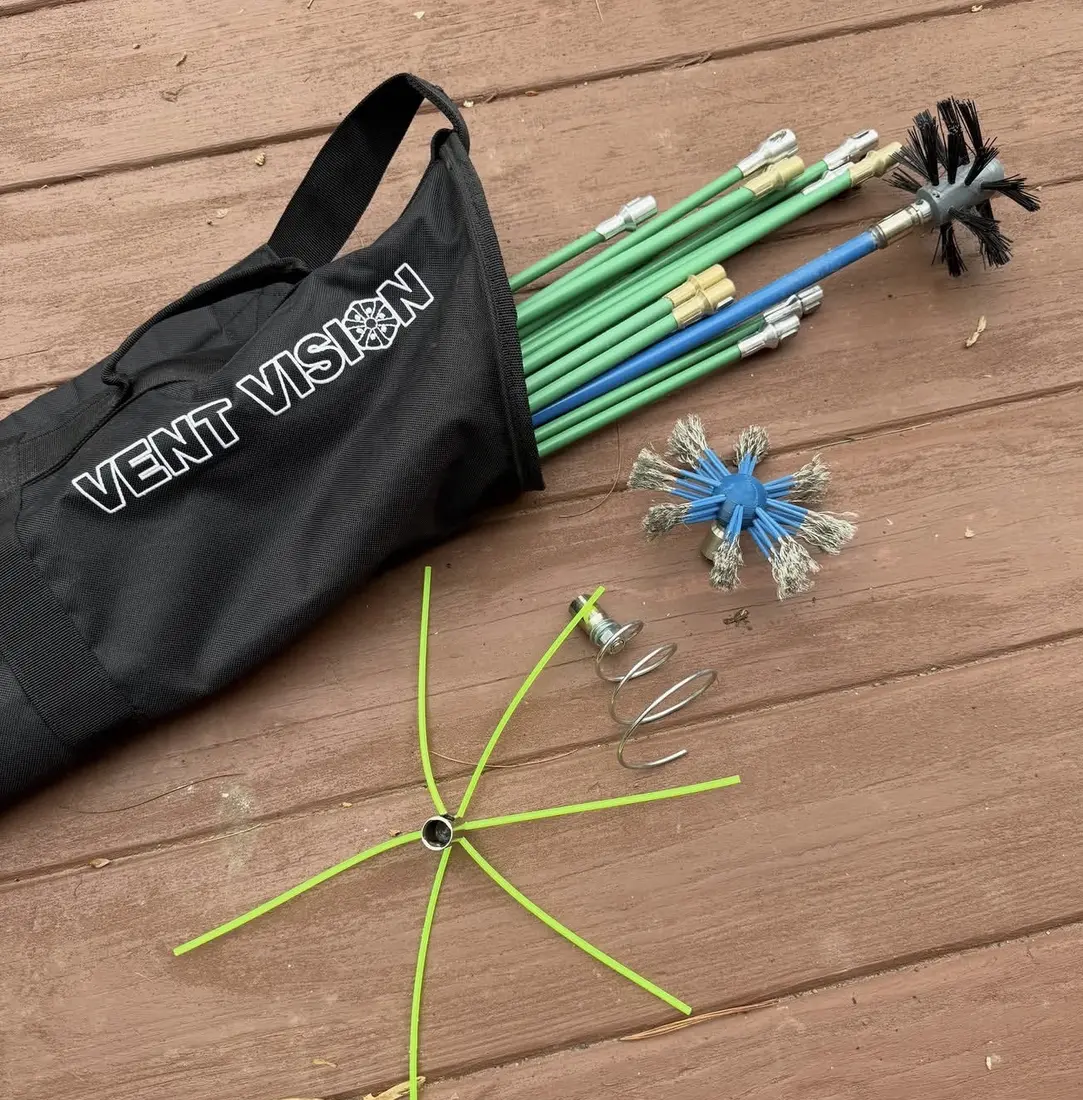
Cleaning tools we may combine
HEPA-filtered negative-air machines for controlled source removal
A 220-volt, 5,000 CFM HyperVac system for qualifying layouts
A portable Nikro HEPA negative-air machine rated at 3,000 CFM
A portable Air-Care HEPA system rated up to 3,000 CFM free air
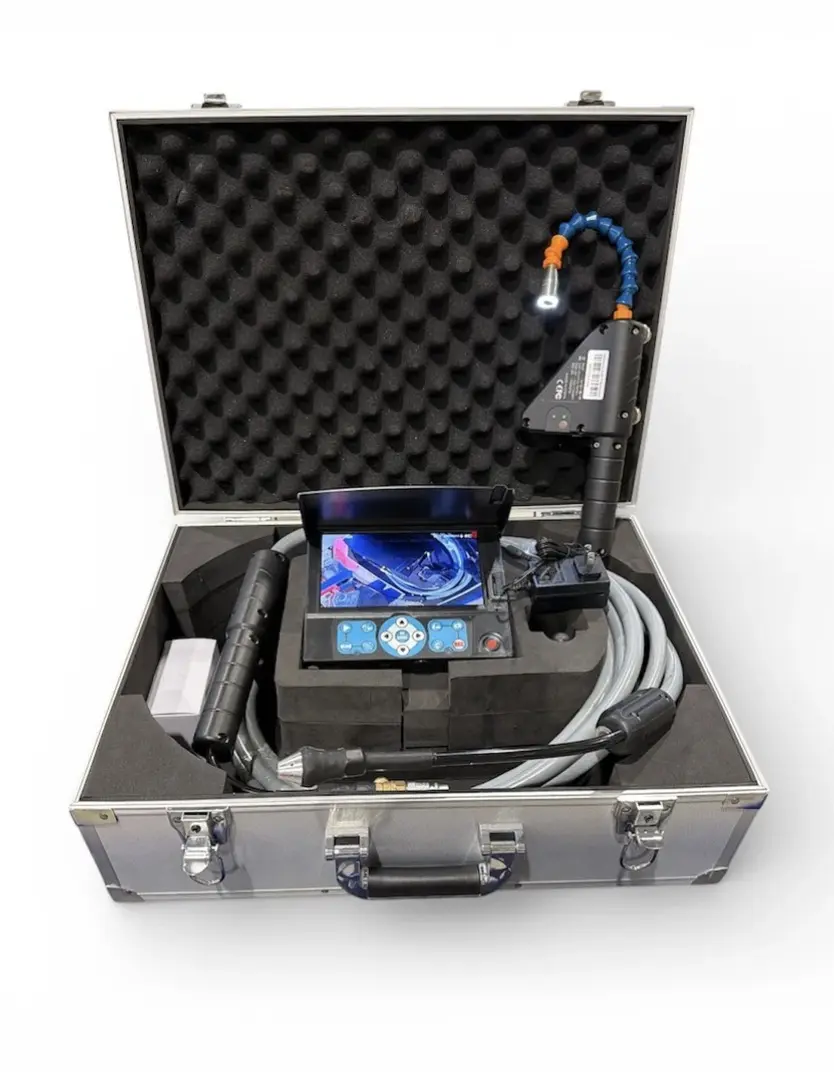
A Cobra inspection camera for accessible pre-service and post-service views
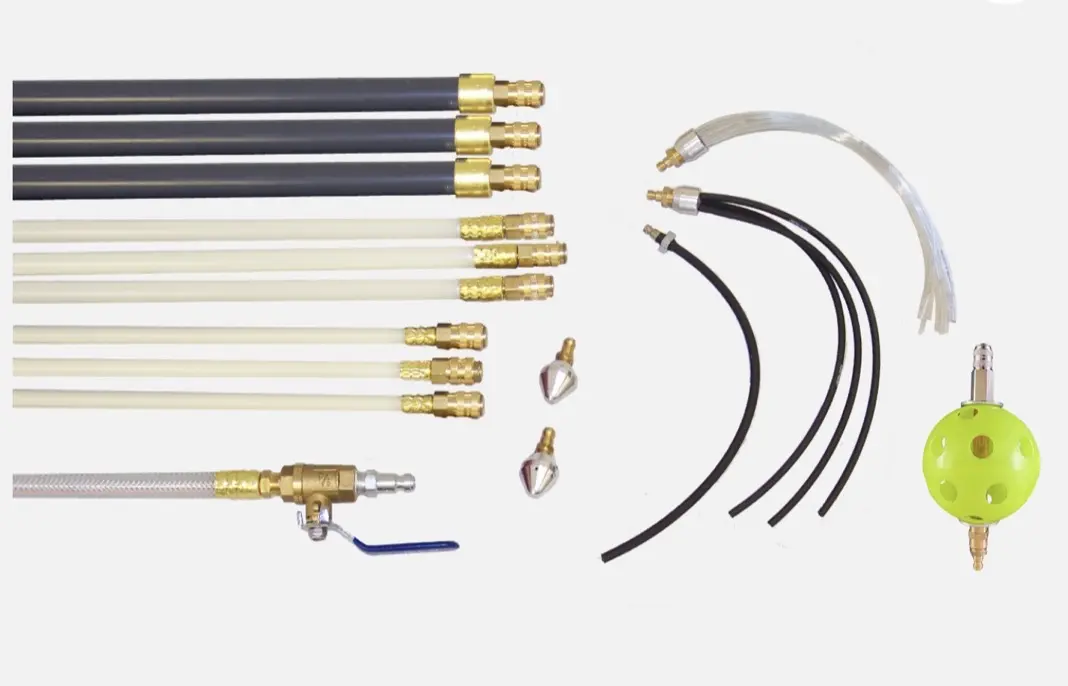
Compressed-air whips for suitable metal and supported duct runs
A 40-foot rotating-brush system for qualifying duct and dryer-vent routes
A flexible snake rotating-brush system for qualifying routes
Vent Vision rods and attachments for suitable register and branch access
Register-by-register tools for heavier debris or detailed branch work
Protective covers, collection hoses, filters, and work-area controls
How we choose an air duct cleaning method
- 01
Review the HVAC system count, property type, renovation history, duct material, access, and visible symptoms before the appointment.
- 02
Inspect accessible registers, returns, trunks, equipment connections, and any reported problem area. Camera inspection is used where the route permits.
- 03
Select the negative-air platform and agitation tools that fit the duct construction, debris condition, available power, and equipment route.
- 04
Place the system under controlled negative pressure, protect finished areas, and work through the planned branches or accessible components.
- 05
Document accessible results, explain any limitation or damaged section, and separate cleaning recommendations from HVAC repair or environmental work.
Equipment & Cleaning Methods questions
Is a 5,000 CFM vacuum always better for air duct cleaning?+
No. Airflow and static pressure matter, but safe access, duct material, filtration, hose configuration, agitation, and source capture also determine the cleaning plan. The larger HyperVac is valuable for qualifying work, while the more portable Air-Care system can be the better fit in other properties.
Do you use a rotating brush in every air duct?+
No. We have a 40-foot rotating-brush system, but the technician first considers the duct material, condition, diameter, turns, and access. Compressed-air tools or another source-removal method may be safer for some systems.
Can the inspection camera show every part of the ductwork?+
Not always. A Cobra camera can document many accessible sections, but branch geometry, elbows, dampers, obstructions, and sealed construction can limit where the camera travels and what it can see.
What equipment information should I include with my quote request?+
Send the HVAC system count, property type, recent construction, visible debris, known duct material, access restrictions, and photos of the equipment area. Those details help us prepare the appropriate machines and tools.