
Can a Clogged Dryer Vent Damage the Dryer Blower Wheel?
A restricted dryer vent can reduce airflow and increase heat, but it does not prove the blower wheel is damaged. Learn which symptoms need vent cleaning or appliance repair.
The short answer
A severely restricted dryer vent can reduce exhaust airflow and contribute to excess heat, but it does not by itself prove that the dryer blower wheel is damaged. A blower wheel can also become loose, cracked, off-balance, or obstructed by an item inside the appliance. Vent cleaning addresses the exhaust route outside the dryer cabinet; diagnosing or replacing the blower wheel is internal appliance repair. Stop using the dryer if it has a new scraping or rumbling noise, strong vibration, smoke, a burning smell, or little exhaust airflow, and never operate it with the blower wheel removed or known to be damaged.
Three real AirDuctVet field photos
These authentic AirDuctVet job photos were selected for this topic. We do not use repeated AI artwork or stock photography.
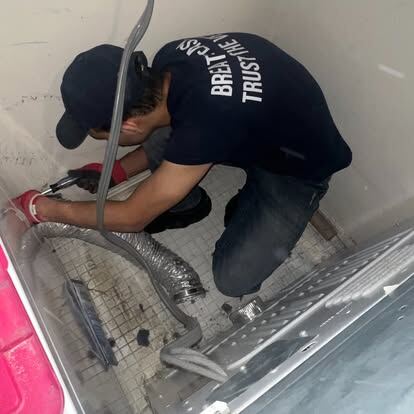 Real AirDuctVet photo
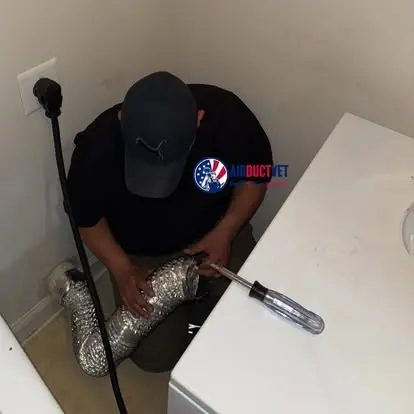 Real AirDuctVet photo
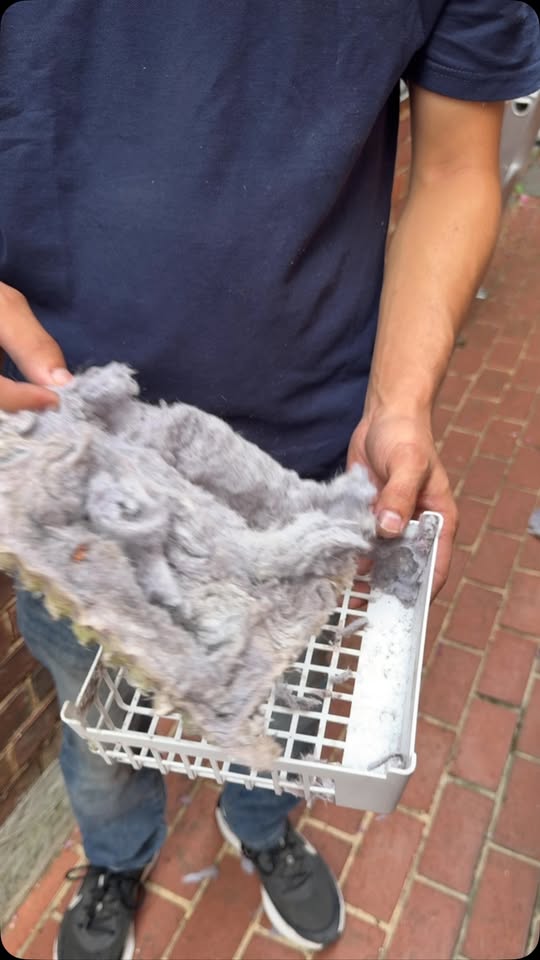 Real AirDuctVet photo
Clear, practical guidance: General education cannot replace an on-site inspection. We separate routine maintenance from conditions that need an HVAC, appliance, chimney, mold, or restoration specialist.
What does the dryer blower wheel do?
The blower wheel is an internal appliance part that helps move air through the dryer and out through the exhaust connection. Whirlpool describes the dryer blower as pulling air through the appliance and drawing hot, damp air out through the vent. If the wheel is loose, obstructed, cracked, off-balance, or no longer turning correctly, the dryer may make a rumbling, rattling, scraping, or high-pitched sound and may move less air.
The blower wheel is not optional. Running a dryer without it, or continuing to run a dryer with a known damaged wheel, can prevent the appliance from moving heat and moisture as designed. Do not remove the wheel as a temporary workaround. Disconnect the dryer from use and have the internal condition evaluated by a qualified appliance technician.
How can a clogged exhaust route affect the dryer?
Lint, a crushed transition connector, excessive bends, a blocked exterior hood, nesting material, or a damaged duct can reduce the air leaving the dryer. CPSC warns that lint in the dryer or exhaust duct can block airflow and cause excessive heat buildup. USFA advises checking that the venting behind the dryer is not crushed or restricted and that the outdoor covering opens while the dryer operates.
Restricted airflow can make the dryer run hotter or longer and can produce symptoms that overlap with an appliance fault. It may add operating stress, but a vent restriction alone cannot confirm that the blower wheel has failed. The exact relationship depends on the dryer model, route, restriction, duration, sensors, controls, and condition of the internal components. A useful diagnosis checks both the complete exhaust path and the appliance rather than assuming one cause.
What else can damage or obstruct a blower wheel?
A coin, small garment, lint clump, or another item can enter the lint-chute or blower-housing area on some models and strike the wheel. A wheel can also loosen from the motor shaft, crack, warp, or become unbalanced. Wear in the motor, belt, rollers, idler, drum supports, or another moving part can create a similar sound, so noise by itself is not a blower-wheel diagnosis.
Whirlpool notes that a loose, off-balance, or obstructed blower wheel can cause loud rumbling and recommends professional assistance when the sound persists. Do not open energized panels, reach into a moving appliance, disconnect gas components, or keep running test cycles to identify the noise. Internal inspection should follow the manufacturer’s service procedures.
Which warning signs mean you should stop the dryer?
Stop using the dryer when a new scraping, grinding, repeated knocking, or heavy rumbling sound appears, especially if the cabinet vibrates, airflow drops, or the dryer becomes unusually hot. Stop immediately for smoke, sparking, a strong burning or electrical odor, visible overheating, a gas odor, or a tripped safety device. Follow the appropriate emergency or gas-utility guidance when fire or fuel gas is suspected.
Long drying times, damp clothes, a check-vent message, weak exterior airflow, or an exterior flap that barely opens justify an exhaust-path check, but they do not prove that the vent is the only problem. A coated lint screen, load selection, moisture sensor, heating component, motor, blower, control, power supply, or internal lint accumulation can produce similar symptoms.
- Do not run the dryer with the exhaust disconnected into the room.
- Do not remove the blower wheel and operate the dryer without it.
- Do not keep resetting an airflow warning without finding the cause.
- Do not move a gas dryer or strain its connection to inspect behind it.
How do vent cleaning and appliance repair differ?
Dryer vent service follows the exhaust route from the appliance connection through the transition and concealed duct to the outdoor termination. It can remove qualifying accessible lint and removable material, document route restrictions, and check available airflow and exterior damper movement after cleaning. A clearer route may improve exhaust performance when restriction was present.
Appliance service addresses the dryer cabinet and its internal blower wheel, housing, motor, sensors, heating components, wiring, gas system, and controls. Vent cleaning does not open the dryer cabinet, replace a blower wheel, remove material trapped inside the appliance, or certify that internal parts are operating correctly. If the route is confirmed clear but the noise, vibration, heat, warning code, or low airflow remains, the dryer needs model-specific appliance diagnosis.
What can you check safely before the appointment?
Clean and reinstall the lint screen as the manufacturer directs. Without moving a heavy or gas-connected appliance, look for an obviously crushed or sharply kinked transition connector. From a safe location, observe whether the exterior hood opens and whether exhaust seems steady during a brief normal cycle, but stop the test if the dryer makes a severe noise, overheats, smells unusual, or produces smoke.
Record the full model number, the exact sound, when it starts, whether the drum turns, any warning code, drying time changes, exterior airflow, and recent vent or appliance work. A short video can help an appliance technician distinguish a repeating drum sound from a blower-area sound, but it should not be recorded if operating the dryer appears unsafe.
What does AirDuctVet inspect and clean?
For an approved dryer vent scope, AirDuctVet reviews the accessible appliance connection, transition, planned exhaust route, exterior termination, route length and bends when known, and property-access limits. The crew selects a route-appropriate brush, vacuum, or compressed-air method, removes qualifying accessible lint, and checks available exhaust airflow and damper movement after cleaning. A Cobra inspection camera may document selected reachable areas, but it cannot see through every bend or obstruction or diagnose the internal blower wheel.
AirDuctVet dryer vent cleaning does not automatically include dryer disassembly, blower-wheel diagnosis or replacement, motor or sensor repair, electrical or gas work, connector replacement, concealed-duct reconstruction, roof repair, or work on a building-controlled shared shaft. The blue Air-Care TurboJet Max II HEPA equipment is used only for approved air-duct cleaning and is never used for dryer vent service.
Air-duct cleaning is a separate service. Coil cleaning must be requested, evaluated, and separately approved. Routine duct service does not automatically include mechanical diagnosis or repair, filter replacement, appliance repair, or dryer vent work. The written quote defines the included route, access, methods, and completion checks.
Quick answers about dryer vents and blower wheels
Can cleaning the dryer vent fix a noisy blower wheel? Only if the noise was caused by an exhaust-side condition that the approved cleaning corrects. A loose, cracked, obstructed, or damaged internal wheel still needs appliance service.
Can I run the dryer without the blower wheel? No. The blower is required to move air through the dryer and exhaust route. Do not use the appliance until the wheel is correctly installed and the dryer is cleared for operation.
Does weak outdoor airflow prove the blower wheel is broken? No. Weak airflow can result from lint, a crushed connector, a blocked hood, route design, a disconnected duct, an appliance fault, or more than one condition.
Will a clean vent prevent every dryer repair? No. Vent maintenance addresses the exhaust path, not normal part wear, manufacturing defects, foreign objects inside the dryer, electrical faults, or other internal failures.
What should I send with an estimate request? Share the ZIP code, dryer model, laundry floor, stacked or side-by-side setup, photos of the accessible connection and outdoor termination, known route details, warning codes, and whether the sound or airflow problem began before or after recent work.
Sources and further reading
Official guidance informs the general information above. AirDuctVet's included services are defined by your written quote; local requirements and manufacturer instructions may differ.