
Can a Chimney Sweep Fix a Stuck Fireplace Damper?
A chimney sweep may free a damper obstructed by accessible soot or debris, but rusted, warped, broken, or disconnected parts need a separate repair scope.
The short answer
Sometimes, but chimney cleaning and damper repair are different services. A sweep may remove accessible soot, creosote, or debris that is interfering with a serviceable damper and can document whether the accessible control and plate move. Cleaning will not repair a rusted, warped, broken, disconnected, or incorrectly installed damper. Do not light a fire if the damper will not open fully or its position is uncertain. AirDuctVet chimney sweeping does not automatically include damper repair or replacement, and any added work must be evaluated and separately approved.
Three real AirDuctVet field photos
These authentic AirDuctVet job photos were selected for this topic. We do not use repeated AI artwork or stock photography.
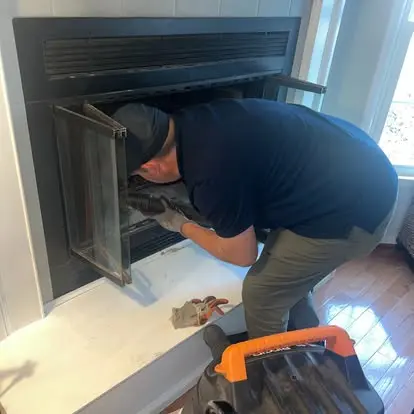 Real AirDuctVet photo
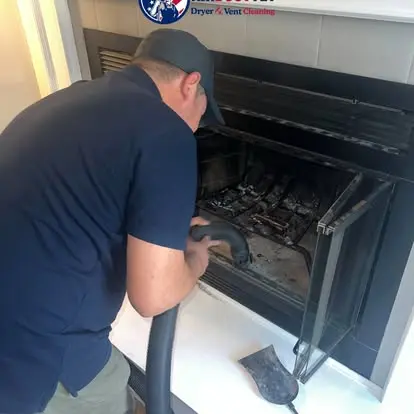 Real AirDuctVet photo
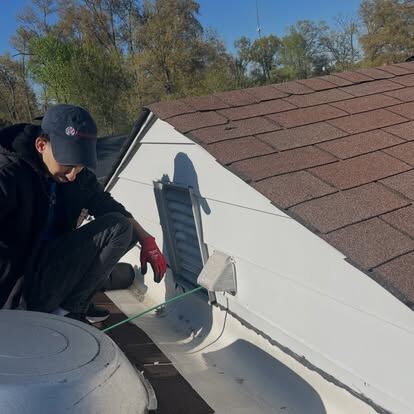 Real AirDuctVet photo
Clear, practical guidance: General education cannot replace an on-site inspection. We separate routine maintenance from conditions that need an HVAC, appliance, chimney, mold, or restoration specialist.
Do not use a fireplace when the damper will not open fully
A fireplace damper helps control the opening between the firebox and the flue. CPSC advises opening the damper before lighting a fire and keeping it open until the ashes are cool. If the handle, lever, chain, cable, or plate will not move as intended, the open position cannot be confirmed, or smoke has entered the room, leave the fireplace unused until the condition is evaluated.
Do not keep relighting a fire to test a partly open damper. If smoke enters the room, a carbon-monoxide alarm sounds, you smell fuel gas, or the fireplace or surrounding finish becomes unusually hot, follow the alarm instructions and contact the appropriate emergency service or gas utility from a safe location. Carbon monoxide has no smell, so odor is not a reliable safety test.
- Wait until the fireplace and ashes are completely cool before looking into the firebox.
- Keep a clear photo of the control and visible damper area for the service request.
- Do not climb onto the roof or reach into a flue to force a part open.
- Do not spray lubricant, cleaner, or another product into a hot or fuel-burning system.
Why does a fireplace damper become stuck?
Accessible soot, creosote, ash, fallen masonry, animal debris, or another obstruction can interfere with movement. Moisture can contribute to corrosion, and heat or a prior chimney fire can warp metal. A handle, pivot, linkage, chain, cable, spring, or top-mounted component can also loosen, break, disconnect, or fall out of alignment. The same symptom can therefore require cleaning, adjustment, repair, replacement, or a different trade.
The fireplace type matters. A traditional throat damper, a top-sealing damper, a factory-built fireplace, an insert, a wood stove, and a gas appliance do not use identical parts or operating instructions. Do not alter a gas fireplace, flue control, safety stop, or appliance component based on a generic online diagram. Use the model instructions and an appropriately qualified fireplace or appliance professional when the system is not a conventional wood-burning masonry fireplace.
What can you check safely before requesting service?
When the fireplace is cold, use a flashlight from the room to look for an obvious control, loose part, heavy deposit, nesting material, or debris that can be seen without reaching into the flue. Record whether the system burns wood or gas, when the control last worked, whether water has entered the chimney, whether smoke has spilled into the room, and whether roofing, masonry, fireplace, or chimney work was recently completed.
Find the manufacturer and model information for a factory-built fireplace, insert, stove, or gas appliance. Do not force the handle, remove the plate, pull hard on a cable, dismantle doors or panels, or test the system with a fire. A forced control can bend or disconnect a part and may make the original condition harder to document.
When can chimney sweeping help a stuck damper?
Sweeping can help when qualifying accessible soot, creosote, or removable debris is physically interfering with a serviceable damper or nearby smoke-chamber area. A technician may be able to expose the accessible plate and control, document their condition, and report whether they move after the approved cleaning. The Connecticut Department of Consumer Protection advises that a chimney professional check whether the damper opens completely and inspect it for damage such as cracks, pitting, or corrosion.
A successful cleaning does not prove that every hidden joint, liner section, control component, or top-mounted part is sound. Movement during one visit also does not certify the full fireplace or chimney system. USFA recommends professional chimney inspection and cleaning as part of heating-fire prevention, but the exact work performed still depends on the written scope and the system's condition.
When does the damper need repair instead of cleaning?
Repair or replacement is the more likely path when the plate is warped, cracked, badly corroded, missing, disconnected, incorrectly sized, or unable to stay in the required position. A failed handle, pivot, linkage, cable, spring, frame, seal, or top-mounted assembly is a mechanical condition. Cleaning deposits from around the part does not rebuild that mechanism.
The appropriate next provider may be a qualified chimney-repair contractor, fireplace specialist, mason, factory-built fireplace technician, roofer, or gas-appliance professional. The choice depends on the damper type, fuel, manufacturer, access, moisture source, surrounding construction, and whether other damage is present. Ask for the observed defect, proposed repair, parts, access, and completion check in writing before authorizing work.
What does an AirDuctVet chimney visit include?
For an approved wood-burning chimney scope, AirDuctVet can review accessible fireplace and chimney components, clean qualifying accessible deposits, document observable damper conditions, and explain findings within the written work. A camera may help document selected reachable areas, but a camera assessment is not automatically a complete Level 2 chimney inspection and cannot establish the condition of every concealed liner, joint, chase, structural component, or mechanical part.
Damper repair or replacement, masonry or liner work, roof or flashing repair, gas-appliance service, electrical work, structural correction, code certification, and hidden-building diagnostics are not automatically included. Any additional work requires separate evaluation and written approval or referral to the appropriate qualified trade.
Air-duct cleaning is a separate service. Coil cleaning must be requested, evaluated, and separately approved. Routine duct service does not automatically include mechanical diagnosis or repair, filter replacement, fireplace work, or chimney service. The written quote controls the included surfaces, access, methods, documentation, and completion checks.
Quick answers about a stuck fireplace damper
Can I use the fireplace if the damper is partly open? No. Do not light a fire unless the required open position is confirmed and the fireplace instructions permit use.
Will sweeping always free a stuck damper? No. Sweeping may remove interfering deposits, but it cannot repair corrosion, warping, broken hardware, a disconnected control, or an installation defect.
Should the damper stay open after the fire? Follow the fireplace instructions. CPSC advises keeping it open until the ashes are cool.
Does a working damper prove the chimney is safe? No. It confirms only one observable function. Blockage, creosote, liner damage, masonry defects, water entry, appliance problems, and other conditions may still require evaluation.
What should I send with an estimate request? Share the property ZIP code, fuel type, fireplace or appliance model when available, clear photos of the firebox and control, a description of how the damper behaves, and any history of smoke, water entry, animal activity, unusual heat, alarms, or recent work.
Sources and further reading
Official guidance informs the general information above. AirDuctVet's included services are defined by your written quote; local requirements and manufacturer instructions may differ.