
Why Is There Black Dust Around My Air Vents?
Black dust around air vents can come from dust, soot, moisture, damaged material, or microbial growth. Learn what to check before cleaning.
The short answer
Black dust around an air vent is not automatically mold. It may be ordinary dust darkened by airflow, soot from candles or combustion, residue collecting where humid air meets a cool register, deteriorating material, or microbial growth associated with moisture. Do not identify it by color alone. Document where it appears, check for moisture or combustion clues, and have the source evaluated before choosing cleaning or repair.
Three real AirDuctVet field photos
These authentic AirDuctVet job photos were selected for this topic. We do not use repeated AI artwork or stock photography.
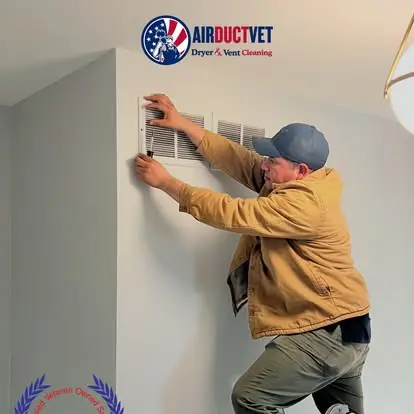 Real AirDuctVet photo
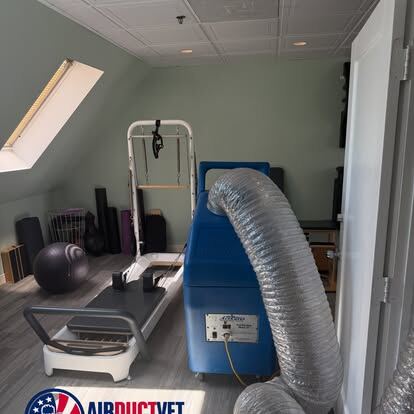 Real AirDuctVet photo
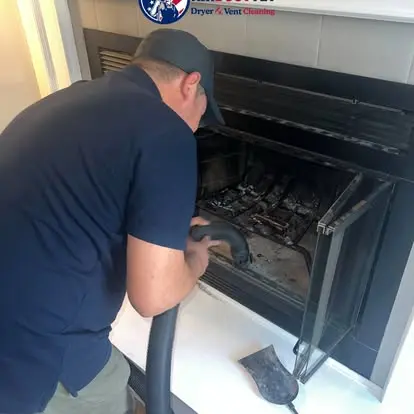 Real AirDuctVet photo
Clear, practical guidance: General education cannot replace an on-site inspection. We separate routine maintenance from conditions that need an HVAC, appliance, chimney, mold, or restoration specialist.
Why is there black dust around my air vents?
Dark residue forms when particles collect on the grille, nearby wall, ceiling, or inside an accessible duct opening. Air movement can deposit household dust at the edges of a register. Candle smoke, fireplace or cooking emissions, tobacco smoke, and other combustion particles can make the deposit darker. Moisture can also trap material on a cool surface and create conditions where microbial growth is possible.
Color alone cannot identify the material. A black mark may look alarming without being biological growth, while actual moisture-related growth can appear in several colors. The useful question is not only what the residue looks like, but where it is appearing, whether it returns after careful surface cleaning, and whether moisture, odor, combustion, filtration, or damaged duct material is involved.
What clues help narrow down the source?
Look for a pattern before disturbing the material. Residue limited to the outer edges of several supply registers may point to particle deposition around small air gaps. A deposit near candles, a fireplace, a gas appliance, or frequent cooking may suggest soot. Spotting accompanied by condensation, staining, a musty odor, or recent water intrusion needs a moisture-focused evaluation.
- Note whether the residue appears at one register, throughout one HVAC system, or across the home.
- Photograph the grille, nearby wall or ceiling, and any safely visible material before wiping it away.
- Check for condensation, roof or plumbing leaks, wet insulation, drain problems, or high indoor humidity.
- Record candle use, fireplace operation, cooking smoke, indoor smoking, renovation dust, or a recent combustion event.
- Check the filter size, fit, direction, and replacement history according to the equipment manufacturer's instructions.
- Stop and contact the appropriate qualified professional if there is active water, a burning odor, visible smoke, or suspected combustion-appliance trouble.
Could the black residue be mold?
It could be microbial growth, but appearance alone is not enough to confirm that. The EPA emphasizes controlling moisture because wet or damp materials can support mold growth. If the register repeatedly becomes damp, the surrounding surface is water-stained, or visible growth extends beyond a small accessible area, the moisture source should be found and corrected before cleaning is treated as the solution.
AirDuctVet does not diagnose a substance as mold solely from a photograph or its color. Testing, remediation, building-envelope repair, plumbing work, or HVAC moisture diagnosis may require an independent qualified professional. Painting over, spraying, or fogging a suspect area without correcting moisture can hide the symptom while the underlying condition continues.
Can air duct cleaning remove the black dust?
Cleaning can remove accessible dust and debris when the material is actually in the duct system or on serviceable components within the approved scope. It will not stop residue caused by an unresolved leak, condensation, candle or combustion soot, poor filtration, an air leak around the register, damaged insulation, or a mechanical problem. The source must be addressed or the dark material may return.
The EPA recommends considering duct cleaning based on actual conditions rather than assuming it is needed on a fixed schedule. A useful inspection documents the accessible duct interior, register condition, system pattern, and any limitation. A Cobra inspection camera may help view selected reachable sections, but it cannot pass every bend, identify an unknown substance, prove the condition of the entire concealed system, or replace laboratory analysis or HVAC diagnosis.
What should you do before wiping or vacuuming it?
Avoid dry brushing or blowing an unknown material into the room. Keep children and pets away from a visibly contaminated or wet area. If the deposit is small, dry, and limited to a removable grille, follow appropriate equipment shutoff and manufacturer guidance before any surface cleaning. Do not open sealed equipment panels or reach into moving machinery.
If the area is wet, widespread, repeatedly returns, or is linked to smoke or a combustion appliance, pause routine cleaning and arrange the appropriate evaluation. A qualified HVAC contractor may need to inspect temperature, humidity, filtration, air leakage, the evaporator coil, drain system, blower, and equipment operation. A restoration or mold professional may be needed when water damage or broader contamination is involved.
What does AirDuctVet include and exclude?
AirDuctVet can inspect accessible registers and duct sections, document visible conditions, and provide the air-duct cleaning scope approved in the written quote. Cleaning does not automatically include identifying an unknown substance, laboratory testing, mold remediation, water-damage restoration, duct sealing, insulation replacement, building repair, combustion-safety testing, or mechanical HVAC diagnosis and repair.
Coil cleaning must be specifically requested and separately evaluated and approved. Routine air-duct service does not automatically include mechanical repair or filter replacement. If the source is outside the cleaning scope, AirDuctVet may recommend an HVAC contractor, plumber, roofer, restoration firm, environmental professional, or another appropriate trade before or instead of cleaning.
AirDuctVet serves qualifying properties in Northern Virginia, Washington, DC, Maryland, Raleigh, Cary, and Miami. Share photos, the affected rooms, HVAC system count, filter information, recent water or smoke events, and any access restrictions so the correct local office can review the request.
Frequently asked questions
Does black dust mean black mold? No. Dust, soot, moisture-related residue, damaged material, and microbial growth can look similar. Color alone does not identify the substance.
Why is the residue only around the vent edges? Airflow and small gaps around a register can deposit particles along the perimeter. The grille fit, nearby surface, duct connection, filtration, and room particle sources should be checked.
Will replacing the filter solve it? A correctly selected and fitted filter is important, but replacement will not repair moisture, combustion, duct leakage, damaged insulation, or mechanical problems. Follow the equipment manufacturer's instructions.
Can AirDuctVet test the material during routine cleaning? Laboratory testing and formal mold assessment are not automatically included in routine service. They require a separate qualified scope when warranted.
Will sanitizing keep the black dust from returning? No treatment should be promised to fix an unidentified source. Moisture, smoke, filtration, leakage, or material damage must be addressed as appropriate.
How often should the ducts be cleaned afterward? There is no single fixed interval for every property. Base the decision on documented conditions, source control, equipment guidance, occupancy, and actual buildup.
Sources and further reading
Official guidance informs the general information above. AirDuctVet's included services are defined by your written quote; local requirements and manufacturer instructions may differ.