
Supply Vents vs Return Vents: What Gets Cleaned?
Supply vents deliver conditioned air and return vents pull room air back to the HVAC system. Learn how each fits into a professional duct-cleaning scope.
The short answer
As of August 2026, supply vents and return vents perform different jobs in the same HVAC system. Supply vents deliver heated or cooled air into rooms. Return vents draw room air back toward the air handler. A professional duct-cleaning quote should identify the HVAC system and the accessible supplies and returns included in the scope.
Three real AirDuctVet field photos
These authentic AirDuctVet job photos were selected for this topic. We do not use repeated AI artwork or stock photography.
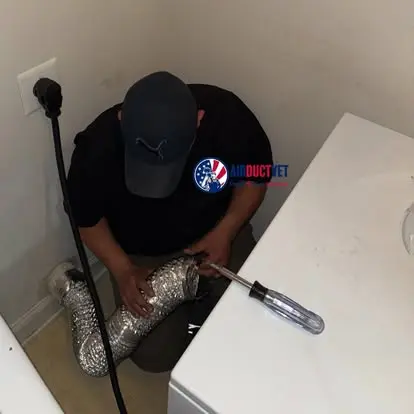 Real AirDuctVet photo
 Real AirDuctVet photo
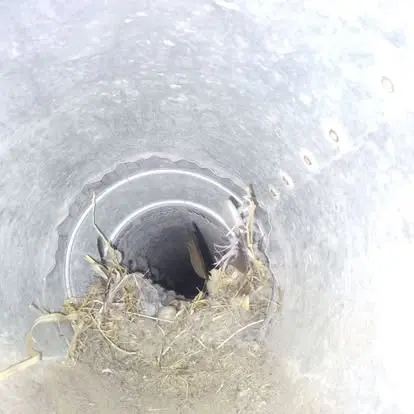 Real AirDuctVet photo
Clear, practical guidance: General education cannot replace an on-site inspection. We separate routine maintenance from conditions that need an HVAC, appliance, chimney, mold, or restoration specialist.
What is the difference between a supply vent and a return vent?
A supply register usually releases conditioned air when the system runs. Supply registers may be located on floors, walls, or ceilings and often have adjustable louvers that direct airflow into the room.
A return grille pulls air from the room toward the filter and air handler. Returns are often larger than supply registers and may not have an adjustable damper. Some homes have one central return, while others have several returns across different rooms or floors.
How can you tell which vent is a return?
With the HVAC fan operating normally, a return pulls a light tissue toward the grille while a supply pushes air outward. Do not remove covers or place objects inside the opening to test airflow. If the direction is unclear, the system layout and filter location can help a technician identify the route.
A grille's size alone does not prove its function. Additions, multiple HVAC systems, transfer grilles, and unusual remodels can create openings that look similar but serve different purposes.
Are both supply and return ducts cleaned?
A complete written scope should state which accessible supply and return pathways belong to the approved HVAC system. AirDuctVet does not assume that every grille in a property belongs to one system or can be safely accessed.
For qualifying loose dust and debris, AirDuctVet may use commercial HEPA negative-air source removal. Heavy, sticky, or construction debris can require a separately approved vent-by-vent brush and compressed-air scope. The method and included openings should be confirmed before work begins.
Why does the HVAC system count matter?
Two systems can serve different floors, additions, or zones. Cleaning the openings connected to one air handler does not automatically clean a second system. The quote should identify each unit, its accessible returns, its supply network, and any equipment-access limitations.
Condo and commercial layouts may include shared building systems or mechanical areas outside a private unit's scope. Property permission and system responsibility must be confirmed before service is promised.
What should you send for an accurate air duct cleaning quote?
Send the full property address, property type, number of HVAC systems, approximate supply and return count, equipment locations, renovation history, and photos of unusual or inaccessible openings. AirDuctVet uses those details to separate routine source removal from extensive cleaning, HVAC repair, duct repair, or another specialist's work.