
Can a Crushed Dryer Vent Hose Be Cleaned?
A crushed dryer vent hose should not simply be cleaned and reused. Learn why the restriction must be corrected and what to document before service.
The short answer
A crushed dryer vent hose should not simply be cleaned and reused. Cleaning may remove lint, but it cannot restore damaged material, correct an excessively tight bend, or create the clearance needed to keep the connector open. Stop using the dryer if the connector is torn, disconnected, severely flattened, unusually hot, or associated with smoke or a burning smell. Have the appliance position, connector, and full outdoor exhaust route evaluated against the exact dryer manufacturer's instructions before the dryer is returned to service.
Three real AirDuctVet field photos
These authentic AirDuctVet job photos were selected for this topic. We do not use repeated AI artwork or stock photography.
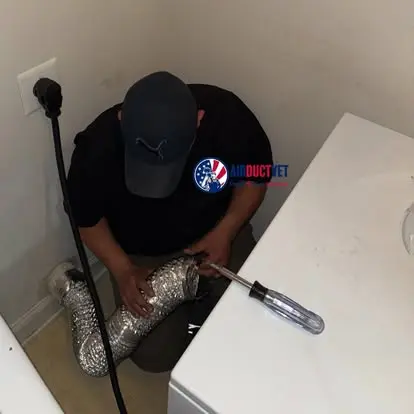 Real AirDuctVet photo
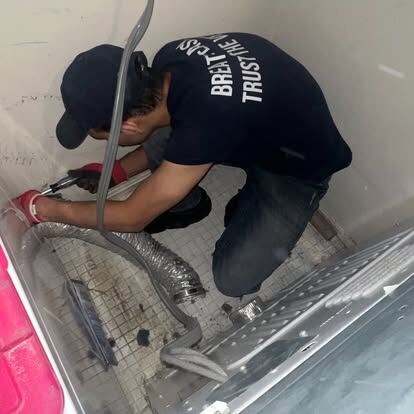 Real AirDuctVet photo
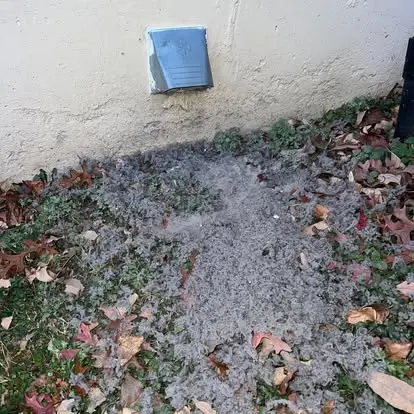 Real AirDuctVet photo
Clear, practical guidance: General education cannot replace an on-site inspection. We separate routine maintenance from conditions that need an HVAC, appliance, chimney, mold, or restoration specialist.
Why cleaning cannot fix a crushed dryer vent hose
The connector behind a conventional vented dryer carries heated, moisture-laden exhaust into the permanent duct. When it is flattened or sharply kinked, the available opening becomes smaller and airflow can be restricted. Removing lint does not restore a torn wall, reshape a permanently crushed connector, or prevent the dryer from crushing it again after the appliance is moved back.
U.S. Department of Energy Building America guidance recommends a short, direct dryer exhaust route using suitable metal duct, with the dryer installed according to its manufacturer. Whirlpool likewise advises avoiding crushed or kinked venting. The manual for the exact dryer model remains the controlling manufacturer source for connector type, clearances, route length, and installation details.
A connector that repeatedly collapses may point to too little space behind the appliance, a poor transition angle, an incorrect material, an unsecured connection, or a permanent duct opening that is badly positioned. The cause must be addressed rather than hidden by pushing the dryer back into the same position.
What should you do before moving or running the dryer?
Turn the dryer off and inspect only what is safely visible. Do not reach behind a hot appliance, pull on a gas line, disconnect wiring, or move a stacked, recessed, or tightly installed dryer without an appropriate plan. Photograph the connector from more than one angle and record the dryer make, model, fuel type, warning code, and any recent change in drying performance.
If you see smoke or sparks, smell burning or gas, hear gas escaping, or a carbon-monoxide alarm sounds, leave the affected area and follow emergency instructions from the fire department, gas utility, alarm manufacturer, or emergency services. Dryer vent cleaning is not emergency response and does not diagnose gas piping, wiring, combustion, or an internal appliance fault.
For a condominium, rental, or managed property, confirm who owns the exhaust route and who may approve repair or alteration. A visible transition connector, concealed in-unit duct, shared shaft, and exterior termination can involve different responsibilities.
- Photograph the connector, dryer clearance, and visible wall connection.
- Record the model, gas or electric fuel type, warning codes, and symptoms.
- Identify the outdoor termination from the ground if it is safely visible.
- Do not operate the dryer to prove a suspected restriction when warning signs are severe.
Repair the connector before judging the rest of the vent
The responsible provider should compare the existing connector with the exact dryer instructions and applicable property requirements. The replacement must be suitable for dryer exhaust, sized correctly, secured without fasteners that obstruct the airflow path, and arranged so the appliance does not crush or sharply bend it when returned to position.
Correcting the visible connector does not prove that the permanent route is clear. The concealed duct, elbows, exterior hood, damper, developed length, and any booster fan still require separate evaluation. Long cycles, an airflow code, unusual heat, moisture, or a flap that does not open can also involve the appliance or another part of the exhaust route.
Do not substitute plastic duct, an improvised household hose, tape alone, a lint-catching bucket, or another unapproved material. Do not connect the dryer to a bathroom fan, chimney, plumbing vent, or shared exhaust unless a specifically designed and approved system has been confirmed by the appropriate qualified professional.
When does cleaning still make sense?
After the damaged or badly positioned connector is corrected, cleaning may be appropriate when qualifying lint or debris is present in an accessible dryer exhaust route. The service scope should identify the appliance connection, permanent duct, exterior termination, access limitations, cleaning method, and the observable completion checks.
The U.S. Fire Administration advises cleaning the lint filter before and after each load and cleaning the back of the dryer where lint can build up. It also advises checking that the outdoor vent covering opens when the dryer operates. Those routine steps do not replace correction of a crushed connector or professional evaluation of an inaccessible route.
A Cobra inspection camera may document selected reachable portions of the route. It cannot see through every turn or blockage, verify every concealed joint, certify code compliance, diagnose the dryer, or prove that the full exhaust path is safe.
What AirDuctVet includes and excludes
For an approved dryer-vent scope, AirDuctVet can review the accessible appliance connection and visible termination, clean qualifying accessible lint or debris through the approved route, document observable conditions, and check airflow within the limits of the service. The written quote defines the included route and access.
Routine dryer-vent cleaning does not automatically include moving an unsafe appliance, dryer disassembly or repair, gas or electrical work, duct rerouting, opening finished surfaces, fire-stopping, exterior-cap replacement, structural or roofing work, permits, code certification, or work on a shared exhaust system. Any additional work must be separately evaluated and approved by the appropriate provider.
Air-duct cleaning is a separate service. Coil cleaning must be requested, separately evaluated, and separately approved. Routine duct service does not automatically include mechanical repair or filter replacement. AirDuctVet does not promise medical improvement, guaranteed energy savings, fire prevention, or a fixed routine cleaning interval.
Frequently asked questions
Can I bend a crushed connector back into shape? A small temporary deformation may appear to reopen, but damaged, torn, sharply creased, or repeatedly crushed material should be evaluated for replacement. The installation must remain open after the dryer is returned to position.
Can cleaning remove the restriction? Cleaning can remove qualifying lint or debris. It cannot repair damaged material, change the appliance clearance, or correct a poor connection angle.
Should I pull the dryer out myself? Not if it is gas, stacked, recessed, tightly installed, unusually heavy, or connected in a way you cannot safely manage. Arrange appropriate appliance access instead.
Will a new connector fix slow drying? It may correct one restriction, but slow drying can also involve the permanent duct, exterior damper, dryer settings, load size, power supply, or an internal appliance problem. Evaluate the whole symptom rather than assuming one cause.
How often should the dryer vent be cleaned? There is no single interval for every appliance and route. Follow the manufacturer, monitor warning signs, and base service on use, route conditions, and an appropriate assessment.
Sources and further reading
Official guidance informs the general information above. AirDuctVet's included services are defined by your written quote; local requirements and manufacturer instructions may differ.