
Is a Plastic or Foil Dryer Vent Hose Safe?
Is a plastic or foil dryer vent hose safe? Learn why plastic should be replaced, when listed metal foil may be allowed, and what to check behind the dryer.
The short answer
Plastic dryer vent hose should be replaced with the metal venting specified by the dryer manufacturer. Flexible metal foil is more complicated: some manufacturers prohibit it, while others allow only a listed product under strict limits. Check the installation instructions for the exact dryer, the duct label, and locally adopted code. A hose that is crushed, torn, excessively long, or hidden inside a wall needs correction even if its material appears acceptable.
Three real AirDuctVet field photos
These authentic AirDuctVet job photos were selected for this topic. We do not use repeated AI artwork or stock photography.
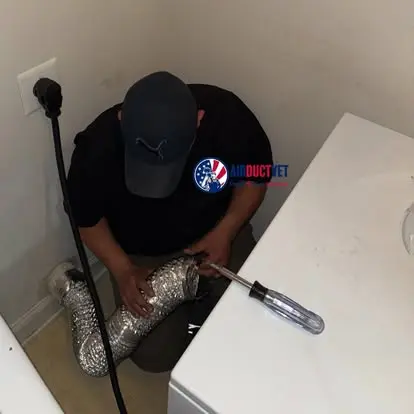 Real AirDuctVet photo
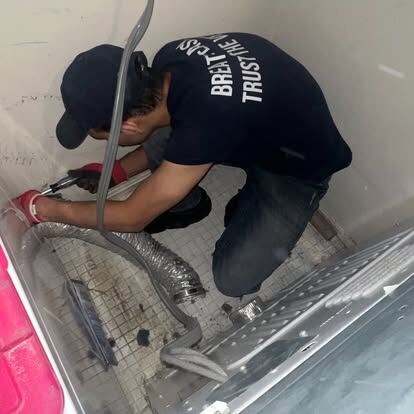 Real AirDuctVet photo
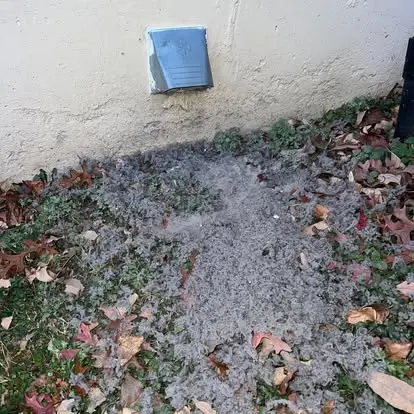 Real AirDuctVet photo
Clear, practical guidance: General education cannot replace an on-site inspection. We separate routine maintenance from conditions that need an HVAC, appliance, chimney, mold, or restoration specialist.
Is a plastic or foil dryer vent hose safe?
Plastic or vinyl hose is not an acceptable substitute for the metal dryer venting required by current appliance guidance. Whirlpool says plastic and aluminum foil materials are not recommended because they can collapse or be crushed. GE Appliances states that plastic ductwork is not approved for a safe installation and identifies rigid metal as its preferred material.
Do not assume every flexible silver hose is the same. GE allows certain UL-listed foil transition ducts under strict criteria, while current Whirlpool guidance for many models says not to use metal foil vent. The controlling source is the installation manual for the exact dryer, together with the product listing and the code adopted where the property is located.
What does code say about the connection behind a dryer?
The transition duct is the short connection between the dryer outlet and the permanent exhaust duct. The 2024 North Carolina Residential Code says that this transition duct must be one listed and labeled length complying with UL 2158A. It also limits where transition duct can be used. Other AirDuctVet service areas may use a different code edition or local amendment, so owners should verify the rule for their property.
A product label matters because appearance alone does not establish compliance. A listed flexible metal transition duct is not the same as thin plastic film with a metallic finish. The dryer's manual may be more restrictive than a general code provision and may specify the diameter, maximum transition length, acceptable duct type, and fastening method.
Why do crushing, kinks, and excess hose matter?
Dryer exhaust needs a clear path outdoors. When a flexible connector is compressed behind the appliance, its internal area becomes smaller and lint has more places to collect. Sagging, sharp bends, punctures, and loose ends can also reduce airflow or release warm, moist exhaust into the laundry area.
Whirlpool recommends rigid or flexible metal venting and a short, straight route. GE recommends rigid metal and limits any permitted flexible transition duct according to the appliance instructions. Replacing the connector does not correct a restriction farther along the route, a damaged exterior cap, a separated concealed joint, or an appliance fault.
What can you check safely behind the dryer?
Turn the dryer off before looking behind it. Do not disconnect a gas line, open electrical panels, or pull the appliance farther than its connections safely allow. If access is limited, take photographs from the side and leave movement or disconnection to an appropriately qualified person.
- Look for a plastic, vinyl, thin foil, semi-rigid metal, or rigid metal connection.
- Photograph any label or marking without removing it from the duct.
- Check for visible crushing, tight bends, tears, loose clamps, and excess unsupported length.
- Note whether the dryer was recently moved or pushed closer to the wall.
- Report long drying times, airflow warnings, unusual heat, lint behind the appliance, or a burning odor.
Can dryer vent cleaning fix the hose?
Cleaning can remove qualifying accessible lint from the approved exhaust path, but it does not make an improper connector compliant or repair torn, crushed, disconnected, or concealed ductwork. AirDuctVet can document an accessible concern and explain whether cleaning can proceed, but replacement or installation work must be separately evaluated and approved.
A Cobra inspection camera may help document reachable parts of a dryer vent route. It cannot see through every bend, confirm every concealed joint, or certify the installation. AirDuctVet's dryer vent scope also does not include appliance, gas, electrical, wall, roof, or mechanical repair unless a separate written scope specifically says so.
What should you send with a service request?
Send the dryer brand and model, a clear photo of the connection, the dryer floor, the exterior outlet location, and any building access restrictions. For a condo or managed property, confirm who controls the concealed exhaust route and whether management approval is required before work begins.
Dryer vent cleaning and air duct cleaning are separate services. Routine air duct service does not automatically include mechanical repair or filter replacement. Coil cleaning must be specifically requested, evaluated, and separately approved. The written quote should identify the requested system and any limits before the appointment.
Frequently asked questions
Is every foil dryer hose unsafe? No. Some manufacturers permit a specific listed foil transition duct under strict conditions, while others prohibit foil. Follow the exact dryer's instructions and local requirements.
Is semi-rigid metal the same as foil? No. They are different products. Check the construction, label, listing, and appliance instructions instead of relying on color alone.
Can flexible duct run inside a wall? A transition duct is generally intended to remain accessible and should not be concealed. The permanent exhaust route has separate material and installation requirements.
Can I secure the hose with screws? Do not use fasteners that project into the airflow path and catch lint. Follow the dryer manufacturer's approved clamp or joint method.
Should I keep using a crushed plastic hose? Arrange correction before continued use. Stop immediately and seek appropriate help if there is smoke, sparking, a burning odor, gas odor, or abnormal heat.
Sources and further reading
Official guidance informs the general information above. AirDuctVet's included services are defined by your written quote; local requirements and manufacturer instructions may differ.