
Can a Dryer Vent Exit Through the Roof? Safety Guide
Can a dryer vent exit through the roof? Learn when it may be allowed, what the roof cap needs, and why access and airflow matter before service.
The short answer
Yes, a dryer vent can exit through the roof when the route, materials, termination, and installation follow the dryer manufacturer's instructions and the code adopted for the property. The roof cap must discharge outdoors, open freely, resist backdraft, and remain free of screens or other features that trap lint. A roof exit is not automatically the best route because height, bends, weather exposure, and service access can make inspection and cleaning more difficult.
Three real AirDuctVet field photos
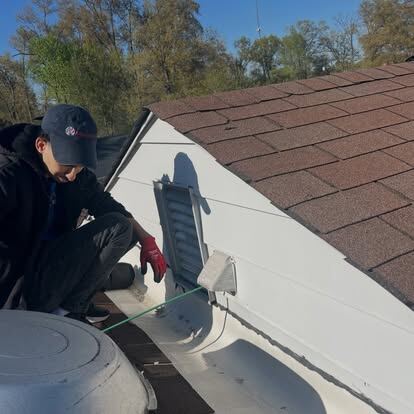
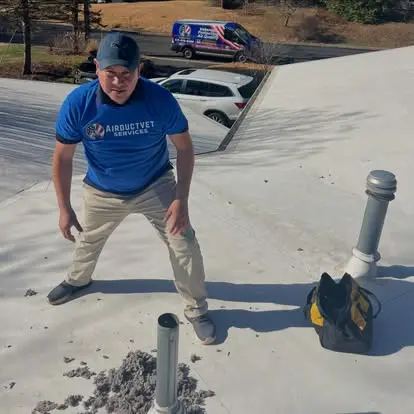
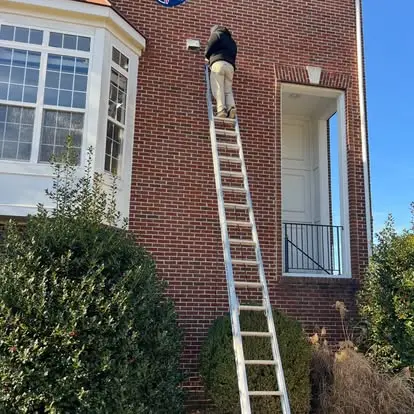
These authentic AirDuctVet job photos were selected for this topic. We do not use repeated AI artwork or stock photography.
 Real AirDuctVet photo
 Real AirDuctVet photo
 Real AirDuctVet photo
Clear, practical guidance: General education cannot replace an on-site inspection. We separate routine maintenance from conditions that need an HVAC, appliance, chimney, mold, or restoration specialist.
Can a dryer vent exit through the roof?
Yes, but permission depends on the specific dryer, route, roof termination, and locally adopted requirements. The International Residential Code requires dryer exhaust to terminate outdoors and addresses the termination opening, backdraft damper, clearances, and screen prohibition. The dryer manufacturer's installation instructions also control the permitted duct length, material, diameter, and number of turns for that model.
Whirlpool's dryer guidance recognizes that a vent may end at an exterior exhaust hood or roof cap. It also says the best venting is the shortest and straightest practical path outdoors. A roof route should therefore be evaluated as a complete system, not approved simply because a roof cap is present.
What makes a roof dryer vent different?
A roof termination often requires a vertical rise and may include several elbows before the duct reaches the cap. Each added turn and length of duct can increase airflow resistance. The cap is also exposed to rain, wind, nesting activity, roofing work, and debris that may not be visible from the ground.
Safe service access matters just as much as the duct condition. A technician may be unable to reach a steep, wet, fragile, or unusually high roof without a different access plan. Interior or attic access may help in some homes, but it does not automatically provide a complete path to the exterior termination.
What should a proper roof termination include?
The termination should be a dryer-compatible roof cap sized for the approved duct, with a backdraft damper that opens freely when the dryer runs. It should discharge outdoors without a screen across the opening. The cap and surrounding roof assembly must also be installed so they do not create an obvious water-entry or structural concern.
- A freely moving damper that is not painted, sealed, or jammed shut.
- No fine mesh or screen that can collect lint at the outlet.
- A clear discharge path that is not blocked by nest material or roof debris.
- Approved metal exhaust duct that follows the dryer manufacturer's instructions.
- An access plan for inspecting and cleaning the full route safely.
Why can a roof vent still have weak airflow after cleaning?
Removing accessible lint does not correct every possible restriction. Weak airflow can remain when the transition duct behind the dryer is crushed, the route is longer or more complex than the appliance allows, an elbow is damaged, a concealed joint has separated, or the roof cap does not open fully. Whirlpool's Check Vent guidance tells owners to consider the lint screen, crushed or kinked venting, the entire exhaust run, the exterior hood, route length, and elbows.
A Cobra inspection camera may help document accessible portions of a dryer vent, but it cannot see through every bend or prove that every concealed joint is intact. Cleaning also does not replace roofing work, duct reconstruction, appliance diagnosis, or correction of an improper installation.
What does AirDuctVet check before roof vent service?
AirDuctVet reviews the dryer location, visible transition connection, outlet location, roof height and pitch, available interior or attic access, route information, and the condition of safely observable components. Photos of the exterior and the area behind the dryer help determine whether routine cleaning, special access, repair coordination, or appliance service should come first.
The approved dryer vent scope covers only the work listed in the quote. Roof repair, flashing repair, concealed duct replacement, mechanical repair, and appliance repair are not automatically included. Dryer vent cleaning is also separate from air duct cleaning. Routine air duct service does not automatically include coil cleaning, filter replacement, or mechanical repair. Coil cleaning must be requested, evaluated, and separately approved.
Frequently asked questions
Is a wall exit always better than a roof exit? Not always. A short, direct wall route is often easier to inspect and service, but the correct route depends on the building and the dryer's instructions.
Can a roof cap have a screen to stop birds? The IRC prohibits screens at dryer exhaust terminations. Any animal-deterrent product must preserve the required opening and damper operation and comply with local requirements.
Does cleaning from inside guarantee the roof cap is clear? No. The exterior termination still needs to be evaluated when it can be reached or observed safely.
Can AirDuctVet work on every roof? No. Roof height, pitch, surface condition, weather, anchoring, and property access can limit service. The team may recommend another safe access method or a qualified roofing or duct professional.
How often should a roof dryer vent be cleaned? There is no single schedule that fits every property. Follow the dryer manufacturer's guidance and respond to longer drying times, airflow warnings, visible lint, a damper that does not open freely, or other changes in performance.
Sources and further reading
Official guidance informs the general information above. AirDuctVet's included services are defined by your written quote; local requirements and manufacturer instructions may differ.