
Why Is There Water in My Dryer Vent? What to Check
Water in a dryer vent may come from condensation, restricted airflow, rain entry, or damaged ductwork. Learn what to check and when cleaning is not enough.
The short answer
Water in a dryer vent usually comes from condensation or rain intrusion, but it can also point to restricted airflow, a disconnected joint, or damaged ductwork. Stop using the dryer if water is reaching the appliance, electrical connection, or gas components. Cleaning may remove an accessible lint restriction, but standing water, insulation problems, roof leaks, duct damage, and appliance faults require separate diagnosis and approval.
Three real AirDuctVet field photos
These authentic AirDuctVet job photos were selected for this topic. We do not use repeated AI artwork or stock photography.
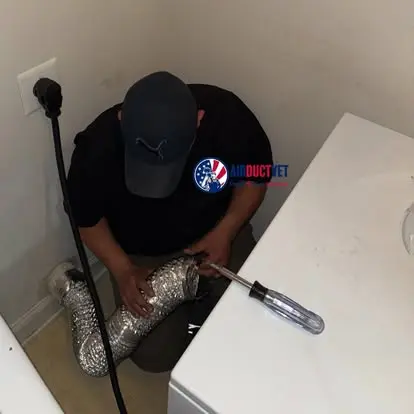 Real AirDuctVet photo
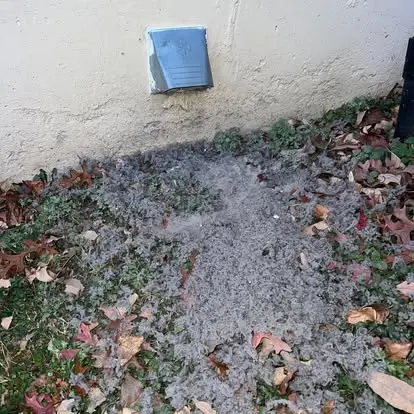 Real AirDuctVet photo
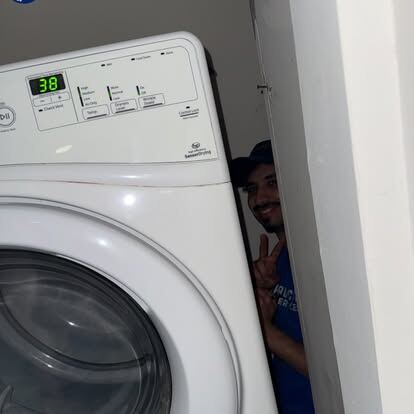 Real AirDuctVet photo
Clear, practical guidance: General education cannot replace an on-site inspection. We separate routine maintenance from conditions that need an HVAC, appliance, chimney, mold, or restoration specialist.
Why does water collect in a dryer vent?
A vented dryer removes moisture from clothing and sends warm, humid air outdoors. If that air slows down or meets a cold duct surface, some moisture can condense into liquid water. GE Appliances explains that debris in an exhaust route can keep warm, moist air inside the vent long enough for condensation to form as the air cools.
Cold attics, crawlspaces, garages, and long exterior runs can make condensation more likely. LG advises keeping the exhaust route short and straight and insulating ductwork that passes through unheated areas to reduce condensation and lint buildup. Those installation details must be evaluated separately from routine cleaning.
Could the water be coming from outside?
Yes. A damaged exterior hood, roof cap, flashing detail, or surrounding wall or roof assembly can admit rain. A damper that is missing, stuck, or damaged may also leave the opening exposed. The 2024 International Residential Code requires dryer exhaust to terminate outdoors and addresses the backdraft damper, opening, clearances, and screen prohibition, while locally adopted rules and the dryer's instructions control the actual installation.
Water near a roof termination does not prove that the dryer vent caused a roof leak. Roofing, flashing, siding, and building-envelope concerns belong to an appropriately qualified contractor. Cleaning lint from the duct cannot repair those components.
What can you check safely before service?
Turn the dryer off and look for the location and amount of moisture without opening electrical or gas components. Note whether water appears behind the dryer, at a ceiling or wall penetration, inside an accessible duct, or around the exterior termination. Photographs of the dryer connection and outside hood or roof cap can help the office plan the correct next step.
- Check whether the lint screen is clean and undamaged.
- Look for a crushed, loose, or visibly torn transition connection behind the dryer.
- Observe whether the exterior damper opens when the dryer runs, but only from a safe location.
- Record recent rain, freezing weather, roof work, appliance warnings, and longer drying cycles.
- Do not enter an unsafe attic, climb onto a roof, or reach into a moving appliance to investigate.
When can dryer vent cleaning help?
Cleaning can help when accessible lint buildup is restricting the exhaust path and contributing to slow, moisture-laden airflow. AirDuctVet evaluates the accessible connection, route, termination, and airflow within the approved dryer vent scope. A Cobra inspection camera may help document reachable sections, but it cannot see through every bend or prove that every concealed joint is intact.
Cleaning is not a repair for a separated joint, crushed duct, improper route, missing insulation, leaking roof cap, failed booster fan, or appliance problem. Those findings require a separate qualified service and written approval. A wet route may need to be dried and its moisture source corrected before normal use resumes.
What should Northern Virginia and DC homeowners report?
For a Northern Virginia, Washington, DC, or Maryland property, report whether the vent crosses a cold attic, garage, crawlspace, shared shaft, high exterior wall, or roof. Also identify the dryer floor, property type, outlet location, recent weather, building rules, and whether the problem occurs after every load or only during cold or wet conditions.
AirDuctVet will separate cleaning from installation, appliance, roofing, and mechanical work in the quote. Dryer vent cleaning is also separate from air-duct cleaning. Routine duct service does not automatically include coil cleaning, filter replacement, or mechanical repair. Coil cleaning must be requested, evaluated, and separately approved.
Frequently asked questions
Can lint cause water in a dryer vent? Lint can restrict airflow and keep humid exhaust in the duct longer, which may contribute to condensation. It is not the only possible cause.
Will cleaning stop the water? Only if removable buildup is the relevant restriction. Cleaning cannot correct a leak, damaged duct, missing insulation, poor route design, or appliance fault.
Should I keep using the dryer? Do not use it when water is reaching the appliance, electrical connection, or gas components, or when you notice a burning smell, smoke, sparks, or abnormal heat. Arrange the appropriate inspection first.
Can a roof vent let rain into the duct? A damaged roof cap or surrounding roof assembly can admit water, but the source needs to be identified before repair. Dryer vent cleaning does not include roofing or flashing repair.
How often should the vent be cleaned? There is no single interval that fits every property. Follow the dryer manufacturer's instructions and respond to warning signs, route conditions, and documented findings.
Sources and further reading
Official guidance informs the general information above. AirDuctVet's included services are defined by your written quote; local requirements and manufacturer instructions may differ.