
How Long Does Dust Stay Airborne After Vacuuming? Guide
How long does dust stay airborne after vacuuming? There is no single time. Particle size, airflow, filtration, and vacuum quality all affect settling.
The short answer
There is no single settling time for household dust. Larger particles can fall quickly, while finer particles may remain suspended much longer when people are moving, fans are running, or the HVAC system is circulating air. The vacuum, filter, room layout, humidity, and amount of disturbed material all affect what happens next.
Three real AirDuctVet field photos
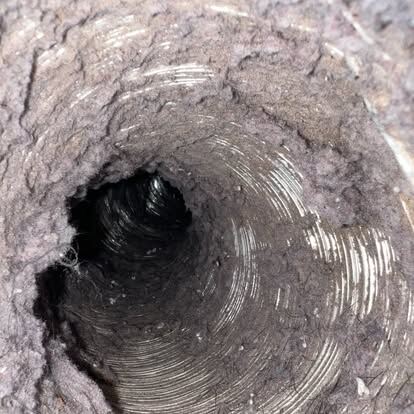
These authentic AirDuctVet job photos were selected for this topic. We do not use repeated AI artwork or stock photography.
 Real AirDuctVet photo
 Real AirDuctVet photo
 Real AirDuctVet photo
Clear, practical guidance: General education cannot replace an on-site inspection. We separate routine maintenance from conditions that need an HVAC, appliance, chimney, mold, or restoration specialist.
Why dust does not settle on one schedule
Household dust is a mixture of particles with different sizes and weights. A visible speck behaves differently from very fine material that is difficult to see. Open doors, ceiling fans, supply air, foot traffic, and vacuum exhaust can keep particles moving or lift settled material again.
A well-sealed vacuum with effective filtration generally releases less captured material than a leaking unit or an overfilled bag or bin. Vacuum slowly, maintain the machine according to its instructions, and avoid shaking dusty filters inside the living area.
Practical steps after vacuuming
Give the room time to become calm before wiping higher surfaces that still show dust. A slightly damp microfiber cloth can capture settled material without immediately pushing it back into the air. Follow the equipment maker's instructions for replacing or cleaning the HVAC filter.
- Use the correct vacuum attachment and make slow passes.
- Check the vacuum bag, bin, seals, and filter before starting.
- Keep unnecessary fans off while loose dust is being captured.
- Clean from higher surfaces toward the floor when practical.
When the HVAC system may be part of the question
Dust on furniture does not prove that the ductwork needs cleaning. Outdoor particles, fabrics, pets, cooking, open windows, renovations, vacuum leakage, and ordinary activity can all contribute. A professional should look for accessible accumulation or physical debris rather than diagnosing the ducts from a countertop alone.
AirDuctVet uses commercial HEPA negative-air equipment for appropriate loose source removal. Heavy, sticky, or construction material may call for an approved vent-by-vent brush and compressor scope. Cleaning cannot stop new household dust from entering later.
When to request an evaluation
Consider a property-specific evaluation after major construction, when physical debris is visible inside accessible openings, or when a known event introduced material into the system. Share photos, the HVAC system count, property age, and renovation history so the office can distinguish a duct question from a housekeeping or equipment issue.