
Why Does My Dryer Vent Keep Clogging?
If a dryer vent keeps clogging, repeated lint removal may not solve a crushed connector, long route, blocked hood, duct damage, appliance problem, or installation defect.
The short answer
If your dryer vent keeps clogging, do not assume that repeated brushing is the complete solution. A restriction can return because the connector is crushed, the route is long or has too many bends, the duct material or diameter is wrong, a joint catches lint, the exterior hood is blocked, the route is damaged or disconnected, or the dryer's internal airflow is weak. The next visit should document where material is collecting and whether the full approved route was reached. Cleaning removes qualifying lint; it does not repair the appliance, reroute concealed ductwork, or correct every installation defect.
Three real AirDuctVet field photos
These authentic AirDuctVet job photos were selected for this topic. We do not use repeated AI artwork or stock photography.
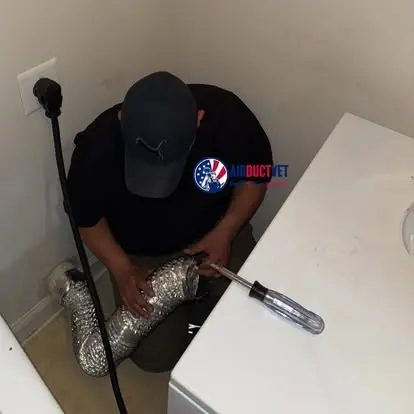 Real AirDuctVet photo
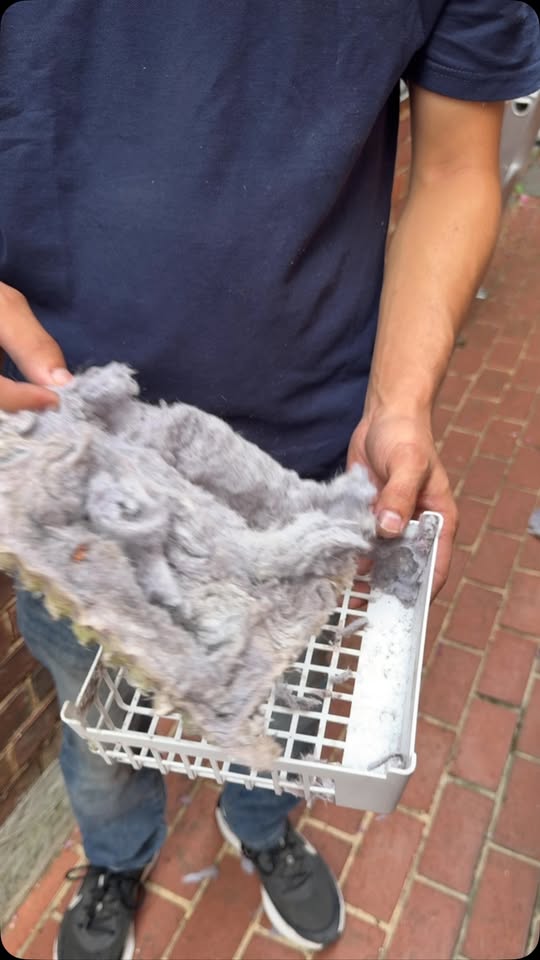 Real AirDuctVet photo
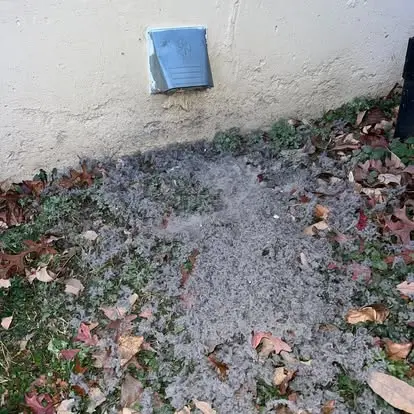 Real AirDuctVet photo
Clear, practical guidance: General education cannot replace an on-site inspection. We separate routine maintenance from conditions that need an HVAC, appliance, chimney, mold, or restoration specialist.
First, define what keeps clogging means
A vent that collects some lint over time is different from a route that becomes severely restricted shortly after a complete service. Record the cleaning date, dryer model, number of loads, drying-time change, warning codes, and where lint was found. Also confirm whether the prior service reached the complete private exhaust route and exterior termination or stopped at an inaccessible section, shared shaft, roof cap, booster fan, or unsafe appliance connection.
The location of the material matters. Lint concentrated behind the dryer points toward the transition connector, appliance clearance, or internal blower path. Material at one elbow can indicate a sharp turn, loose joint, fastener, or damaged section. A blocked exterior hood can involve lint, a stuck damper, nesting material, an unsafe screen, vegetation, snow, or a termination that does not open freely.
A crushed or kinked connector can restart the restriction
The short connection behind the dryer can be crushed when the appliance is pushed back, kinked by excess length, or pulled partly loose when a stacked unit moves. CPSC warns that plastic or foil accordion-style material can trap lint and is more vulnerable to kinking and crushing. The exact dryer installation instructions control the permitted connector and exhaust material.
Do not keep pushing a dryer against a compressed connector or operate it while the exhaust is disconnected. If the appliance cannot be moved safely, the gas connection is involved, or the connector is damaged, stop and use the appropriate appliance or qualified trade. Replacing or reconfiguring a connector is separate from routine vent cleaning and must be approved in the written scope.
Long runs and repeated bends reduce airflow
Whirlpool identifies excessive vent length and too many elbows as possible causes of restricted airflow and long drying times. Every turn adds resistance, and a long vertical or concealed run can collect material at low points, offsets, joints, or a roof termination. A new dryer can reveal a restriction in an old household vent even when the previous appliance did not display an airflow warning.
The permitted length depends on the exact dryer, duct diameter, elbow type, termination, and locally adopted requirements. Cleaning cannot certify that a route is correctly designed. If the path exceeds the appliance instructions, repeatedly traps material, or cannot be reached safely, a qualified mechanical or building contractor may need to evaluate rerouting, access, support, or replacement.
The duct itself may be catching lint
An improper fastener projecting into the airflow, a separated seam, crushed section, sag, rough transition, reduced diameter, damaged liner, or poorly supported duct can catch lint after the open portions are cleaned. Water intrusion or condensation can make lint adhere more readily. A brush passing through one time does not prove that every concealed joint is intact or that the route will remain clear.
A Cobra inspection camera may document selected reachable sections and help identify a joint, deposit, bend, water, or visible damage. It cannot pass every obstruction, see through the duct wall, measure the full route, or certify code compliance. Opening a wall or ceiling, reconstructing a route, replacing duct, sealing joints, or repairing water entry requires separate evaluation and written approval by the appropriate provider.
Check the outdoor hood and any building equipment
The U.S. Fire Administration advises confirming that the outdoor vent covering opens while the dryer operates. A damper that barely moves, a hood packed with lint, a restrictive screen, an inactive nest, or a damaged roof cap can limit airflow at the end of an otherwise clean route. Do not climb onto a roof or use an unsafe ladder to inspect it yourself.
Condominiums and apartments can add shared shafts, central fans, access rules, roof controls, or fire-rated assemblies. Cleaning one unit connection does not establish that shared equipment is working. The property manager should identify ownership and access responsibility, and a qualified building or mechanical provider may need to test or repair shared exhaust equipment.
The dryer can contribute to weak exhaust airflow
The household vent may be clean while the dryer's internal lint path, blower wheel, sensor, heating system, or another appliance component is not operating correctly. CPSC notes that lint can collect inside the dryer as well as in the exhaust duct. Vent cleaning does not open the dryer cabinet or diagnose internal components.
If the complete route and exterior hood are confirmed clear but drying remains slow, airflow stays weak, a warning returns, or the appliance makes a new noise, arrange model-specific appliance service. Stop using the dryer for smoke, sparks, a burning or gas odor, scorching, severe vibration, a detached connector, or little to no exterior exhaust. Follow emergency and utility guidance for fire, gas, or electrical concerns.
What should a repeat-clog inspection document?
A useful assessment should identify the appliance connection, accessible route, exterior termination, route length and bends when known, duct material, any shared or powered component, where lint was concentrated, access limits, and the airflow or damper observation after work. Before-and-after photos should be tied to their location rather than presented as proof of the entire concealed system.
Ask whether the prior cleaning included the same full route, whether the connector was reinstalled without crushing, and whether the exterior damper opened under operation. If the provider finds damage or an installation concern, request the evidence, the limitation of cleaning, and a separate repair recommendation. Do not authorize an urgent add-on solely because a photo shows lint without identifying where the photo was taken.
- When was the route last cleaned, and which sections were actually reached?
- Where is the recurring material concentrated?
- Is the connector crushed, kinked, loose, or made of unsuitable material?
- Does the exterior hood open freely during an operating check?
- Are route length, bends, diameter, damage, moisture, or a shared fan relevant?
- Does airflow remain weak after the complete accessible route is clear?
- Which finding needs cleaning, appliance service, duct repair, or property-management action?
What AirDuctVet can clean and what requires separate work
For an approved dryer-vent scope, AirDuctVet can review the accessible appliance connection, clean qualifying lint from the approved private exhaust route, service the safely accessible exterior termination included in the quote, use a Cobra camera in selected reachable areas when helpful, and document an airflow or damper observation after cleaning. Roof, high-wall, shared-system, booster-fan, active-wildlife, damaged-duct, and concealed-access conditions require separate review and may change or stop the work.
Routine dryer-vent cleaning does not automatically include appliance disassembly or repair, gas or electrical work, connector or duct replacement, rerouting, opening finished surfaces, roof or structural repair, exterior-cap replacement, booster-fan service, permits, code certification, or work on a shared exhaust system. Any additional work must be separately evaluated and approved, and some findings require another qualified trade.
There is no one cleaning interval that fits every home. Manufacturer and fire-safety guidance, dryer use, route length, appliance performance, pets, property rules, and observed lint or airflow conditions can all affect the plan. No cleaning can guarantee utility savings, prevent every fire, or permanently correct an unresolved route or appliance defect.
Frequently asked questions
Why did my dryer vent clog again after cleaning?
The prior service may not have reached the full route, or the connector, route design, duct condition, exterior hood, shared equipment, or dryer may still restrict airflow and collect lint. The next assessment should identify where the material returned.
Can a long dryer vent keep collecting lint?
Yes. Extra length and elbows add resistance and can encourage lint collection. Compare the actual route with the exact dryer's installation instructions and have unsafe or noncompliant conditions evaluated by the appropriate qualified provider.
Will another cleaning fix the problem permanently?
Only if removable lint is the complete cause. Cleaning cannot repair a crushed connector, separated joint, sag, damaged duct, failed booster fan, blocked shared system, or appliance fault.
Can a camera find the cause of repeated clogs?
A Cobra camera can document selected reachable areas, but it cannot see every concealed joint, pass every turn, test appliance performance, or certify the full installation.
How often should a dryer vent be cleaned?
Use the appliance instructions, property requirements, route conditions, dryer use, warning signs, and professional findings rather than one universal promise. Reduced airflow, longer drying, heat, lint at the hood, or a warning code deserves timely investigation.
Sources and further reading
Official guidance informs the general information above. AirDuctVet's included services are defined by your written quote; local requirements and manufacturer instructions may differ.