Choose your area for local availability
Veterans Preventing Dryer Fire Hazards & Improving Your Indoor Air Quality
Choose your local officeTap the correct number for your area
Start here before choosing an air duct service

Air Duct Cleaning Homeowner Guide

This air duct cleaning guide consolidates AirDuctVet’s most useful homeowner answers into one practical resource. It explains when cleaning may be helpful, how professional source removal works, what equipment does, how to prepare, and when cleaning is not the correct solution.

The complete starting point

Air duct cleaning should solve a defined source-removal problem

Air duct cleaning removes accessible dust, debris, and other physical material from qualifying HVAC ductwork and components. It can be useful after dust-producing construction, when debris is visibly present, when pests or objects entered the system, or when an inspection identifies buildup that can be removed safely. It is not automatically necessary because a house feels dusty, and it is not a substitute for filtration, housekeeping, HVAC repair, moisture control, or environmental remediation.

A good provider asks about the system count, duct material, property age, renovation history, symptoms, access, and service goal before recommending a method. The quote should identify the included systems and components, the equipment plan, important exclusions, and conditions that could change the work. Homeowners should be cautious when an unusually low advertisement never asks how many systems the property has or what the offer includes.

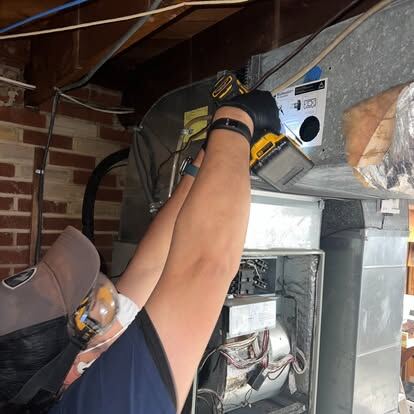
AirDuctVet uses HEPA-filtered negative-air platforms, compressed-air agitation, rotating brushes, cameras, and register-level tools. The Air-Care TurboJet Max II is rated up to 3,000 CFM free air, while the 220-volt HyperVac Revolution Hybrid is rated at 5,000 CFM with filters installed. Those machine ratings do not replace a safe connection, adequate filtration, suitable agitation, and a method matched to the duct material.

Evaluate the actual condition

Signs that justify a closer look

One symptom rarely proves the ducts need cleaning. Combine visible evidence, property history, system behavior, and a qualified inspection before deciding.

01

Visible material inside accessible ducts

Dust on a grille is not the same as heavy buildup inside the system. A useful inspection looks beyond the face of the register and documents accessible conditions.

02

Recent construction or renovation

Drywall dust, sawdust, insulation, and physical debris can enter open registers or an operating HVAC system. Final cleaning is usually most useful after dust-producing work is complete.

03

Pest, object, or debris entry

Rodent evidence, insects, toys, nesting material, or loose construction debris calls for source identification and the appropriate cleaning or pest-control response.

04

A known event affecting the system

Water intrusion, smoke, equipment failure, or contamination concerns require the cause to be addressed first. Cleaning may be one part of the plan, but not the complete remedy.

What professional air duct cleaning should explain

Which HVAC systems, supply branches, returns, trunks, registers, and accessible components are included
Which negative-air platform and agitation tools fit the property and duct material
How finished areas and registers will be protected during access
Whether camera views or accessible before-and-after photos are available
How flexible, lined, fragile, damaged, or inaccessible duct sections will be handled
What HVAC repair, moisture, remediation, or structural work is outside the scope
Which property conditions could require a revised plan and customer approval
How the completed work, payment, and workmanship follow-up will be reviewed
Professional service sequence

A practical air duct cleaning sequence

  1. 01

    Confirm the system count, duct type, access, recent construction, visible concerns, and the reason for requesting service.

  2. 02

    Inspect accessible returns, supplies, equipment connections, and reported trouble spots. Use a camera where the route allows a useful view.

  3. 03

    Protect work areas, connect the selected HEPA negative-air equipment, and establish controlled airflow through the planned system.

  4. 04

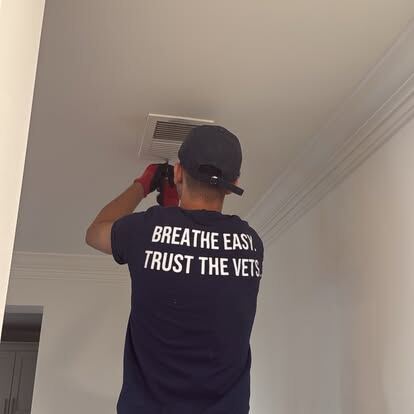
    Agitate qualifying branches and components with compressed-air whips, register tools, or a rotating-brush system appropriate to the material and condition.

  5. 05

    Collect loosened debris, document accessible results, identify damage or unresolved sources, and explain any next step that belongs to another qualified trade.

Honest limits

Problems cleaning alone does not solve

Air duct cleaning is a source-removal service. It should not be sold as a cure for every dust, odor, health, airflow, or HVAC complaint.

A leaking return, poor filter fit, unsealed bypass, or damaged duct can keep introducing dust until it is repaired.
Wet insulation, active leaks, condensation, and uncontrolled humidity require moisture correction before a lasting cleaning result is possible.
Low airflow can involve a dirty coil, failed blower, closed damper, crushed duct, undersized system, balancing issue, or another mechanical condition.
Routine cleaning is not mold testing or licensed remediation and does not provide a medical diagnosis.
Odors may come from drains, appliances, animals, building materials, crawlspaces, or HVAC components outside the cleaned duct surfaces.
Fragile, inaccessible, or damaged ductwork may need repair or replacement instead of more aggressive agitation.
Straight homeowner answers

Air Duct Cleaning Guide questions

How often should air ducts be cleaned?+

There is no useful one-size interval for every property. Base the decision on inspection, visible material, renovation history, pests, a known event, system condition, and the cause of the concern rather than a calendar alone.

Can homeowners clean air ducts themselves?+

Homeowners can clean registers and maintain filters, but a household vacuum does not establish controlled negative pressure throughout the system. For internal duct cleaning, choose a provider that can explain containment, agitation, filtration, access, and limitations.

Will air duct cleaning make the house less dusty?+

It may reduce a documented duct source, but household dust also comes from people, pets, fabrics, outdoor air, leaks, poor filtration, and cleaning habits. The result depends on whether the ductwork was a meaningful source and whether other causes are corrected.

How long does professional air duct cleaning take?+

Time varies with system count, property layout, duct material, access, buildup, construction debris, equipment route, and the approved method. A useful quote explains the scope rather than promising the same short appointment for every home.

Need an answer for your property?

Share the ZIP code, property type, system or vent route, symptoms, access, and photos. AirDuctVet will confirm local coverage and prepare a free, property-specific quote.