
How Far Should a Dryer Vent Be From a Window?
Model IRC guidance generally keeps a dryer exhaust termination at least 3 feet from building openings, but local code and dryer instructions control.
The short answer
Under the model International Residential Code, a dryer exhaust termination is generally kept at least 3 feet in any direction from openings into a building, including an operable window. That is a starting point, not universal approval: the code adopted by the city or county, local amendments, the dryer manufacturer's instructions, and the actual wall layout control. Cleaning can remove qualifying accessible lint, but it cannot relocate or certify a poorly placed outlet.
Three real AirDuctVet field photos
These authentic AirDuctVet job photos were selected for this topic. We do not use repeated AI artwork or stock photography.
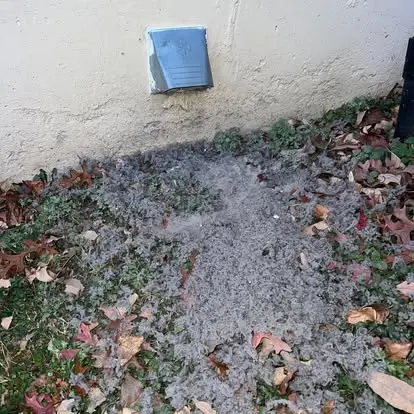 Real AirDuctVet photo
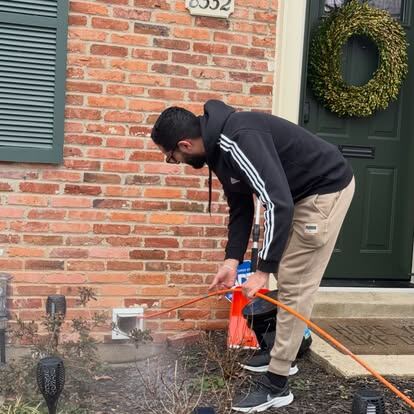 Real AirDuctVet photo
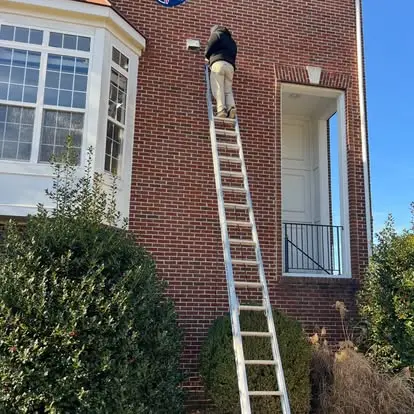 Real AirDuctVet photo
Clear, practical guidance: General education cannot replace an on-site inspection. We separate routine maintenance from conditions that need an HVAC, appliance, chimney, mold, or restoration specialist.
What distance applies between a dryer vent and a window?
The model IRC says a dryer exhaust opening should be at least 3 feet in any direction from openings into a building. An operable window is the clearest example because it can admit outdoor air and exhaust. The measurement is directional, so an outlet directly below or beside a window is not automatically acceptable just because the wall has open space.
A fixed, sealed window may be treated differently from an opening that can admit air, but homeowners should not make that call from appearance alone. The locally adopted code, amendments, permit history, manufacturer instructions, and authority having jurisdiction determine what is acceptable at a specific property.
Why does the termination location matter?
A dryer outlet releases warm, moist, lint-bearing air. If it is too close to an open window, door, or air intake, some exhaust can return to the building instead of dispersing outdoors. The termination also needs enough open space for its damper to move and for exhaust to leave without being blocked by soil, snow, vegetation, stored items, or a nearby structure.
Whirlpool advises keeping the route as short and straight as practical and locating the outside hood at least 12 inches above the ground or any object that may obstruct exhaust. That manufacturer guidance addresses obstruction, while the model-code separation from building openings addresses a different concern. Both may apply, along with model-specific installation instructions.
What should be checked around the exterior outlet?
The visible outlet should be evaluated together with the complete route. A compliant-looking cover does not prove that the concealed duct is correctly sized, supported, joined, or within the dryer's allowed equivalent length. Likewise, a clean route does not make an improperly located outlet acceptable.
- Measure from the exhaust opening to nearby operable windows, doors, and other openings into the building.
- Check the dryer manual and the locally adopted code rather than relying on a universal online distance.
- Confirm that the backdraft damper opens freely and that shrubs, decks, snow, or stored items do not obstruct discharge.
- Do not add a screen to a dryer termination when the adopted code or manufacturer prohibits it; screens can trap lint.
- Document high, roof, multifamily, or shared-space outlets before scheduling work because safe access and property rules can limit service.
Can cleaning solve a vent that is too close to a window?
No. Cleaning may remove qualifying accessible lint and improve airflow when buildup is the restriction. It does not move the outlet, repair wall or roof penetrations, redesign the route, approve an installation, or correct a clearance that does not meet the applicable requirements.
Relocation may involve siding, masonry, roofing, fire-rated construction, an association or building approval, a permit, and appliance or mechanical work. Those items require a separate written scope and may need another qualified contractor. An uncertain installation should be reconciled with the local authority or an appropriately qualified professional before reconstruction.
Can a Cobra camera confirm the outlet is code-compliant?
A Cobra inspection camera may help document selected reachable portions of a dryer exhaust route, including visible lint, a joint, water, or a change in direction. It cannot measure every exterior clearance, pass every bend, see through an obstruction, verify concealed fire stopping, or confirm the entire installation against every local requirement.
Camera footage is evidence from the sections actually reached. It can support a cleaning or referral decision, but it is not a permit inspection, installation certification, or guarantee that the full concealed route is compliant.
What is included and excluded from AirDuctVet service?
For a qualifying dryer-vent cleaning scope, AirDuctVet can review accessible connections and the visible termination, clean qualifying accessible lint, document observable conditions, and check airflow within the approved work. Outlet relocation, duct reconstruction, wall or roof openings, dryer repair, gas or electrical work, waterproofing, permits, and code certification are not automatically included and may require another qualified trade.
Air-duct cleaning is a separate service. Coil cleaning must be specifically requested, separately evaluated, and approved. Routine duct service does not automatically include mechanical repair or filter replacement. Every added service must appear in the written scope before work begins.
AirDuctVet reviews qualifying dryer-vent requests in Northern Virginia, Washington, DC, Maryland, Raleigh, Cary, and Miami. The same evidence-based review applies in every market, while the adopted code, property rules, dryer model, route, and safe access determine the next step.
Frequently asked questions
Is 3 feet always the required dryer vent distance from a window? No. Three feet is a common model-IRC starting point for openings into a building. The locally adopted code, amendments, and dryer instructions control at the property.
Is a fixed window treated the same as an operable window? Not necessarily. A sealed fixed window may not be an opening into the building, but the local authority should interpret the adopted language and actual assembly.
Can the outlet be directly below a window? Only if the measured separation and all other applicable requirements are satisfied. Being below the window does not cancel the directional clearance.
Can a cover redirect exhaust away from the window? Do not improvise a deflector or restrictive cover. Use an approved termination that follows the dryer instructions and locally adopted requirements, with a freely operating backdraft damper.
Should a screen be installed over the dryer outlet? The model IRC prohibits screens at dryer exhaust terminations because they can collect lint. Verify the adopted local rule and manufacturer instructions, and use the required backdraft damper or approved termination instead.
Sources and further reading
Official guidance informs the general information above. AirDuctVet's included services are defined by your written quote; local requirements and manufacturer instructions may differ.