
Can a Dryer Vent Run Downward?
A dryer vent can sometimes run downward, but it must avoid sags and low spots, terminate outdoors, and follow the dryer instructions and local code.
The short answer
Sometimes. A dryer exhaust route can descend before it exits, but the installation must still follow the dryer manufacturer's instructions and locally adopted code, terminate outdoors, remain supported without sags or low spots that collect lint or water, and stay within the allowed route length. Cleaning can remove qualifying accessible lint; it cannot certify, redesign, or repair an improper downward route.
Three real AirDuctVet field photos
These authentic AirDuctVet job photos were selected for this topic. We do not use repeated AI artwork or stock photography.
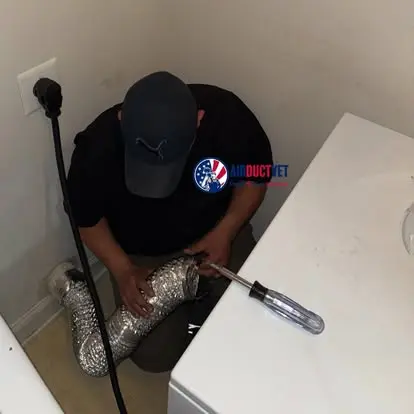 Real AirDuctVet photo
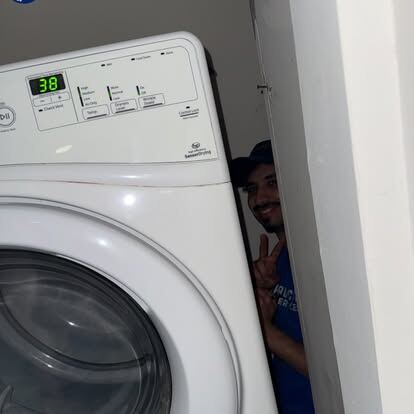 Real AirDuctVet photo
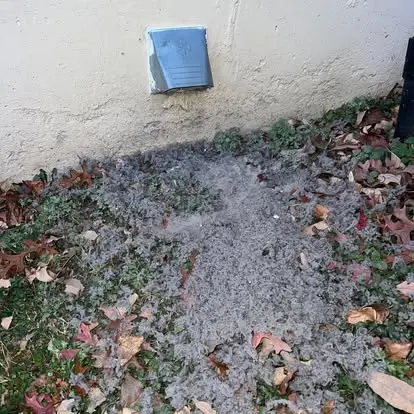 Real AirDuctVet photo
Clear, practical guidance: General education cannot replace an on-site inspection. We separate routine maintenance from conditions that need an HVAC, appliance, chimney, mold, or restoration specialist.
Can a dryer vent run downward safely?
A downward section is not automatically unsafe. The important questions are whether the entire route is approved for that dryer, uses the correct duct material and diameter, remains smooth and supported, ends outdoors, and avoids a trapped low point. Manufacturer instructions and locally adopted requirements control the actual installation.
Whirlpool advises keeping dryer venting as short and straight as possible because added length and elbows can reduce airflow and encourage lint buildup. A descending route with several bends may use more of the dryer's allowed equivalent length than the tape-measure distance suggests, so the model-specific vent chart matters.
Why can a low spot cause trouble?
A sag or low spot can become a collection point for lint, condensation, or rainwater that entered at a damaged termination. That buildup can narrow the exhaust path and make inspection or cleaning more difficult. Water in the vent does not prove that slope is the only cause; restricted airflow, cold spaces, damaged joints, missing insulation, or exterior water entry may also contribute.
The route behind the dryer deserves separate attention. A crushed transition connector, loose joint, sharp bend, or excess flexible material can restrict airflow before the exhaust reaches the permanent duct. Pushing the dryer tightly against the wall can recreate the problem after a cleaning visit.
- Check the dryer manual's vent chart for the allowed material, diameter, equivalent length, and elbows.
- Confirm that the permanent duct is supported and does not visibly sag between supports.
- Verify that the route terminates fully outdoors through an unobstructed, serviceable outlet.
- Look for water, rust, disconnected joints, crushed material, or lint escaping into the room.
- Do not open concealed construction or climb to a high termination without safe access and the proper trade.
What does code and manufacturer guidance require?
The International Residential Code's dryer-exhaust provisions address matters such as independent outdoor termination, duct construction, support, joints, route length, and installation according to the clothes-dryer manufacturer's instructions. The code adopted in a specific city or county may differ or include amendments, so a general article cannot certify a particular route.
LG and Whirlpool both direct owners to use the appliance instructions and keep the exhaust route short and direct. The correct maximum length depends on the dryer and the number and type of bends. A route that looks simple from the laundry room may include concealed offsets that need to be documented before anyone recommends cleaning, repair, or reconstruction.
Can dryer vent cleaning fix a downward route?
Cleaning may remove qualifying accessible lint from an approved route and restore airflow when buildup is the actual restriction. It does not correct an unsupported sag, back-pitched section, disconnected joint, improper material, excessive equivalent length, water entry, damaged termination, or an unsafe appliance connection.
If the route needs reconstruction, an appliance, HVAC, mechanical, roofing, or other qualified contractor may need to design and complete that work under a separate scope. AirDuctVet does not represent routine cleaning as an installation approval or code inspection, and no cleaning result guarantees that a future dryer fire cannot occur.
What can a Cobra camera assessment show?
A Cobra inspection camera may help document selected reachable sections of a dryer exhaust route, including visible lint, water, a joint, or a change in direction. It cannot pass every bend, measure the full concealed route, see through an obstruction, prove that every joint is sound, or determine by itself whether the installation complies with the dryer manual and local requirements.
Camera footage is evidence from the sections actually reached. High outlets, shared building spaces, fire-rated assemblies, roof terminations, and concealed shafts can impose access limits that must be discussed before service.
What is included and excluded from AirDuctVet service?
For a qualifying dryer-vent cleaning scope, AirDuctVet can review accessible connections and the visible termination, clean qualifying accessible lint, document observable conditions, and check airflow within the approved work. Duct reconstruction, dryer repair, gas or electrical work, wall or ceiling access, roofing, waterproofing, insulation, and mechanical installation are not automatically included and may require another qualified trade.
Air-duct cleaning is a separate service. Coil cleaning must be specifically requested, separately evaluated, and approved. Routine duct service does not automatically include mechanical repair or filter replacement. Every added service must appear in the written scope before work begins.
AirDuctVet reviews qualifying dryer-vent requests in Northern Virginia, Washington, DC, Maryland, Raleigh, Cary, and Miami. Basement laundries, garages, condos, townhomes, and multistory properties can have different route and access constraints, so the actual property and dryer instructions determine the next step.
Frequently asked questions
Does a downward dryer vent need to slope toward the outside? The correct layout depends on the dryer instructions, duct location, condensation risk, and locally adopted requirements. It should not contain an unsupported sag or trapped low point.
Can a dryer vent go through the floor? Sometimes, if the complete independent route is approved, constructed correctly, and terminates outdoors. A floor penetration does not make every concealed route acceptable.
Will lint fall out of a downward vent by gravity? Do not rely on gravity. Lint can cling to joints, bends, damp surfaces, crushed connectors, and rough or damaged material.
Does water at the low point mean the vent only needs cleaning? No. Cleaning may address a lint restriction, but condensation, exterior water entry, insulation, damage, or installation problems need separate diagnosis.
Can AirDuctVet certify that my route meets code? No. AirDuctVet can document accessible conditions within the approved service. Formal code approval belongs to the authority having jurisdiction or another appropriately qualified professional.
Sources and further reading
Official guidance informs the general information above. AirDuctVet's included services are defined by your written quote; local requirements and manufacturer instructions may differ.