
Dryer Vent Screen vs Bird Guard: What Is Safe?
Should a dryer vent have a screen or bird guard? Learn why fine mesh traps lint, what a proper termination needs, and when a compatible guard may fit.
The short answer
The IRC prohibits screens at dryer exhaust terminations, and a product called a bird guard or basket is not automatically exempt. The outlet needs a freely opening backdraft damper. Any proposed animal-deterrent modification must meet the locally adopted code and dryer manufacturer requirements; a cage that functions as a prohibited screen should not be installed.
Three real AirDuctVet field photos
These authentic AirDuctVet job photos were selected for this topic. We do not use repeated AI artwork or stock photography.
 Real AirDuctVet photo
 Real AirDuctVet photo
 Real AirDuctVet photo
Clear, practical guidance: General education cannot replace an on-site inspection. We separate routine maintenance from conditions that need an HVAC, appliance, chimney, mold, or restoration specialist.
Should a dryer vent have a screen?
No screen should be placed across the dryer exhaust opening. The International Residential Code states that dryer exhaust terminations need a backdraft damper and that screens must not be installed at the termination. Local code editions and enforcement can vary, so the authority with jurisdiction has the final say for a specific property.
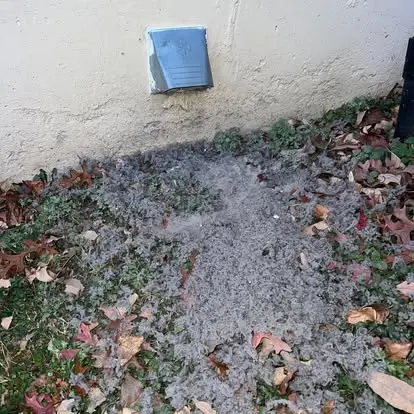
A fine insect or pest screen can catch fibers leaving the dryer. As lint accumulates, the opening can become more restrictive even when the concealed duct was recently cleaned.
Is a bird guard the same as a screen?
A dryer exhaust termination must meet the adopted code and the dryer manufacturer's instructions. The IRC prohibits screens at the termination; a product marketed as a bird guard or basket is not automatically exempt.
AirDuctVet evaluates the specific outlet and proposed product before recommending an animal-deterrent modification. If a cage functions as a prohibited screen or obstructs the damper, it should not be installed. A larger opening does not create an automatic exception to the screen prohibition.
What should a proper dryer vent termination do?
The outlet should discharge outdoors, open when the dryer runs, resist backdraft when the dryer is off, and avoid creating a lint trap. It should also remain visible and accessible enough for routine observation and maintenance.
- The damper opens freely during normal dryer operation.
- No screen crosses the exhaust opening.
- The cover does not press against or obstruct the damper.
- Lint can exit without collecting on narrow bars or decorative louvers.
- The termination remains accessible for cleaning and condition checks.
When should a bird guard not be installed?
Do not install a guard over an active nest, trapped animal, damaged outlet, incompatible termination, or route that has not been evaluated. Wildlife laws and nesting-season restrictions may also apply. Active birds, eggs, or young require the appropriate wildlife guidance before removal or exclusion work begins.
A guard should not be used to hide a broken flap, clogged outlet, crushed duct, disconnected route, or unsafe access condition. Those findings must be corrected within the appropriate cleaning, repair, wildlife, or property-management scope first.
What does AirDuctVet check before installing a dryer vent bird guard?
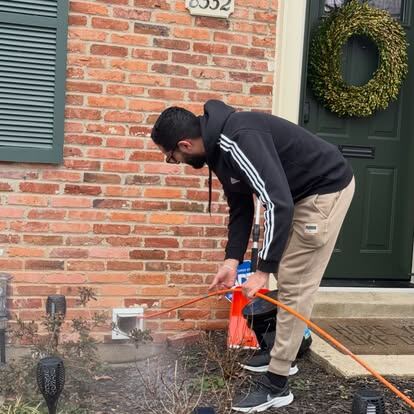
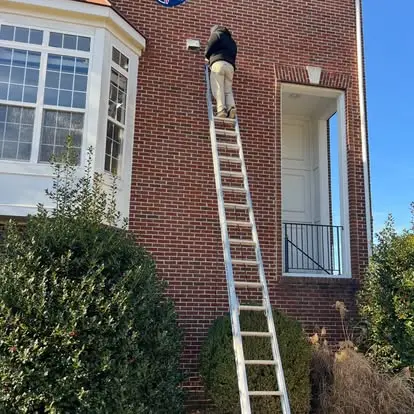
AirDuctVet reviews the outlet type, visible lint, current bird activity, damper movement, height, ladder or roof access, mounting surface, and whether end-to-end dryer vent cleaning is needed. Installation is limited to compatible, safely accessible conditions and does not include siding, masonry, roofing, concealed-duct, or structural repair unless separately approved.
Send the full property address, a clear outlet photo, dryer location, outlet height, nesting history, and any HOA or building rules. Those details help determine whether cleaning, inactive-nest removal, guard installation, repair, or wildlife coordination should come first.
Frequently asked questions
Can chicken wire or insect mesh cover a dryer vent? No. Improvised mesh can trap lint and may conflict with the applicable dryer-exhaust requirements.
Will a bird guard prevent every future nest? No. A compatible guard can reduce access at one outlet, but it cannot guarantee that animals will never reach the cover, damage it, or enter another opening.
Does installing a guard include dryer vent cleaning? Only when both services are included in the approved scope. A blocked route should be evaluated and cleaned as appropriate before a new cover is treated as the solution.
Sources and further reading
Official guidance informs the general information above. AirDuctVet's included services are defined by your written quote; local requirements and manufacturer instructions may differ.