
Dryer Vent Cleaning Fire Safety Guide for Homeowners
This dryer vent cleaning guide combines inspection, airflow, maintenance, warning-sign, and fire-safety guidance in one place. It helps homeowners recognize a likely exhaust restriction while understanding when the dryer itself or the vent installation needs another specialist.
Real dryer vent restrictions, tools, and access
Three authentic AirDuctVet photos showing appliance connections, removed lint, professional cleaning tools, and exterior-access conditions.
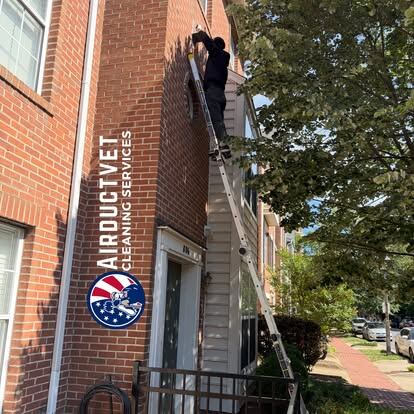 Real AirDuctVet photo
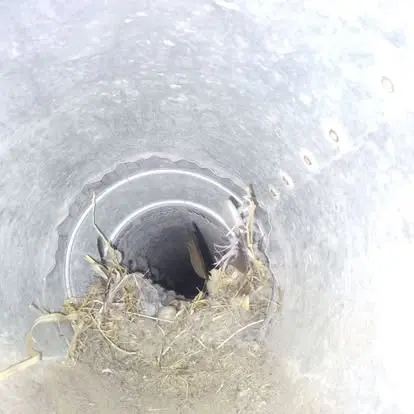 Real AirDuctVet photo
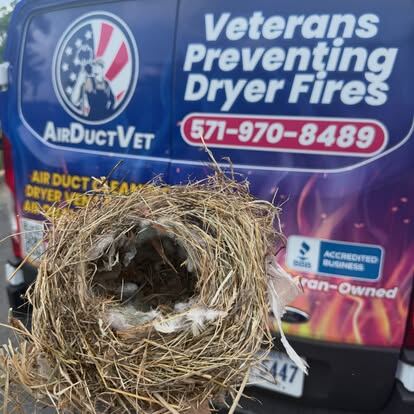 Real AirDuctVet photo
A dryer vent is a complete exhaust route, not just the hose behind the machine
Conditions that change dryer vent performance
The route and termination often explain why one dryer performs well while another clogs repeatedly, even when both households clean the lint screen.
What a dryer vent inspection should cover
A responsible dryer vent service sequence
- 01
Record the symptoms, appliance location, route information, termination, previous cleaning, and any known booster fan or building rule.
- 02
Disconnect power as appropriate, inspect the accessible transition, locate the outlet, and evaluate airflow or camera access where useful.
- 03
Select the access direction and tool for the duct material, route, blockage, and termination. AirDuctVet has a 40-foot rotating-brush system, plus compressed-air tools.
- 04
Remove qualifying lint and debris through the vent route while protecting the appliance area and controlling material at the selected access point.
- 05
Recheck accessible airflow and outlet movement, reconnect appropriately, document concerns, and explain any remaining appliance or installation issue.
When should a dryer transition duct be replaced?
A dryer transition duct should be replaced when it is plastic, coiled-wire foil, crushed, torn, punctured, disconnected, excessively long, or unable to hold a smooth route behind the appliance. Cleaning removes lint; it does not repair unsafe or damaged material. The replacement must follow the dryer manufacturer's instructions and applicable local requirements.
Rigid metal is generally preferred for the concealed exhaust route. A listed semi-rigid or flexible metal connector may be used only where the appliance instructions and local rules allow it. The connection should be as short and straight as practical, secured without screws that project into the airflow path, and protected from crushing when the dryer is returned to position.
| Material or condition | What it means | Recommended next step |
|---|---|---|
| Plastic or vinyl connector | Combustible material can collect lint and is not an appropriate dryer exhaust connection. | Stop using the connector and arrange compliant replacement. |
| Coiled-wire foil connector | Ridges and a fragile wall can restrict airflow, trap lint, or tear. | Replace with material approved by the dryer manufacturer and local requirements. |
| Listed semi-rigid metal connector | May be suitable for the short exposed connection when allowed and not crushed. | Keep it short, supported, and free of sharp bends; replace it if damaged. |
| Rigid smooth metal duct | Creates less internal resistance and is generally preferred for the permanent route. | Inspect joints, support, route length, and termination; clean when buildup is present. |
Primary sources: U.S. Fire Administration dryer fire-safety guidance · Whirlpool dryer-vent installation guidance
Is dryer vent cleaning different for gas and electric dryers?
The exhaust-duct cleaning method is usually similar for gas and electric dryers because both appliances move lint and moist air through a vent route. AirDuctVet reviews the accessible transition, concealed duct, exterior termination, and airflow for either appliance type. The main difference is the appliance-side safety boundary.
A gas dryer also has a fuel supply, connection, burner, and combustion system. AirDuctVet does not disconnect, test, or repair gas components as part of routine vent cleaning. A damaged gas connection, combustion concern, unusual fuel odor, or appliance fault requires a qualified appliance or gas professional. Electric dryer wiring, heating elements, sensors, and internal repairs also remain outside the vent-cleaning scope.
| Service question | Gas dryer | Electric dryer |
|---|---|---|
| Vent route cleaned | Accessible transition, duct route, termination, and airflow | Accessible transition, duct route, termination, and airflow |
| Appliance energy connection | Gas supply and electrical connection require appliance-specific care | Electrical supply requires appliance-specific care |
| AirDuctVet routine scope | Vent cleaning only; no gas-line, burner, or combustion repair | Vent cleaning only; no wiring, heater, sensor, or internal appliance repair |
| When another professional is needed | Fuel odor, damaged connector, combustion concern, or appliance fault | Damaged cord or outlet, electrical concern, heater or appliance fault |
Primary sources: U.S. Fire Administration appliance and dryer safety · U.S. Fire Administration clothes-dryer guidance
Dryer Vent Cleaning Fire Safety Guide questions
How often should a dryer vent be cleaned?+
Annual service is a common planning baseline, but heavy use, long routes, many elbows, roof terminations, booster fans, pets, large households, and previous restrictions can justify a different interval. Watch actual drying performance and the exterior airflow.
Can I use a leaf blower or plumbing snake to clean the vent?+
Improvised tools can compact lint, damage or disconnect the duct, push debris into a termination, or fail to clean the complete route. A professional method controls the tool, debris, access direction, and result.
Will cleaning fix an LG D80 or D90 warning?+
It can correct a removable exhaust restriction, but a warning may remain because of sensor, appliance, transition, installation, route, or termination conditions. The vent and appliance should be evaluated as separate parts of the system.
Do you clean inside the dryer too?+
Dryer vent cleaning addresses the accessible exhaust duct and connection included in the approved scope. Internal appliance disassembly and repair should be performed by a qualified appliance technician.
Should a crushed foil transition duct be cleaned or replaced?+
A crushed, torn, plastic, or coiled-wire foil transition duct should not be treated as a cleaning-only problem. The damaged or unsuitable connector needs compliant replacement based on the appliance instructions and local requirements.
Does AirDuctVet disconnect a gas line during dryer vent cleaning?+
No. Routine AirDuctVet dryer vent cleaning does not disconnect, test, or repair gas components. Gas-line, burner, combustion, and fuel-odor concerns require a qualified appliance or gas professional.