
Heat Pump Dryer Vent Cleaning: Do You Really Need It?
Heat pump dryer vent cleaning is unnecessary for a ventless model. Learn about filter care, drainage, and when an existing exhaust duct needs service.
The short answer
No, not if your model is a ventless heat pump dryer: it has no outdoor exhaust duct for a dryer-vent cleaner to service. It still needs the filter, water-management, and other maintenance specified in its owner's manual. Confirm the exact model before booking; a wall vent left from an older dryer does not mean the new machine uses it. The three AirDuctVet field photos below show conventional vented-dryer connections, exterior exhaust, and removed lint for comparison, not a heat-pump dryer repair or installation.
Three real AirDuctVet field photos
These authentic AirDuctVet job photos were selected for this topic. We do not use repeated AI artwork or stock photography.
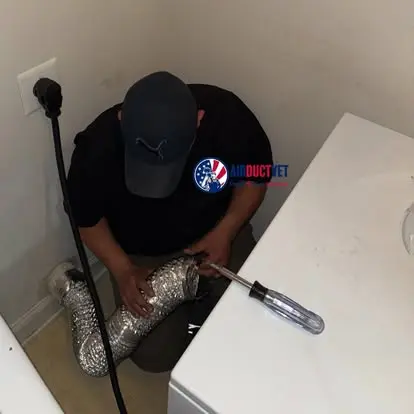 Real AirDuctVet photo
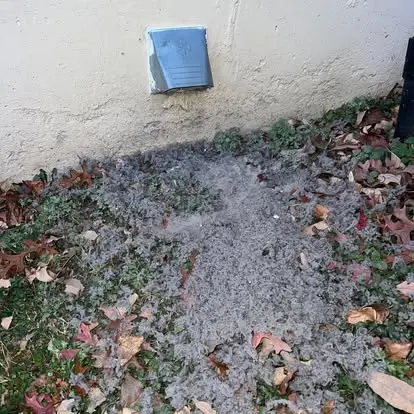 Real AirDuctVet photo
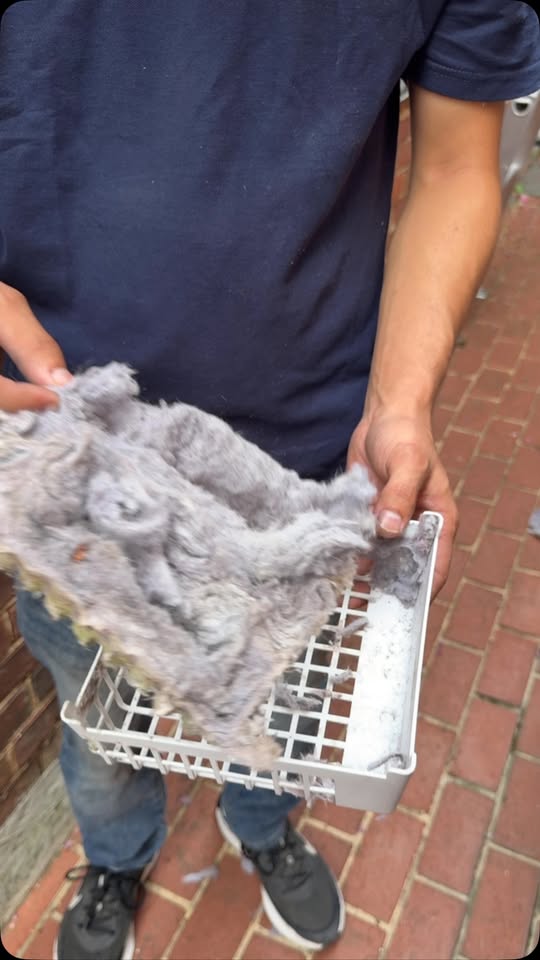 Real AirDuctVet photo
Clear, practical guidance: General education cannot replace an on-site inspection. We separate routine maintenance from conditions that need an HVAC, appliance, chimney, mold, or restoration specialist.
A ventless dryer recirculates air instead of exhausting it outdoors
ENERGY STAR describes a heat pump dryer as a closed-loop system: moisture is removed from the circulating air and the air is reused. The collected water goes into a tank or an approved drain arrangement, depending on the model. That water connection is not a dryer exhaust duct.
Start with the model number and installation manual, not the appliance's appearance or a previous service receipt. A conventional vented electric dryer needs exhaust service just as a vented gas dryer does; electric does not mean ventless. A washer-dryer combination is not automatically ventless either. Check the manufacturer's description of your exact appliance.
Ventless does not mean maintenance-free
Follow the model-specific instructions for lint filters, any secondary filter, accessible heat-exchanger areas, and water collection or drainage. Do not transfer a cleaning procedure from another brand or assume every condenser can be removed, rinsed, or brushed.
For example, GE's UltraFast Combo guidance distinguishes the mesh filter, a second mesh or foam filter, and the filter compartment. It gives different care instructions for those parts, warns against damaging evaporator fins, and says not to operate the appliance without its filters. Those instructions illustrate why a generic vent-cleaning appointment is not a substitute for the correct appliance maintenance.
- Locate the owner's manual using the full model number.
- Check which filters are user-serviceable and follow their stated cleaning schedule.
- Confirm whether your dryer collects water in a tank or uses a drain hose.
- Follow shutdown and electrical-safety instructions before maintenance.
- Leave sealed-system work and inaccessible internal components to qualified appliance service.
Long drying times call for model-specific troubleshooting
If there is no exhaust duct, cleaning an unused wall vent will not correct the dryer's internal drying problem. Record the model, cycle, load type, displayed message, and whether clothing is actually wet at the end of the cycle. Then follow the manufacturer's troubleshooting sequence.
GE's guidance for its UltraFast Combo identifies load balance, drainage, pump-filter restrictions, and drain-hose installation among the checks for persistently wet clothing. It directs owners to appliance repair when the suggested checks do not resolve the issue. Those are examples for that product, not a diagnosis of every heat pump dryer.
An old wall vent needs a separate decision
Replacing a vented dryer can leave an unused duct and exterior opening. Ask the installer or property manager to identify what the route serves and whether it should be retained for future use or properly decommissioned. Do not assume an opening is unused just because the new dryer is ventless, especially where exhaust systems are managed by a building.
Ask who is responsible for any approved closure, weather protection, or building work. Cleaning, removing, and closing a route are different jobs. AirDuctVet should not be booked to clean a nonexistent active exhaust path, and an abandoned duct should not be represented as the cause of the new dryer's performance without evidence.
What to tell AirDuctVet before booking
Provide the model number, whether the manual calls the dryer vented or ventless, a description of the accessible connection, and the reason for the request. If an active conventional exhaust route needs cleaning, confirm its access, termination, and written scope with the office. Do not move a heavy appliance or disturb gas or electrical connections just to obtain a photograph.
Dryer-vent service does not automatically include appliance disassembly, heat-pump repair, filter replacement, drain work, or decommissioning an old duct. These require the appropriate provider and separate approval. Air-duct cleaning is a different service: coil cleaning must be requested and separately approved, and routine duct service does not automatically include mechanical repair or filter replacement.
Quick answers about heat pump dryer vent cleaning
Does a ventless dryer need an outdoor vent? No. Follow the exact model's installation requirements for drainage, clearances, power, and room conditions instead of adding an exhaust connection.
Does a filter-cleaning reminder mean I need duct cleaning? Not by itself. On a ventless appliance, follow the manufacturer's instructions for the named filter or compartment.
Can AirDuctVet clean the old vent after I change dryers? Ask the office to evaluate the identified route and purpose first. Any approved cleaning is separate from heat-pump appliance maintenance or closure of the abandoned opening.
Sources and further reading
Official guidance informs the general information above. AirDuctVet's included services are defined by your written quote; local requirements and manufacturer instructions may differ.