
Can You Remove a Bird Nest From a Dryer Vent?
Can you remove a bird nest from a dryer vent? Learn when to stop using the dryer, how active nests change the plan, and what removal does not include.
The short answer
Sometimes, but the nest must be assessed before removal. Stop using the dryer if the exhaust is blocked, the exterior flap cannot open, or birds are entering the vent. If birds, eggs, or young are present, do not disturb the nest until the species, federal protections, local rules, and a lawful next step have been confirmed. AirDuctVet handles qualifying inactive dryer-vent nesting material within an approved scope; active wildlife, repairs, and unsafe access may require another qualified professional.
Three real AirDuctVet field photos
These authentic AirDuctVet job photos were selected for this topic. We do not use repeated AI artwork or stock photography.
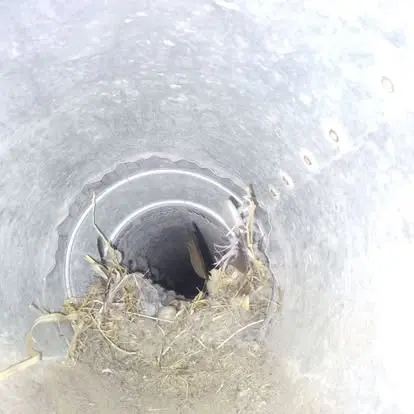 Real AirDuctVet photo
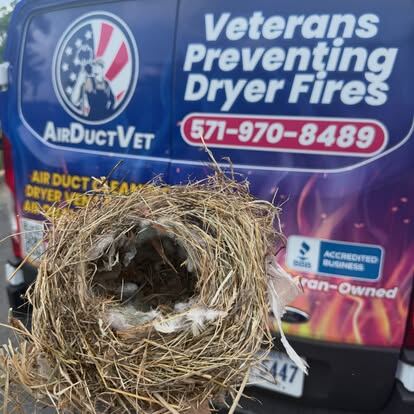 Real AirDuctVet photo
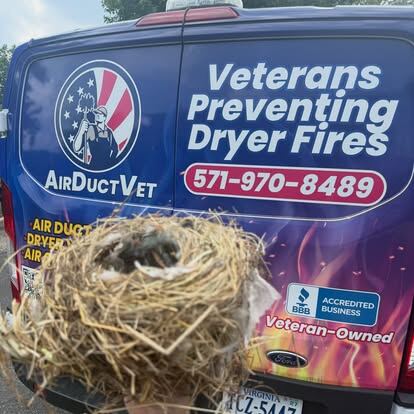 Real AirDuctVet photo
Clear, practical guidance: General education cannot replace an on-site inspection. We separate routine maintenance from conditions that need an HVAC, appliance, chimney, mold, or restoration specialist.
Can you remove a bird nest from a dryer vent?
A qualifying inactive nest can often be removed from an accessible dryer exhaust route, followed by cleaning and a check of the exterior termination. Removal should not begin just because nesting material is visible. The technician first needs to determine whether birds, eggs, or young may still be present and whether the route can be reached safely without damaging the duct or building.
The U.S. Fish and Wildlife Service explains that the Migratory Bird Treaty Act prohibits taking protected migratory birds without authorization. Species and circumstances matter, and state or local requirements can also apply. AirDuctVet does not identify every species or issue wildlife permits. An active or uncertain nest may need a licensed wildlife professional or guidance from the appropriate wildlife agency before vent work proceeds.
What should you do when birds are using the dryer vent?
Turn the dryer off and avoid repeated test cycles when airflow appears blocked. Heat, lint, nesting material, and a trapped animal can create an unsafe condition, while continued operation can injure wildlife or push debris deeper into the route. Do not reach into the outlet, insert tools, spray chemicals, light smoke, or seal the opening while occupancy is uncertain.
- Photograph the exterior opening from a safe location without approaching an active nest.
- Note bird activity, sounds, visible material, and whether the damper is stuck open or closed.
- Share the dryer location, vent termination height, roof or wall access, and any property-management rules.
- Keep pets and people away from fallen debris or a displaced bird.
- Contact the appropriate wildlife authority or qualified rehabilitator if a bird appears injured or trapped.
How do you tell whether a nest is active?
Frequent adult visits, calls from inside the vent, fresh grass or feathers, eggs, or young can indicate current use. A brief quiet period does not prove that a nest is inactive. Some adults leave to feed, and a concealed bend can hide the occupied portion from view.
A visual check can document accessible conditions, but it has limits. A Cobra inspection camera may help view selected sections of a dryer vent when the route and material allow it. The camera may not pass every bend, show the entire nest, identify a species, establish legal status, or prove that the full concealed route is clear.
What does professional nest removal involve?
For a qualifying inactive blockage, the approved work can include opening an accessible termination, removing reachable nesting material, cleaning lint and debris from the agreed dryer exhaust route, and checking accessible airflow and damper movement. The crew should protect the surrounding work area and document conditions that prevent complete removal.
Nest material can extend farther than the visible opening. A disconnected joint, crushed transition, damaged hood, inaccessible chase, or unsafe roof condition can stop the work. Cleaning does not repair concealed ductwork, rebuild an opening, replace siding or roofing, or guarantee that every fragment has been removed from an inaccessible route.
Should a bird guard be installed after removal?
A compatible low-restriction bird guard may help deter re-entry after the vent is confirmed unoccupied and the route is cleared. The guard must preserve the dryer's required exhaust opening and allow the backdraft damper to operate. Fine mesh or a screen across the outlet can collect lint and restrict airflow, so a generic pest screen is not an acceptable shortcut.
The 2024 International Residential Code addresses dryer exhaust termination requirements, while the appliance instructions control the permitted vent materials and layout for that dryer. Local jurisdictions may adopt a different code edition or amendments. Guard selection and installation must account for the termination design, mounting surface, clearances, access, and any condominium, landlord, or HOA approval.
What does AirDuctVet include and exclude?
AirDuctVet's written quote defines the approved bird-nest removal, dryer-vent cleaning, termination access, and any separately approved bird-guard installation. Qualifying work depends on nest inactivity, vent condition, safe access, weather, property authorization, and applicable wildlife rules. Routine service does not include wildlife trapping or rehabilitation, species identification, permit work, carpentry, roofing, masonry, electrical work, appliance repair, or concealed duct replacement.
Dryer-vent work is separate from air-duct cleaning. If air-duct service is also requested, coil cleaning must be specifically requested and separately evaluated and approved. Routine duct service does not automatically include mechanical repair or filter replacement.
AirDuctVet serves qualifying properties in Northern Virginia, Washington, DC, Maryland, Raleigh, Cary, and Miami. Access and wildlife requirements vary, so choose the correct service area and share clear photos before scheduling. The local office will confirm whether the request fits AirDuctVet's scope or needs a wildlife, roofing, appliance, or other specialist first.
Frequently asked questions
Can I use the dryer if I hear birds in the vent? Stop using it until the route and occupancy are assessed. A test cycle can add heat and airflow to an occupied or blocked vent.
Can AirDuctVet remove an active nest? AirDuctVet handles qualifying inactive nesting material. Birds, eggs, young, protected species, or uncertain occupancy may require wildlife-agency guidance or a qualified wildlife professional before vent service.
Can I pull the nest out from outside? Do not reach into an elevated or occupied opening or remove material without knowing what is behind it. You can injure wildlife, fall, damage the termination, or leave a deeper blockage in place.
Will cleaning keep birds from returning? Cleaning removes approved accessible debris but does not guarantee that birds will not return. A compatible low-restriction guard may be separately approved after the route is unoccupied and clear.
Can a camera prove the vent is empty? No. A camera can document reachable sections, but bends, material, length, and access can limit the view. It does not identify every species or replace required wildlife decisions.
Does nest removal include dryer or duct repair? No. Appliance repair, duct replacement, exterior construction, and other corrective work require a separate evaluation and written approval from the appropriate trade.
Sources and further reading
Official guidance informs the general information above. AirDuctVet's included services are defined by your written quote; local requirements and manufacturer instructions may differ.