
Can Air Duct Cleaning Remove Rodent Droppings?
Rodent droppings in air ducts require pest control and safe contamination planning before routine duct cleaning can be considered.
The short answer
Not as a routine first step. If rodent droppings are in air ducts, stop the infestation and establish a safe cleanup plan before ordinary duct cleaning begins. A pest-control or qualified remediation professional may need to remove rodents, close entry points, and address contaminated material first. After that work, a qualified duct-cleaning provider can inspect accessible HVAC sections and determine whether an approved cleaning scope is appropriate or whether damaged or porous material should be replaced.
Three real AirDuctVet field photos
These authentic AirDuctVet job photos were selected for this topic. We do not use repeated AI artwork or stock photography.
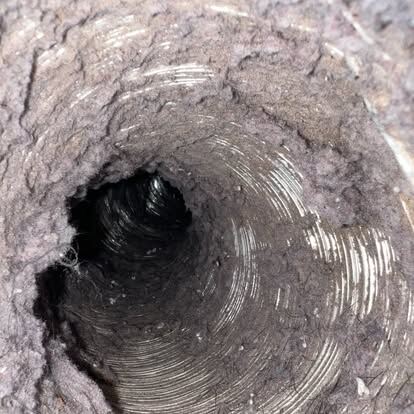 Real AirDuctVet photo
 Real AirDuctVet photo
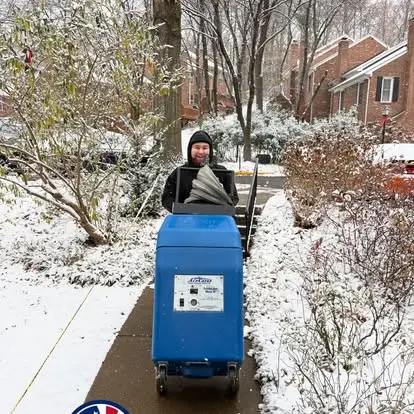 Real AirDuctVet photo
Clear, practical guidance: General education cannot replace an on-site inspection. We separate routine maintenance from conditions that need an HVAC, appliance, chimney, mold, or restoration specialist.
What should happen first when droppings are found in air ducts?
Do not start by brushing or vacuuming dry droppings. CDC guidance says not to sweep or vacuum rodent urine, droppings, or nesting material because disturbing it can put contaminated particles into the air. The affected area should remain undisturbed while the property owner arranges the correct pest-control and cleanup response.
The sequence matters: confirm the evidence, control the rodents, identify and close entry points, remove contaminated material using an appropriate safety plan, and only then evaluate the HVAC system for cleaning or replacement. EPA guidance also says the underlying cause should be corrected before ducts are cleaned, retrofitted, or replaced, or the problem is likely to return.
How can rodents get into an HVAC system?
Rodents may enter through damaged ductwork, open returns, gaps around equipment, crawlspaces, attics, wall cavities, utility penetrations, or an unprotected opening connected to the system. Droppings near one register do not prove that every duct is contaminated, and a clean-looking register does not rule out activity elsewhere.
A useful inspection separates evidence inside the air path from contamination in the attic, crawlspace, equipment closet, or floor cavity around the duct. Pest-control professionals should identify active entry routes and animal activity. An HVAC or duct professional can then document accessible system conditions without claiming that a limited view represents every concealed branch.
- Keep children and pets away from suspected droppings or nesting material.
- Do not run cleaning brushes, compressed air, or an ordinary vacuum through untreated contamination.
- Photograph visible evidence from a safe distance without disturbing it.
- Note where the evidence appears: inside a register boot, on top of a grille, beside equipment, or in an attic or crawlspace.
- Ask the pest-control provider to document the infestation and exclusion work before duct service is scheduled.
Can a camera show the full extent of rodent contamination?
No. A Cobra inspection camera can help document selected reachable duct sections, but it cannot pass every bend, damper, branch, liner transition, or obstruction. It also cannot identify a biological material, determine whether it is safe to disturb, or prove that every concealed section is clean.
Camera footage should be treated as evidence from the areas actually reached. If the suspected material is in an inaccessible, internally lined, flexible, damaged, or heavily contaminated section, the correct next step may be a specialist assessment or replacement rather than forcing cleaning tools through the system.
When may duct cleaning be considered after pest control?
Duct cleaning may be considered after active rodents have been removed, re-entry has been addressed, contaminated material has been handled under an appropriate safety plan, and the remaining HVAC scope is clear. EPA lists vermin infestation as one condition that can justify considering duct cleaning, but it does not recommend routine cleaning on a fixed schedule.
The approved method depends on the duct material, amount and location of remaining debris, access, equipment layout, and whether the contamination can be safely removed without spreading it. Bare accessible sheet metal may present a different cleaning decision from porous liner, damaged flex duct, contaminated insulation, or a concealed cavity that is not actually part of the duct.
What may require replacement instead of cleaning?
Cleaning is not automatically appropriate for damaged flexible duct, contaminated porous liner, torn insulation, inaccessible sections, or material that cannot be safely treated within the approved scope. An HVAC contractor or qualified remediation professional may recommend removing and replacing affected components after the pest source is controlled.
AirDuctVet does not claim that routine duct cleaning disinfects every concealed surface or makes a property free of rodent-related contamination. It also does not provide medical testing, pest extermination, wildlife removal, or biohazard remediation as part of routine air-duct service.
What does routine AirDuctVet service include and exclude?
Once the property is ready for a normal duct assessment, AirDuctVet can review accessible supply and return areas, document visible conditions, identify reachable debris, and explain whether its source-removal methods fit the approved scope. Service availability depends on safe access, duct material, system configuration, and the records from any pest-control or remediation work.
Routine air-duct cleaning does not automatically include mechanical repair, duct replacement, pest exclusion, filter replacement, or cleanup of attics, crawlspaces, wall cavities, or occupied animal nests. Coil cleaning must be specifically requested, separately evaluated, and approved. Any added work requires a separate written scope, and some conditions must be handled by a licensed pest-control company, HVAC contractor, remediation specialist, or local health authority.
AirDuctVet reviews qualifying properties in Northern Virginia, Washington, DC, Maryland, Raleigh, Cary, and Miami. The same condition-based process applies in every market: remove the source, confirm that the site is safe for the proposed work, inspect accessible HVAC sections, and approve only the scope that fits the actual system.
Frequently asked questions
Should I turn on the HVAC system after finding droppings in a vent? Avoid disturbing the suspected area and follow guidance from the pest-control or remediation professional handling the property. AirDuctVet cannot give a universal operating instruction without knowing the system and contamination conditions.
Can I vacuum mouse droppings from a register? CDC says not to vacuum or sweep rodent urine, droppings, or nesting material before proper disinfection because that can put contaminated particles into the air.
Does one dropping mean the whole duct system is contaminated? No. It is evidence that needs investigation, but the location and extent must be documented before deciding on cleaning or replacement.
Will duct cleaning stop rodents from returning? No. Cleaning does not seal entry points, repair damaged construction, remove food sources, or replace pest-control and exclusion work.
Can sanitizing replace physical removal? No. A product should not be used as a shortcut for source control, pest removal, or physical cleanup. Any product use must be appropriate for the material and follow its label and the written scope.
Does routine duct service include coils, repairs, or a new filter? No. Coil cleaning requires a separate request and approval. Mechanical repair and filter replacement are not automatically included.
Sources and further reading
Official guidance informs the general information above. AirDuctVet's included services are defined by your written quote; local requirements and manufacturer instructions may differ.