
Can a Dryer Vent Terminate Under a Deck?
A dryer vent may terminate under a deck only when the outlet remains outdoors, code-compliant, unobstructed, and safely accessible. Learn what to check.
The short answer
Sometimes, but an outlet under a deck is not automatically acceptable. It must still discharge fully outdoors, follow the dryer manufacturer's instructions and locally adopted code, maintain required clearances, use a working backdraft damper without a lint-catching screen, and remain accessible for inspection and cleaning. A low, enclosed, or obstructed deck can make the location unsuitable. Cleaning alone cannot correct an improper termination.
Three real AirDuctVet field photos
These authentic AirDuctVet job photos were selected for this topic. We do not use repeated AI artwork or stock photography.
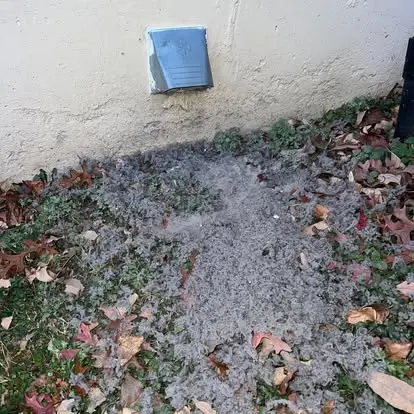 Real AirDuctVet photo
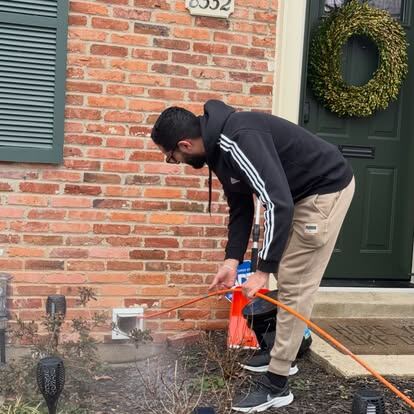 Real AirDuctVet photo
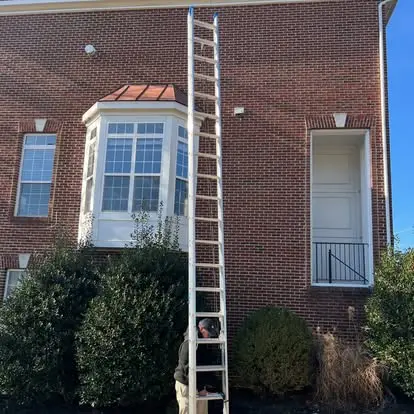 Real AirDuctVet photo
Clear, practical guidance: General education cannot replace an on-site inspection. We separate routine maintenance from conditions that need an HVAC, appliance, chimney, mold, or restoration specialist.
Can a dryer vent terminate under a deck?
A deck above the outlet does not by itself answer the question. The complete condition matters: how open the area is, the distance to doors and windows, the damper's movement, the space available around the hood, exposure to stored items or vegetation, and whether a technician can reach the termination safely. Local code officials and the appliance instructions control the final installation decision.
A termination that opens into an enclosed porch, a boxed-in deck cavity, a garage, a crawl space, or another interior area is not the same as exhausting outdoors. If the deck or later construction turned the outlet into a concealed or enclosed space, a qualified contractor should evaluate relocation or reconstruction rather than treating routine cleaning as the fix.
What rules apply to the exterior termination?
The 2024 International Residential Code describes an independent clothes-dryer exhaust system that terminates outside the building, uses a backdraft damper, and has no screen at the duct termination. It also addresses separation from building openings and requires installation according to the dryer manufacturer's instructions. Your jurisdiction may enforce a different edition or amendment, so the local authority having jurisdiction should confirm any project-specific requirement.
Whirlpool and GE appliance guidance likewise directs dryer exhaust to the outdoors through approved metal venting and a suitable exterior hood. The appliance manual for the exact model should be checked because route length, fittings, duct material, and termination details can differ. A deck should never be used as a reason to improvise a screen, reduce the outlet, or ignore the manufacturer's route limits.
Why can a deck create problems around the outlet?
A low deck can restrict access to the hood and make lint buildup difficult to see. Joists, lattice, stored furniture, leaves, mulch, snow, vegetation, or later-added panels can interfere with the damper or reduce the clear space around it. Exhausted lint and warm moist air can also collect on the underside of the deck instead of dispersing freely.
An outlet near a door, operable window, crawl-space opening, air intake, or occupied sitting area can create additional concerns. Visible lint on deck surfaces does not prove the entire duct is blocked, but it is a reason to inspect the hood, damper, route, and access. Do not crawl under an unstable or very low deck, remove structural parts, or reach into a moving damper to investigate.
What should homeowners check from a safe position?
Observe the outlet during a normal dryer cycle only from a safe location. The damper should open with airflow and return closed after the dryer stops. If the termination cannot be seen or reached without entering an unsafe space, send photographs of the deck and exterior wall and describe the approximate clearance rather than attempting a risky inspection.
- Confirm that the exhaust reaches open outdoor air rather than an enclosed deck cavity, porch, garage, or crawl space.
- Look for a working backdraft damper and no lint-catching screen across the outlet.
- Note doors, windows, air intakes, crawl-space openings, stairs, lattice, joists, storage, vegetation, and other nearby obstructions.
- Check whether the hood can be safely accessed for inspection, cleaning, and any future repair.
- Stop using the dryer if the outlet is blocked, the damper will not open, there is a burning odor, the dryer becomes unusually hot, or a vent warning persists.
Can cleaning make an under-deck termination acceptable?
Cleaning can remove qualifying accessible lint and debris from the approved exhaust route. It cannot change an outlet that terminates in an enclosed space, create required clearance, repair a damaged hood, correct unsupported or disconnected ductwork, or move the termination away from an unsuitable location. Those conditions need a separately approved repair or relocation by the appropriate qualified trade.
A strong airflow reading after cleaning does not certify the installation or prove that every concealed joint is sound. Route length, bends, duct material, damper operation, appliance performance, and the surrounding construction still matter. If a deck was built after the dryer vent was installed, provide that history because the original exterior location may no longer function as intended.
What does AirDuctVet include and exclude?
AirDuctVet can inspect accessible portions of the dryer exhaust route, document the visible termination, remove qualifying accessible lint within the approved cleaning scope, and check observable airflow conditions. A Cobra inspection camera may help document reachable sections, but it cannot pass every bend, inspect every concealed joint, determine code compliance for the entire building, or replace a formal inspection by the authority having jurisdiction.
Routine dryer vent cleaning does not automatically include deck disassembly, carpentry, siding or masonry work, roofing, concealed duct replacement, exterior hood replacement, appliance repair, electrical or gas work, mechanical repair, or redesign of the exhaust route. Any additional work must be evaluated and separately approved in writing, and some conditions require another qualified contractor.
Air-duct cleaning is a separate service. Coil cleaning must be specifically requested and separately evaluated and approved. Routine air-duct service does not automatically include mechanical repair or filter replacement. AirDuctVet serves qualifying properties in Northern Virginia, Washington, DC, Maryland, Raleigh, Cary, and Miami, subject to access and the written scope.
Frequently asked questions
Is every dryer vent under a deck unsafe? No. Some open, accessible locations may comply, while low, enclosed, obstructed, or poorly placed outlets may not. The actual installation, appliance instructions, and locally adopted code must be reviewed.
Can I add lattice around the deck after the vent is installed? Lattice or panels can change airflow, access, and whether the outlet remains in open outdoor air. Have the planned enclosure reviewed before blocking access or surrounding the termination.
Can I put a screen over the hood to keep pests out? A lint-catching screen should not cover the dryer exhaust termination. Any compatible guard must allow the damper to operate and remain accessible for service.
What if lint is collecting on the underside of the deck? Document the location and arrange an inspection of the termination and full route. Cleaning may remove buildup, but poor placement or restricted clearance can require repair or relocation.
Who decides whether the location meets code? The local authority having jurisdiction interprets and enforces the adopted code. The dryer manufacturer's installation instructions and any property-management or association requirements also apply.
How often should an under-deck vent be cleaned? There is no single fixed interval for every property. Base service on the appliance instructions, use, route, access, warning signs, and documented buildup.
Sources and further reading
Official guidance informs the general information above. AirDuctVet's included services are defined by your written quote; local requirements and manufacturer instructions may differ.