
Can a Dryer Vent Exhaust Into an Attic or Crawl Space?
Can a dryer vent exhaust into an attic or crawl space? No. Learn why it must discharge outdoors and what to do when the route ends inside the building.
The short answer
No. A clothes dryer vent should not discharge into an attic, crawl space, garage, wall cavity, or other area inside the building. The exhaust needs an independent route to the outdoors that follows the dryer manufacturer's instructions and the code adopted for the property. Cleaning can remove accessible lint, but it cannot make an indoor termination acceptable or repair an incomplete route.
Three real AirDuctVet field photos
These authentic AirDuctVet job photos were selected for this topic. We do not use repeated AI artwork or stock photography.
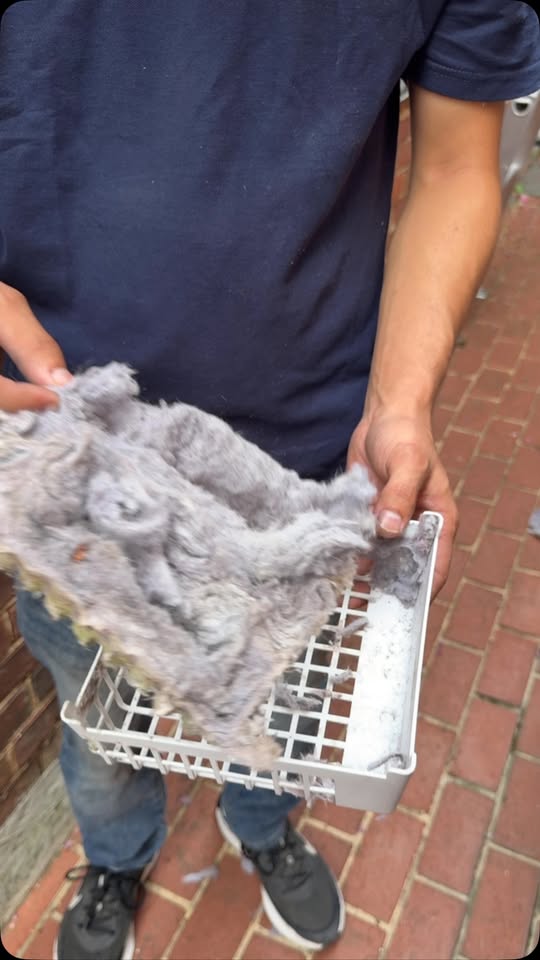 Real AirDuctVet photo
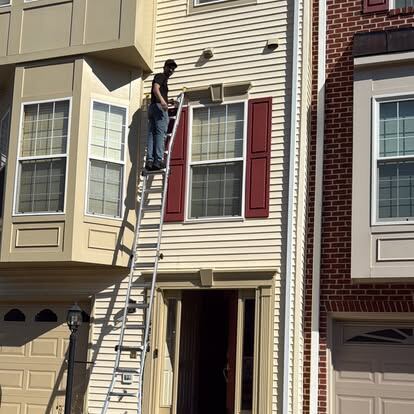 Real AirDuctVet photo
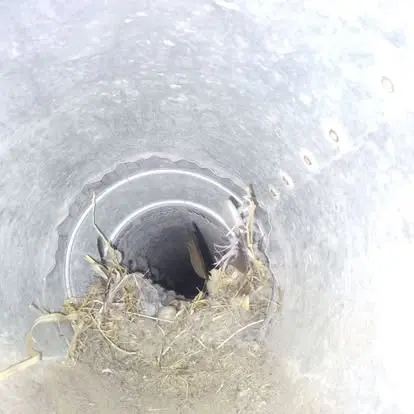 Real AirDuctVet photo
Clear, practical guidance: General education cannot replace an on-site inspection. We separate routine maintenance from conditions that need an HVAC, appliance, chimney, mold, or restoration specialist.
Can a dryer vent exhaust into an attic or crawl space?
No. Section M1502.2 of the 2024 International Residential Code requires dryer exhaust systems to be independent of other systems and to convey moisture outdoors. Whirlpool and GE installation guidance also directs dryer exhaust to the outside. The locally adopted code and the exact appliance instructions control a specific installation.
A duct that stops near an attic vent, soffit opening, crawl-space vent, or garage door is still ending inside the building. Warm exhaust does not become an outdoor discharge simply because the surrounding area has some natural ventilation.
Why is an indoor dryer termination a problem?
A vented dryer releases moisture, heat, and lint. When the route ends inside, those materials enter a space that was not designed to receive dryer exhaust. Lint can settle on framing, insulation, stored items, and equipment, while moisture can condense on cooler surfaces.
An indoor termination can also hide the true condition of the route. Air movement near an attic or crawl-space opening does not prove that the dryer has an approved exterior outlet, that every joint is connected, or that the full path is made from suitable material.
What should you do if the vent ends inside?
Do not extend the route with improvised plastic, foil, tape, or a loose pipe. Photograph the dryer connection, the visible duct, and the point where it ends without entering an unsafe attic or crawl space. Record the dryer model and ask the property owner, manager, or qualified contractor to evaluate a compliant outdoor route.
If you notice smoke, sparks, a burning odor, abnormal heat, a damaged electrical connection, or significant moisture damage, stop using the dryer and seek appropriate qualified help. Cleaning is not a substitute for correcting an unsafe installation or active damage.
- Confirm whether the duct truly reaches an exterior wall or roof termination.
- Check the appliance instructions for material, diameter, length, and fitting requirements.
- Have concealed disconnections, crushed sections, and improper routing handled by the appropriate repair trade.
- Obtain required landlord, condominium, HOA, roof, or property-management approval before routing changes.
Can dryer vent cleaning fix an indoor termination?
No. AirDuctVet can clean qualifying accessible dryer vent sections and assess visible connections, termination conditions, and airflow within the approved scope. A Cobra inspection camera may help document accessible sections, but it cannot see through every bend or certify concealed construction.
Rerouting, extending, replacing, or reconnecting concealed ductwork is repair work and is not automatically included with dryer vent cleaning. The correct next step may involve a qualified duct installer, appliance technician, roofer, building engineer, or property manager, depending on the route and access.
What does AirDuctVet include and exclude?
The written quote defines the approved cleaning path, access points, and exterior work. Routine cleaning does not automatically include mechanical repair, duct rerouting, appliance repair, filter replacement, roofing work, or structural work. Special ladder, roof, attic, crawl-space, or managed-building access must be reviewed before service.
For separate air-duct cleaning requests, coil cleaning is not included unless the customer specifically requests it and AirDuctVet separately approves the work. Routine air-duct service also does not automatically include mechanical repair or filter replacement.
Frequently asked questions
Can a dryer vent end in a ventilated attic? No. Attic ventilation does not turn the attic into an approved outdoor dryer termination.
Can the vent end in a crawl space if the crawl space has vents? No. The dryer exhaust still needs to discharge outdoors through a compliant termination.
Will cleaning remove all lint from an attic? Dryer vent cleaning addresses the approved accessible vent path, not dispersed attic insulation, framing, stored contents, or building-wide cleanup. A separate cleanup or restoration scope may be needed.
Does strong airflow prove the installation is correct? No. Airflow at one point does not verify the material, length, joints, concealed condition, or final termination of the complete route.
What should I send for a quote? Send the property ZIP code, dryer floor, visible outlet location, dryer model, route photos, and any building access rules. Those details help separate routine cleaning from repair or rerouting work.
Sources and further reading
Official guidance informs the general information above. AirDuctVet's included services are defined by your written quote; local requirements and manufacturer instructions may differ.