
Can a Dryer Vent Be Too Long? Length and Bend Guide
Can a dryer vent be too long? Learn how length, bends, crushed connections, roof exits, and restrictive caps affect airflow and when cleaning is not enough.
The short answer
As of August 2026, a dryer vent can be too long or too restrictive for the appliance and route. The answer is not based on distance alone. Every bend, crushed section, rough connection, vertical rise, and restrictive exterior cap adds resistance, and the dryer manufacturer's installation requirements still control the allowable configuration.
Three real AirDuctVet field photos
These authentic AirDuctVet job photos were selected for this topic. We do not use repeated AI artwork or stock photography.
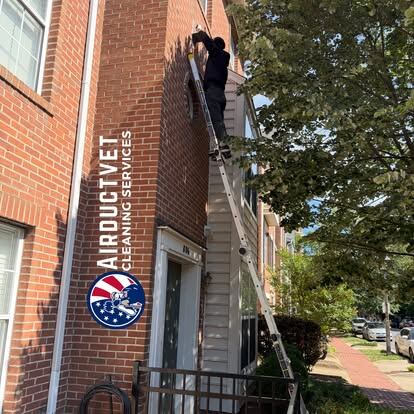 Real AirDuctVet photo
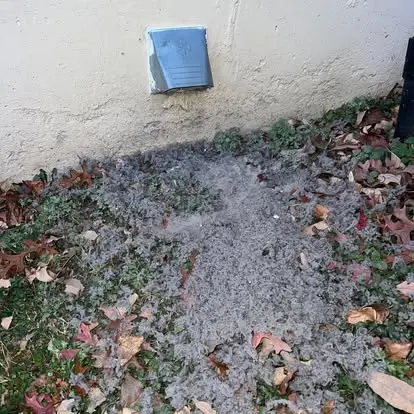 Real AirDuctVet photo
 Real AirDuctVet photo
Clear, practical guidance: General education cannot replace an on-site inspection. We separate routine maintenance from conditions that need an HVAC, appliance, chimney, mold, or restoration specialist.
How does dryer vent length affect airflow?
A longer route gives exhaust air and lint more surface area to travel across. Bends change direction and add resistance. A long, straight metal route may perform better than a shorter route with several tight elbows, a crushed transition connector, or a cap that barely opens.
There is no responsible universal maximum that applies to every dryer. The appliance model, approved duct material, route design, and local requirements must be checked together. AirDuctVet does not approve a route based only on a homeowner's estimated number of feet.
What are the warning signs of a restrictive dryer vent route?
Repeated long cycles, unusually warm laundry areas, weak movement at the exterior damper, moisture remaining in normal loads, and appliance airflow warnings can justify an inspection. These symptoms do not prove that lint is the only cause.
A dryer fault, blocked cap, damaged duct, booster-fan problem, improper installation, or overloaded cycle can produce similar symptoms. Stop using the appliance and seek urgent qualified help if there is smoke, sparking, or a burning odor.
Are roof vents and second-floor exits automatically a problem?
No. A roof or high-wall termination can work when the route is designed for the appliance, remains intact, and has an appropriate outlet. It may require more preparation because safe ladder or roof access, property permission, outlet condition, and vertical lint accumulation must be considered.
Condos and managed buildings may also have shared access rules or concealed sections that are outside a routine residential cleaning scope. AirDuctVet confirms those limitations before promising end-to-end access.
When will cleaning help, and when is repair needed?
Cleaning can remove accessible lint from a qualifying route. AirDuctVet uses a rotating brush with simultaneous vacuum extraction when the route and access allow it, then checks the accessible connection, exterior termination, damper, and airflow condition.
Cleaning cannot shorten an excessive route, replace improper material, reconnect a hidden separation, repair a crushed section, or correct an appliance fault. Those findings require a separately approved repair scope or another qualified professional.
What should you send with a dryer vent quote request?
Send the full property address, property type, dryer floor, approximate outlet location, photos of the accessible connection and exterior termination, and the symptoms you noticed. Include any condo, roof, parking, ladder, or management restrictions. These details help AirDuctVet determine whether routine cleaning, special access, inspection, or repair should come first.