
What Should I Do If I Hear an Animal in My Chimney?
Hear an animal in the chimney? Stop fireplace use, avoid DIY removal, protect the room, and identify the right chimney, wildlife, or public-health response.
The short answer
Stop using the fireplace or connected appliance until the animal, nest, and venting path have been assessed. Do not light a fire to drive the animal out, reach into the firebox or flue, or seal the chimney. Close the fireplace screen or doors if that can be done without approaching the animal, keep people and pets away, and call the appropriate chimney or wildlife professional. If a bat may have entered an occupied room or touched a person or pet, contact local public health or animal control promptly. The three AirDuctVet field photos below show real chimney-service access and cleaning, not the animal or condition at your property.
Three real AirDuctVet field photos
These authentic AirDuctVet job photos were selected for this topic. We do not use repeated AI artwork or stock photography.
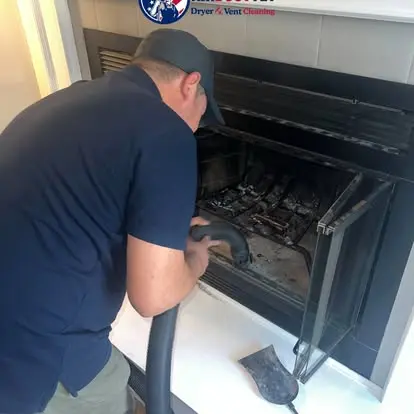 Real AirDuctVet photo
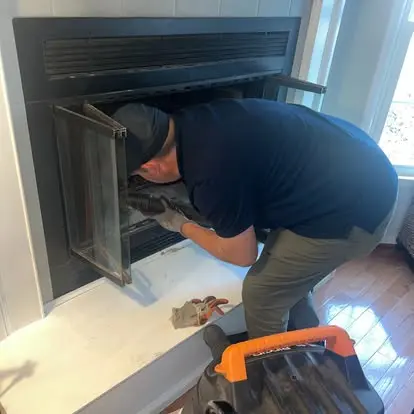 Real AirDuctVet photo
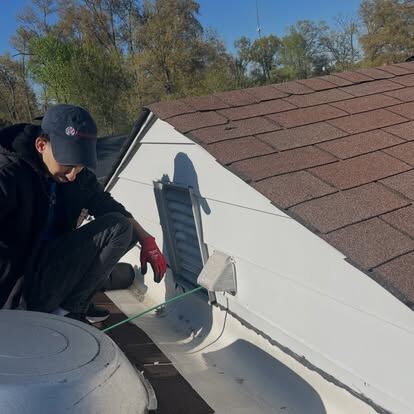 Real AirDuctVet photo
Clear, practical guidance: General education cannot replace an on-site inspection. We separate routine maintenance from conditions that need an HVAC, appliance, chimney, mold, or restoration specialist.
First, stop fireplace use and secure the room
Do not start a fire, add smoke, use chemicals, or run a connected fuel-burning appliance to force an animal out. Heat and smoke can injure wildlife, ignite nesting material, or push smoke and gases into the home when the flue is blocked. The U.S. Fire Administration advises keeping chimneys maintained and vents clear; an active animal concern means the venting path has not yet been confirmed clear.
From a safe location, note when and where you hear scratching, fluttering, chirping, or movement. Photograph the fireplace opening, damper area, or chimney exterior only if you can do so without climbing, reaching into the flue, or disturbing the animal. Do not open a damper to investigate unless a qualified professional directs you.
- Keep children and pets out of the room.
- Close the fireplace screen or doors only if the animal is still contained and you can do so safely.
- Do not block the chimney top, cleanout, or another possible exit.
- Call 911 for smoke, fire, or an immediate life-safety emergency.
Bird, bat, squirrel, or raccoon: the response is not the same
Sound alone cannot reliably identify the species or tell you whether there is an active nest, young animals, or an obstruction. A wildlife professional may need to observe the entry point and timing before planning exclusion. Chimney cleaning should wait when wildlife is active or the legal status is uncertain.
Chimney swifts are migratory birds protected by the Migratory Bird Treaty Act. The U.S. Fish and Wildlife Service states that harassing, injuring, or killing the birds, their eggs, or their nests is illegal. Activity can vary by region and season, so do not assume a nest is inactive based only on the calendar. A licensed wildlife rehabilitator or the appropriate wildlife agency can guide the next step when swifts or young birds may be present.
Treat any possible bat contact as a public-health question
Do not touch a bat with bare hands. CDC guidance says bat bites can be small and may go unnoticed. If a bat was in a room with a sleeping person, a child, someone unable to report contact, or a pet, contact the local health department or animal control before releasing or discarding the bat. They can advise about safe capture, testing, and whether medical or veterinary evaluation is needed.
A chimney appointment is not a rabies exposure assessment. If a person was bitten, scratched, or may have had direct contact, follow CDC and local public-health instructions promptly. If a pet may have had contact, call a veterinarian and animal control for guidance.
Use the right professional for removal, cleaning, and repair
A wildlife professional handles active animals, exclusion, and species-specific requirements. A chimney provider can assess accessible soot, debris, fireplace components, and whether cleaning is appropriate after the animal issue has been resolved. A mason, roofer, fireplace specialist, or other qualified trade may be needed for a damaged cap, crown, liner, damper, chase, masonry, flashing, or appliance connection.
Cleaning does not repair an opening or prevent re-entry. A compatible chimney cap may help limit future animal entry, but it must fit the flue and system, and it should never be installed while animals, young, or an active nest remain inside. Roof access, weather, chimney condition, protected-species rules, and the appliance configuration can change the plan.
What AirDuctVet can document and what remains outside scope
For an approved chimney scope, AirDuctVet can review accessible conditions, sweep qualifying soot or inactive debris, and document selected reachable areas. A Cobra inspection camera may help view part of a reachable flue when included, but a camera assessment is not automatically a complete NFPA 211 Level 2 chimney inspection and cannot verify every concealed joint, clearance, liner, or structural condition.
Routine chimney service does not automatically include live-animal trapping, wildlife rehabilitation, nest authorization, rabies guidance, structural or masonry repair, roofing, liner work, appliance repair, gas or electrical work, or chimney-cap installation. Each additional service requires separate evaluation and written approval, and some conditions must be referred to another qualified provider.
Air-duct and dryer-vent services are separate. Coil cleaning must be requested, separately evaluated, and separately approved. Routine duct service does not automatically include mechanical repair or filter replacement. AirDuctVet does not promise medical improvement, guaranteed utility savings, or a fixed routine cleaning interval for every property.
Quick answers about an animal in a chimney
Can I light a small fire to make the animal leave? No. An animal or nest can block the flue, and smoke or heat can injure wildlife or enter the home. Keep the fireplace out of service until the path is assessed.
Should I open the damper? Not just to investigate. Opening it can allow an animal, droppings, or nesting material into the room. Keep the area contained and ask the appropriate professional how to proceed.
Can a chimney sweep remove any animal? No. Active wildlife, bats, protected birds, eggs, and young require species-specific handling and may require wildlife or public-health authorities. Sweeping may be appropriate only after those issues are resolved.
Will a chimney cap prevent this from happening again? A correctly selected cap can help limit entry, but it does not repair every chimney defect and must not trap wildlife inside. Cap installation requires a separate fit, condition, and access review.
Sources and further reading
Official guidance informs the general information above. AirDuctVet's included services are defined by your written quote; local requirements and manufacturer instructions may differ.