
Why Won’t My Dryer Vent Flap Open?
A dryer vent flap that will not open signals restricted exhaust or a damaged termination. Learn what to check safely and when cleaning is not enough.
The short answer
If the exterior dryer-vent flap does not open while the dryer is running, stop using the dryer until the exhaust path and termination can be checked. Lint, a nest, debris, a crushed connector, a disconnected route, or a stuck or damaged damper may be responsible. Do not keep running cycles to force it open. The three AirDuctVet field photos below show an exterior termination, exterior vent service, and a dryer connection; they do not diagnose the condition at your property.
Three real AirDuctVet field photos
These authentic AirDuctVet job photos were selected for this topic. We do not use repeated AI artwork or stock photography.
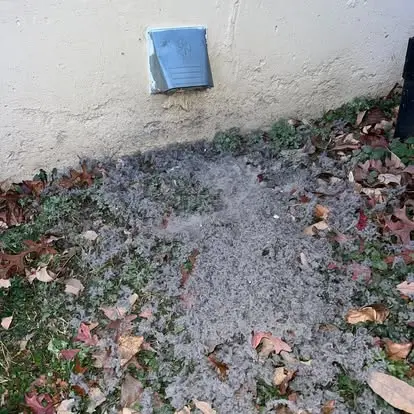 Real AirDuctVet photo
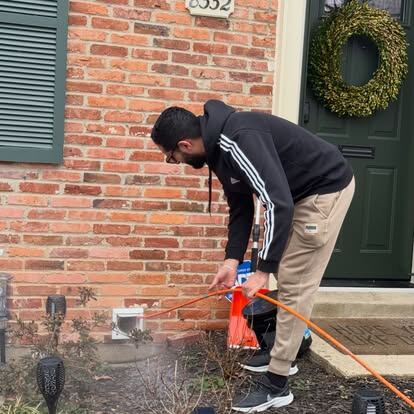 Real AirDuctVet photo
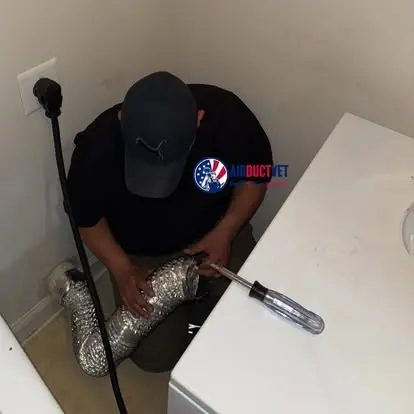 Real AirDuctVet photo
Clear, practical guidance: General education cannot replace an on-site inspection. We separate routine maintenance from conditions that need an HVAC, appliance, chimney, mold, or restoration specialist.
A closed flap means the exhaust needs a complete check
The U.S. Fire Administration tells homeowners to make sure the outdoor vent covering opens when the dryer operates and to check that the venting behind the dryer is not damaged, crushed, or restricted. A flap that stays closed is therefore a useful warning, but it does not identify the exact blockage.
The restriction may be at the hood, inside the concealed duct, at a joint, or behind the dryer. The dryer may also have an appliance-side airflow problem. Checking only the visible flap or cleaning only one end cannot confirm that the entire route is clear and correctly connected.
Common causes include lint, debris, damage, and poor airflow
Lint can collect behind the damper or farther inside the route. Outdoor debris, paint, corrosion, a bent hood, or a nest can also keep the flap from moving. Behind the appliance, a crushed or sharply kinked connector can reduce airflow before it reaches the exterior.
Whirlpool advises checking that the exterior hood is not clogged or blocked and that the venting behind the dryer is not crushed. GE explains that low airflow can trigger a check-vent alert and can leave excess heat and moisture in the dryer. These symptoms support an inspection; they do not prove that cleaning alone will solve the problem.
Check only what is safely visible
Turn the dryer off before touching the termination. From ground level, look for lint, leaves, snow, paint, obvious damage, or a flap caught against the hood. Do not reach into a hot opening, remove a wildlife nest, climb a roof or tall ladder, or force a damaged damper.
If there is smoke, sparking, a burning odor, or an active fire, leave the area and call 911. If you smell gas, leave the area and follow the gas utility's emergency instructions. Dryer-vent service is not electrical, gas, appliance, or fire-cause investigation.
- Photograph the closed flap and the termination from a safe position.
- Record whether the dryer shows a vent warning or takes longer than expected.
- Note whether the route exits through a wall, roof, or shared building system.
- Tell the office about suspected birds, height, roof access, or HOA restrictions before scheduling.
Cleaning and repair are different scopes
A professional vent appointment can assess the accessible route, remove serviceable lint or debris, check airflow, and document restrictions that remain. If the exterior hood, damper, connector, or concealed duct is damaged, incorrectly installed, or disconnected, cleaning does not repair it.
Replacement of a termination, bird-related work, appliance moving, duct modification, wall or roof work, and mechanical repair require separate evaluation and approval. In a condo or managed property, the exterior termination or shared route may be controlled by the association or building manager.
What AirDuctVet service includes and excludes
AirDuctVet can inspect and clean an accessible dryer-exhaust route when the access and conditions fit the written scope. The visit does not automatically include appliance repair, electrical or gas work, concealed duct reconstruction, exterior carpentry, roofing, termination replacement, wildlife removal, or code certification.
Air-duct cleaning is a separate service. Coil cleaning must be requested and separately approved, and routine duct service does not automatically include mechanical repair or filter replacement. AirDuctVet does not promise medical improvement, guaranteed utility savings, or a fixed service interval for every property.
Quick answers about a dryer vent flap not opening
Can I tape the flap open? No. Altering the termination can create weather, pest, or safety problems and does not correct the underlying restriction.
Does a closed flap always mean lint buildup? No. Debris, a nest, damage, a crushed connector, a disconnected route, or an appliance-side problem can produce similar symptoms.
Will cleaning make the flap open again? It may when serviceable buildup is the cause. A damaged or incorrectly installed termination needs the appropriate repair or replacement.
Sources and further reading
Official guidance informs the general information above. AirDuctVet's included services are defined by your written quote; local requirements and manufacturer instructions may differ.