
Why Is Lint Coming Out of My Outdoor Dryer Vent Hood?
Lint coming out of my outdoor dryer vent can be normal in small amounts, but clumps, weak airflow, or a stuck damper can signal a restriction to inspect.
The short answer
A few loose fibers at the outdoor hood can escape the lint filter during normal operation. Thick lint, repeated clumps, a damper that will not move freely, weak airflow, long drying times, or excess heat are not proof of one specific problem, but they do justify checking the complete path from the dryer connection to the exterior termination. Cleaning may remove qualifying accessible lint; it cannot repair a dryer, rebuild a damaged duct, or make an improper outlet compliant.
Three real AirDuctVet field photos
These authentic AirDuctVet job photos were selected for this topic. We do not use repeated AI artwork or stock photography.
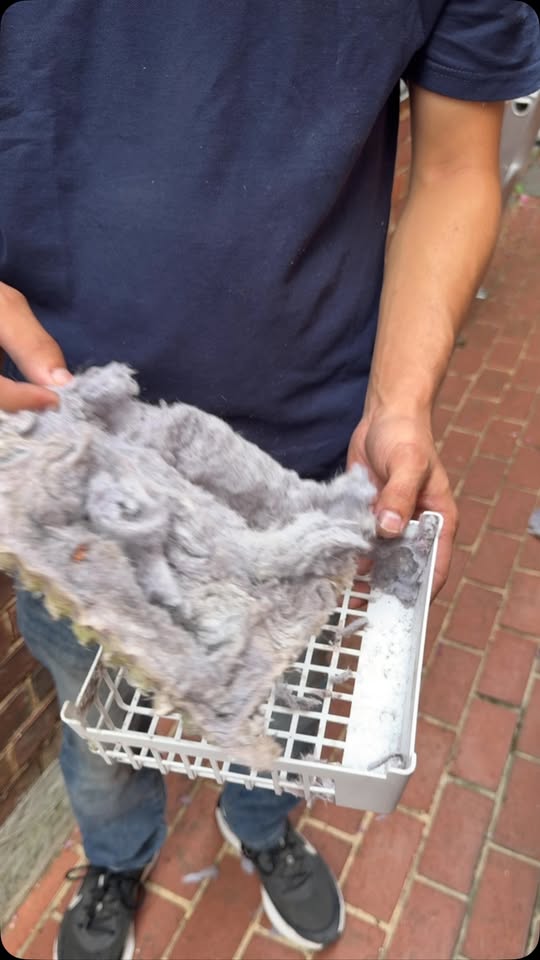 Real AirDuctVet photo
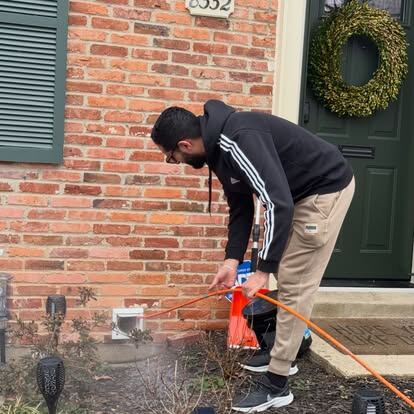 Real AirDuctVet photo
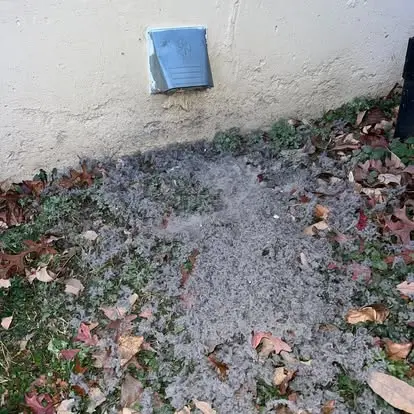 Real AirDuctVet photo
Clear, practical guidance: General education cannot replace an on-site inspection. We separate routine maintenance from conditions that need an HVAC, appliance, chimney, mold, or restoration specialist.
Is lint at the outdoor dryer vent normal?
Some lint can bypass the dryer's filter and leave with the exhaust air, so a few light fibers near a freely opening hood are not automatically a blockage. The amount and pattern matter. A new pile after every load, a mat across the hood, lint caught behind a stuck flap, or debris spreading across siding or a deck deserves a closer look.
The outdoor appearance alone cannot tell you whether the route is clear. Strong exhaust can carry loose fibers out of an otherwise open duct, while a restriction can trap lint throughout the route and leave only a small amount at the outlet. Drying performance, heat, airflow, the lint screen, the transition connection, and the full route need to be considered together.
What can cause lint to collect outside?
Lint at the termination can come from ordinary filter bypass, a filter that is damaged or not seated correctly, lint around the filter housing, a crushed transition connector, excess bends, a long route, a partially blocked hood, animal debris, or buildup farther inside the duct. Certain fabrics and larger loads also release more lint, so one lint-heavy load does not establish a permanent vent problem.
Whirlpool advises checking the entire venting system when lint is not being collected normally and testing air movement at the outside hood. Its venting guidance also notes that longer routes and additional elbows reduce airflow and encourage lint accumulation. The dryer's model-specific instructions remain the right reference for the permitted route and materials.
- Check that the lint screen is present, intact, clean, and seated as the dryer manufacturer directs.
- Look behind the dryer for a crushed, kinked, loose, or damaged transition connector without moving a gas appliance unsafely.
- Run a normal cycle and observe whether the exterior damper opens freely and whether airflow feels steady.
- Note long dry times, a very hot dryer or laundry room, an airflow warning, moisture, or a burning odor.
- Do not add mesh or an improvised screen to catch lint at the outlet; model code prohibits screens at dryer exhaust terminations because they can collect lint.
When does exterior lint point to a restriction?
Exterior lint becomes more concerning when it appears with weak airflow, a damper that barely opens, repeated long cycles, clothes that remain damp, unusual heat, a check-vent message, or visible buildup at both ends of the route. Those symptoms can reflect a restricted duct, but they can also involve a crushed connector, appliance airflow problem, damaged component, or installation condition.
The U.S. Fire Administration advises cleaning the lint filter before and after each cycle, checking that venting behind the dryer is not damaged, crushed, or restricted, and confirming that the outdoor covering opens during operation. USFA also identifies failure to clean as a leading factor in home clothes-dryer fires. If there is smoke, sparking, or a persistent burning odor, stop using the dryer and seek appropriate urgent help rather than continuing test cycles.
What should be inspected and cleaned?
A useful dryer-vent assessment follows the airflow path: lint screen and housing, appliance connection, transition duct, accessible concealed route, elbows, and exterior hood. Cleaning should address qualifying accessible lint along the approved route while controlling debris, then confirm observable airflow and damper movement. A clean-looking hood is not evidence that every concealed section is clear.
A Cobra inspection camera may help document selected reachable sections, such as a lint deposit, joint, bend, water, or visible damage. It cannot pass every turn or obstruction, see through the duct wall, measure all concealed clearances, or certify the entire installation. Camera footage supports a scope decision only for the areas actually reached.
What is included and excluded from AirDuctVet service?
For an approved dryer-vent cleaning scope, AirDuctVet can review accessible connections and the visible termination, remove qualifying accessible lint, document observable conditions, and check airflow within the approved work. Dryer disassembly or repair, gas or electrical work, duct reconstruction, wall or roof openings, outlet relocation, waterproofing, and code certification are not automatically included and may require another qualified trade.
Air-duct cleaning is a separate service. Coil cleaning must be specifically requested, separately evaluated, and approved. Routine duct service does not automatically include mechanical repair or filter replacement. Every added item must appear in the written scope before work begins.
AirDuctVet reviews qualifying dryer-vent requests in Northern Virginia, Washington, DC, Maryland, Raleigh, Cary, and Miami. The dryer model, route, symptoms, property rules, and safe access determine the service plan; a city name does not substitute for a property-specific review.
Frequently asked questions
Does lint outside mean the dryer vent is clogged? Not necessarily. A small amount can leave with normal exhaust, while clumps, weak airflow, a stuck damper, heat, or long drying times make a restriction more likely and justify inspection.
Should I put a screen over the outdoor dryer vent? No improvised screen should be added. The model IRC prohibits screens at dryer exhaust terminations because they can collect lint; follow the locally adopted code and dryer instructions.
Why is the lint screen nearly empty while lint appears outside? The screen may be damaged, poorly seated, or affected by load type, cycle selection, airflow, or an internal appliance condition. Check the manufacturer's instructions and have the appliance evaluated if the pattern continues after the house vent is confirmed clear.
Can I tell that the vent is clear because the flap opens? No. A moving flap shows some airflow at that moment, but it does not prove that the entire route is clean, undamaged, correctly sized, or within the dryer's allowed length.
Will dryer-vent cleaning stop every piece of lint from reaching the outlet? No. Cleaning can remove qualifying accessible buildup and restore an observed restriction, but some lint may still bypass the filter during normal operation. Results depend on the dryer, filter, load, route, and condition.
Sources and further reading
Official guidance informs the general information above. AirDuctVet's included services are defined by your written quote; local requirements and manufacturer instructions may differ.