
Why Does My Laundry Room Get Hot When the Dryer Runs?
A laundry room that gets very hot while the dryer runs can point to leaking exhaust, restricted airflow, poor room ventilation, or an appliance problem.
The short answer
A little warmth near a running dryer can be normal, but a laundry room that becomes unusually hot or humid needs attention. A vented dryer should carry heated, moisture-laden air outdoors. Heat can build up indoors when the connection leaks or separates, the exhaust route is crushed or restricted, the exterior damper cannot open, the room lacks the ventilation required by the dryer instructions, or the appliance has a fault. Stop using the dryer if you notice a burning odor, smoke, a gas odor, a carbon-monoxide alarm, or an abnormally hot surface, and have the correct professional evaluate it.
Three real AirDuctVet field photos
These authentic AirDuctVet job photos were selected for this topic. We do not use repeated AI artwork or stock photography.
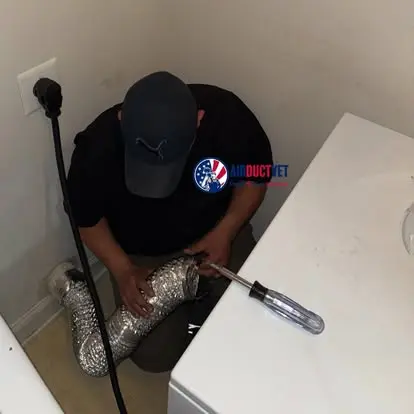 Real AirDuctVet photo
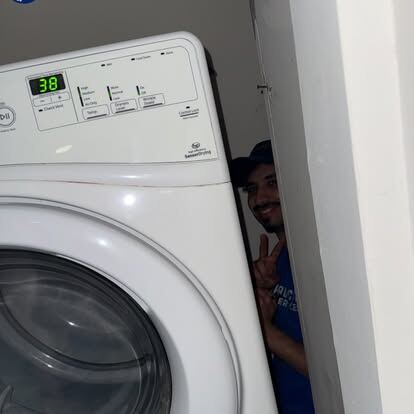 Real AirDuctVet photo
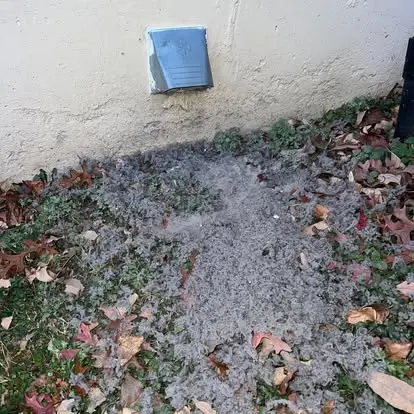 Real AirDuctVet photo
Clear, practical guidance: General education cannot replace an on-site inspection. We separate routine maintenance from conditions that need an HVAC, appliance, chimney, mold, or restoration specialist.
Why can a running dryer overheat the laundry room?
A conventional vented dryer moves warm, moist air through a transition connector and exhaust duct to an outdoor termination. If hot exhaust escapes behind the dryer or cannot move freely to the exterior, some of that heat and humidity can remain in the laundry room instead of leaving the building.
Common causes include a loose or disconnected connector, a crushed or sharply kinked transition duct, lint buildup, a blocked or stuck exterior damper, a long route with excessive bends, a damaged concealed section, or exhaust air being drawn back through a nearby opening. A small enclosed closet can also heat up when the installation does not provide the clearances or air openings required by the dryer manufacturer.
An appliance problem can create similar symptoms. A heating-control fault, blower problem, damaged seal, overloaded drum, or another internal issue is not a dryer-vent-cleaning diagnosis. The vent route and appliance should be evaluated separately so cleaning is not used as a substitute for repair.
- Heat and humidity behind the dryer can indicate a leaking or separated exhaust connection.
- Weak exterior airflow can support a restriction concern, but it does not identify the exact location or cause.
- A damper that barely opens, is stuck, or is packed with lint or nesting material needs evaluation.
- A hot room with normal vent airflow can still involve room ventilation, installation, or appliance conditions.
When should I stop using the dryer?
Stop the cycle and let the appliance cool if the room temperature rises sharply, the dryer or nearby wall becomes abnormally hot, you smell burning material, you see smoke, the dryer displays a vent warning, or the exterior exhaust appears absent. Do not keep restarting the dryer to test it and do not reach behind a hot, energized, or gas-connected appliance.
If you smell gas, hear gas escaping, or a carbon-monoxide alarm sounds, leave the area and follow the emergency instructions from the utility, alarm manufacturer, or local emergency service. Dryer vent cleaning is not emergency response and does not inspect or repair gas piping, combustion systems, wiring, or internal appliance components.
The U.S. Fire Administration advises cleaning the lint filter before and after each load and checking that the outdoor vent opens when the dryer operates. CPSC guidance also calls for periodic cleaning of the vent and exhaust duct. Those maintenance steps reduce avoidable lint accumulation, but they do not make continued use safe when an active warning sign is present.
What can I check without moving the dryer?
Start with observations that do not require disconnecting the appliance. Clean the lint screen according to the manufacturer instructions, note whether clothes are taking longer to dry, and look at the outdoor termination from a safe location while the dryer runs. The damper should respond to airflow and should not be covered by a screen that traps lint. Do not climb, remove guards, or put a hand into moving equipment.
Look from the side for a connector that appears crushed, detached, torn, or compressed against the wall. Do not pull a stacked, recessed, or gas dryer forward unless the appliance manufacturer and a qualified professional confirm a safe method. Moving it can damage the connector, flooring, gas connection, water line, power cord, or appliance.
Record when the room becomes hot, whether it also becomes humid, whether the symptom started after the dryer was moved, and whether the exterior exhaust feels weaker than before. These details help separate a likely exhaust-path issue from a room-ventilation or appliance problem.
How should the vent route be inspected?
A useful dryer-vent inspection follows the route from the appliance connection to the outdoor termination. It documents the connector material and condition, accessible joints, route length and bends, visible lint or nesting material, termination type, damper movement, and any section that is crushed, disconnected, unsupported, or inaccessible.
Airflow observations can indicate that the system needs attention, but one reading does not prove that every concealed section is sound or that the dryer is operating correctly. Weather, cycle settings, load condition, route geometry, damper design, and appliance performance can affect the result.
The Cobra inspection camera may document selected accessible portions of a dryer vent route. It cannot see through walls, verify every concealed joint, certify code compliance, diagnose an internal dryer fault, or replace the appliance manufacturer's service procedure. A damaged, unlisted, or inaccessible exhaust section may require repair or replacement by the appropriate qualified trade.
When does cleaning help, and when is repair needed?
Professional cleaning can help when qualifying lint, debris, or nesting material is restricting an accessible exhaust route. The method should reach the approved route from appropriate service points, collect removed material, protect the appliance connection, and confirm that the exterior termination is not left blocked.
Cleaning cannot reconnect a separated duct, repair a crushed connector, replace an unsafe material, shorten an overlong route, add required room ventilation, correct a roof or wall termination, or repair the dryer. If the room stays unusually hot after the accessible vent is confirmed clear, the next step is appliance or installation evaluation rather than repeated cleaning.
DOE Building America guidance emphasizes proper dryer venting to the outdoors. Manufacturer instructions control the specific dryer's clearances, permitted duct, maximum route, and room or closet requirements. Local code and property rules may add requirements, especially in multi-unit buildings.
What does AirDuctVet include and exclude?
For an approved dryer-vent scope, AirDuctVet can clean qualifying accessible portions of the dryer exhaust route from appropriate service points, remove accessible lint or debris, review the appliance connection and exterior termination, document observable conditions, and explain findings. Access, route length, height, appliance position, and exclusions are confirmed before work begins.
Routine dryer vent cleaning does not automatically include moving an unsafe or inaccessible appliance, internal dryer disassembly, appliance repair, gas or electrical work, duct replacement, wall or roof repair, mechanical ventilation changes, fire investigation, or code certification. A disconnected, crushed, damaged, or inaccessible route can require another qualified trade or a separately approved scope.
Air-duct cleaning is a separate service. Coil cleaning must be specifically requested, separately evaluated, and separately approved. Routine duct service does not automatically include mechanical repair or filter replacement. AirDuctVet does not promise medical improvement, guaranteed bill savings, or a fixed cleaning interval; the appropriate next step depends on use, route, installation, and observed condition.
Frequently asked questions
Is it normal for the top of a dryer to feel warm? Some warmth can be normal, but an abnormally hot surface, burning odor, smoke, repeated shutdown, or a room that becomes excessively hot needs evaluation under the appliance instructions.
Can a clogged dryer vent make the laundry room hot? Yes, restricted airflow can contribute to higher dryer and room temperatures, but heat can also come from a leaking connection, poor room ventilation, installation conditions, or an appliance fault.
Why is the laundry room humid when the dryer runs? A vented dryer releases moisture through the exhaust. Indoor humidity can indicate leaking exhaust, a detached connection, an indoor termination, or another installation problem that needs correction.
Will cleaning the vent fix the heat immediately? Only if removable buildup is the cause and no other defect remains. Cleaning will not repair a damaged route, room-ventilation issue, or internal dryer problem.
Can AirDuctVet repair the dryer? Appliance repair is not included in routine dryer vent cleaning. AirDuctVet can document vent conditions and explain when an appliance technician or another qualified trade is needed.
Sources and further reading
Official guidance informs the general information above. AirDuctVet's included services are defined by your written quote; local requirements and manufacturer instructions may differ.