
Does a Dirty HVAC Filter Mean My Air Ducts Need Cleaning?
A dirty HVAC filter does not prove the ducts need cleaning. Learn what the filter can reveal, what to check first, and when a duct inspection makes sense.
The short answer
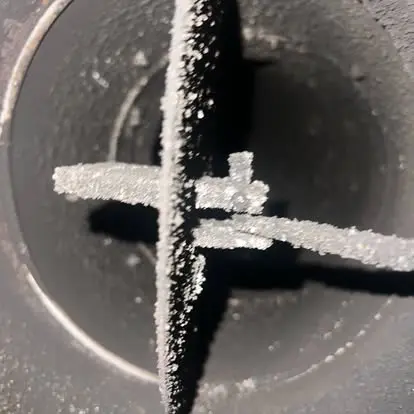
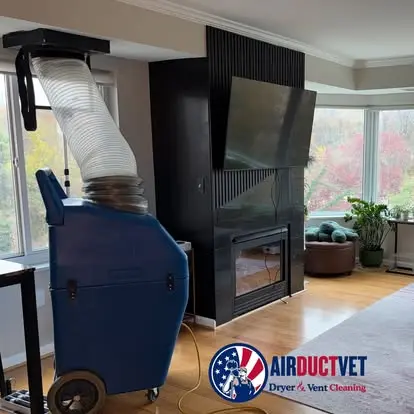
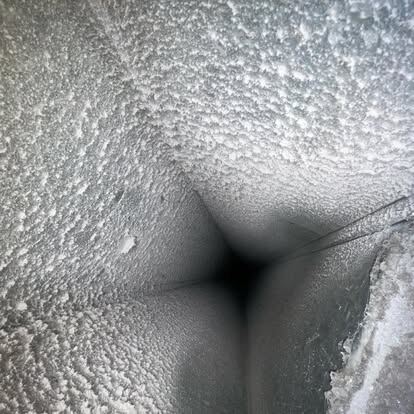
No. A dirty HVAC filter shows that the filter has captured particles and may need cleaning or replacement, but it does not by itself prove that the air ducts need cleaning. Filter condition, equipment airflow, accessible duct surfaces, recent construction, moisture, pests, and material coming from registers should be evaluated separately. The three AirDuctVet field photos below show an accessible register, a duct interior, and air-duct cleaning equipment; they do not diagnose your system.
Three real AirDuctVet field photos
These authentic AirDuctVet job photos were selected for this topic. We do not use repeated AI artwork or stock photography.
 Real AirDuctVet photo
 Real AirDuctVet photo
 Real AirDuctVet photo
Clear, practical guidance: General education cannot replace an on-site inspection. We separate routine maintenance from conditions that need an HVAC, appliance, chimney, mold, or restoration specialist.
A dirty filter and dirty ducts are different findings
An HVAC filter collects particles from air moving through the return side of the system. How quickly it looks dirty can depend on system runtime, household activity, pets, renovation dust, outdoor smoke, filter efficiency, filter size, return leakage, and whether the filter fits its rack correctly. Its appearance is useful maintenance information, but it does not reveal the condition of every supply and return duct.
ENERGY STAR advises inspecting, cleaning, or changing filters regularly because a dirty filter can restrict airflow and strain equipment. That maintenance should be handled promptly. It still does not establish that a professional duct-cleaning scope is necessary.
Check the filter and HVAC system first
Follow the equipment and filter manufacturer's instructions for the correct dimensions, airflow direction, replacement type, and service timing. Do not force a higher-efficiency filter into a system that cannot accommodate its airflow resistance. EPA recommends selecting a filter efficiency that the system fan and filter slot can support, with HVAC guidance when needed.
If a new filter becomes heavily loaded unusually fast, airflow stays weak, the system freezes, the blower sounds abnormal, or heating and cooling performance changes, request HVAC evaluation. Filter-rack gaps, return leakage, blower problems, coil restrictions, duct damage, and other mechanical conditions are not corrected by cleaning the ducts.
- Photograph the old filter before removing it and note how long it was installed.
- Confirm that the replacement matches the approved size and installation direction.
- Document recent construction, pets, smoke events, water problems, or pest activity.
- Report weak airflow, ice, unusual noise, odors, or equipment shutdowns to an HVAC professional.
When a separate duct inspection makes sense
A duct inspection is more useful when there is specific evidence beyond a dirty filter: substantial visible debris inside accessible ducts, particles being discharged from registers, confirmed pest contamination, suspected moisture damage, or identified microbial growth. EPA does not recommend routine duct cleaning on a fixed schedule; it advises considering cleaning as needed after the condition and cause are evaluated.
The inspection should identify the duct material and affected locations. Bare sheet metal, flexible duct, duct board, and internally lined duct cannot automatically receive the same method. Wet, deteriorated, or contaminated insulation may require repair, removal, replacement, or another qualified specialist rather than aggressive cleaning.
Cleaning cannot fix the source of every dusty filter
Professional source removal can address qualifying accessible dust and debris within an approved scope. It cannot seal return leaks, repair damaged ducts, correct an undersized filter rack, balance airflow, fix a blower, resolve a drainage or moisture problem, or repair heating and cooling equipment. Those conditions require the appropriate qualified trade and separate authorization.
If moisture, suspected mold, asbestos-containing material, animal waste, damaged insulation, or another hazardous condition is present, work may need to pause until the material and source are properly assessed. Sanitizer or deodorizer is not a substitute for correcting moisture, removing damaged material, or completing necessary repairs.
What AirDuctVet service includes and excludes
AirDuctVet can document accessible conditions and propose an air-duct cleaning method suited to the observed material, debris, and access. Commercial HEPA negative-air equipment and other approved source-removal tools may be used when they fit the written scope. A Cobra inspection camera may document selected reachable areas, but it cannot see every concealed surface or diagnose HVAC equipment.
Coil cleaning must be requested, separately evaluated, and separately approved. Routine duct service does not automatically include mechanical repair or filter replacement. AirDuctVet does not promise medical improvement, guaranteed utility-bill savings, or a fixed routine cleaning interval. The filter, equipment, ducts, and any building-source problem should each receive the appropriate evaluation.
Quick answers about dirty filters and duct cleaning
Should I wait until the filter looks black? No. Follow the filter and equipment instructions and replace or clean it when required; do not use extreme discoloration as the only maintenance trigger.
Will a new filter remove dust already inside the ducts? A filter captures particles carried through it. It does not physically remove deposits from every duct surface or correct damaged and leaking ductwork.
Will duct cleaning keep my filter clean longer? Not necessarily. Filter loading also depends on runtime, outdoor and indoor particle sources, pets, renovation activity, leakage, filter fit, and system condition. A responsible provider should not guarantee a result from the filter's appearance alone.
Sources and further reading
Official guidance informs the general information above. AirDuctVet's included services are defined by your written quote; local requirements and manufacturer instructions may differ.