
Can a Dryer Vent Share a Duct With a Bathroom Fan?
Can a dryer vent share a duct with a bathroom fan? No. Learn why the exhaust routes must stay separate and what to check if they appear connected.
The short answer
No. A clothes dryer exhaust should not share a duct, connector, or exterior termination with a bathroom fan. Current residential code language requires the dryer exhaust system to be independent of other systems and to carry moisture outdoors. If the two exhausts appear connected, stop treating the problem as routine cleaning and have the installation evaluated for a separate, approved route.
Three real AirDuctVet field photos
These authentic AirDuctVet job photos were selected for this topic. We do not use repeated AI artwork or stock photography.
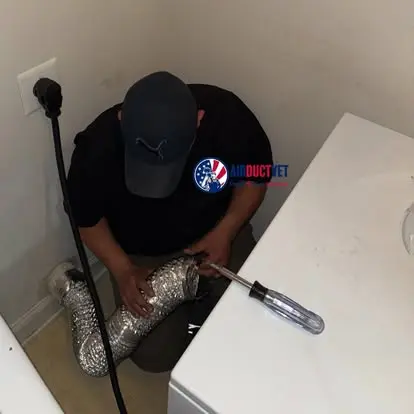 Real AirDuctVet photo
 Real AirDuctVet photo
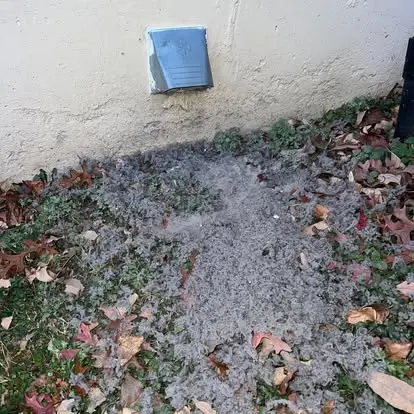 Real AirDuctVet photo
Clear, practical guidance: General education cannot replace an on-site inspection. We separate routine maintenance from conditions that need an HVAC, appliance, chimney, mold, or restoration specialist.
Can a dryer vent share a duct with a bathroom fan?
No. Section M1502.2 of the 2024 International Residential Code says dryer exhaust systems must be independent of all other systems and convey moisture outdoors. The 2024 North Carolina Residential Code contains the same requirement. Local amendments and the exact appliance instructions still apply, but combining a dryer with a bathroom fan is not an acceptable shortcut.
The rule applies to more than the visible hose behind the dryer. The concealed duct, any fittings, and the exterior termination are part of the exhaust path. Two separate grilles that merge inside a wall, attic, ceiling, or shared cap are still connected systems even when the connection is not visible from the room.
Why do the dryer and bathroom fan need separate routes?
A dryer moves warm, moisture-laden air and lint. A bathroom fan moves humid room air but is not designed to handle dryer lint or the dryer manufacturer's required airflow. Joining the two can add resistance, create lint-catching junctions, and allow exhaust from one appliance to move toward the other opening instead of directly outdoors.
A shared cap can also hide which system has weak airflow. The bathroom damper may move while the dryer route remains restricted, or dryer pressure may open the bathroom grille without proving that the complete dryer path is clear. Cleaning one branch does not verify the condition, material, or routing of the other branch.
What signs suggest the exhaust paths may be connected?
Do not open walls or enter an unsafe attic to investigate. Start with observations that can be made from accessible areas, then provide photographs and building information to the appropriate contractor.
- The bathroom grille becomes warm, releases lint, or moves when the dryer runs.
- A laundry odor or humid air appears in the bathroom during a drying cycle.
- Only one exterior hood or roof cap can be found for both rooms.
- Lint collects around a bathroom fan cover or inside an accessible fan housing.
- Drying times, airflow warnings, or moisture problems continue after an ordinary vent cleaning.
- Renovation records or visible fittings show two exhaust branches joining before the outlet.
Can dryer vent cleaning correct a shared duct?
No. Cleaning can remove qualifying accessible lint from an approved dryer exhaust path, but it cannot turn a shared system into an independent one. Separating ducts, adding a dedicated termination, opening walls or ceilings, changing roof components, or correcting electrical and mechanical equipment requires a separately qualified contractor and a separately approved scope.
AirDuctVet may use a Cobra inspection camera to document reachable sections of a dryer vent when conditions allow. A camera cannot see through every bend, prove what happens behind every concealed surface, or certify the installation. AirDuctVet does not represent a routine dryer vent assessment as a complete code inspection.
What should a homeowner or property manager do next?
Stop using the dryer and seek prompt help if you notice smoke, a burning odor, abnormal heat, sparking, a gas odor, or exhaust entering an occupied room. For a suspected shared route without an immediate hazard, gather the dryer make and model, photos of both indoor openings and the exterior termination, the floor and property type, and any renovation or building plans.
A qualified HVAC, mechanical, appliance, or building professional should identify the actual route and determine the correction required by the adopted code and manufacturer instructions. In a condo or managed building, confirm who owns the concealed duct and who must authorize access before work begins. Do not install a homemade damper or seal one branch as a substitute for an independent dryer exhaust.
What does AirDuctVet include in the service scope?
AirDuctVet's dryer vent cleaning scope addresses qualifying accessible dryer exhaust components identified in the written quote. It does not automatically include bathroom fan cleaning, duct redesign, appliance repair, electrical work, gas work, wall or ceiling access, roof repair, or mechanical installation. Any additional work must be evaluated and separately approved.
Dryer vent cleaning is separate from air duct cleaning. Routine air duct service does not automatically include mechanical repair or filter replacement. Coil cleaning must be specifically requested, evaluated, and separately approved. The office can review photos and access details before scheduling so the requested service matches the actual system.
Frequently asked questions
Can two dryers share one exhaust duct? Ordinary residential dryer exhaust systems should remain independent. Some engineered common exhaust systems for listed commercial or multifamily equipment may follow different rules, but they require specific design and approval; do not assume an existing shared route is acceptable.
Can a dryer and bathroom fan use the same exterior hood? No. Separate indoor ducts that combine at one hood no longer remain independent through the full path to outdoors.
Will a backdraft damper make a shared duct safe? No. A damper does not replace the requirement for an independent dryer exhaust system and can become another lint-catching restriction if it is not part of an approved design.
Can I confirm the connection with a camera? A camera can document some accessible sections, but bends, junctions, insulation, and concealed construction can limit the view. Plans or targeted access may still be needed.
Who should separate the ducts? The right trade depends on the route and the property. A qualified HVAC or mechanical contractor may be appropriate, while roof, wall, electrical, gas, appliance, or building work may require other licensed professionals and permits.
Sources and further reading
Official guidance informs the general information above. AirDuctVet's included services are defined by your written quote; local requirements and manufacturer instructions may differ.