
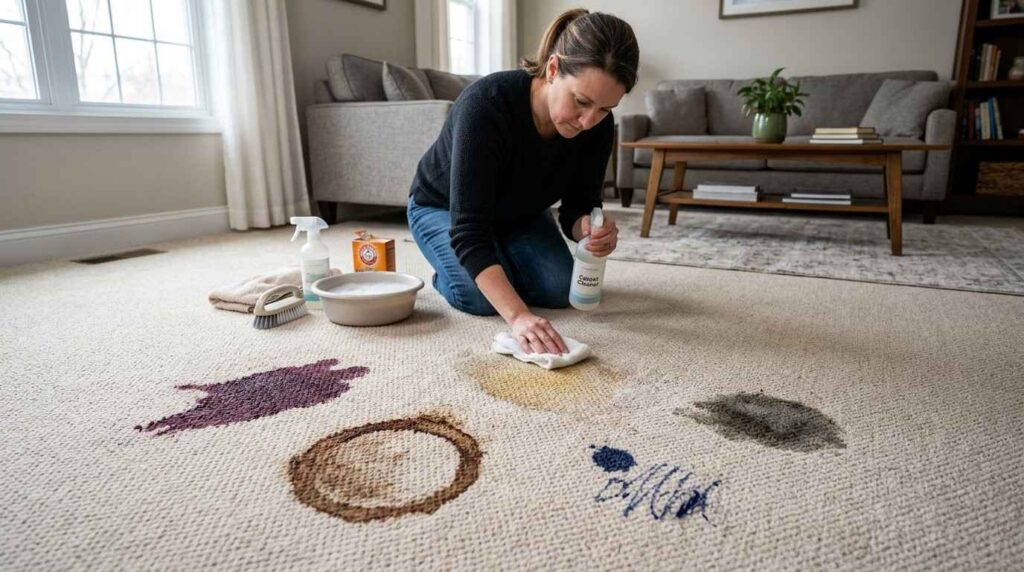
The hardest stain to get out of carpet is old red wine, closely followed by pet urine, coffee, blood, and ink. These stains bond chemically with carpet fibers, penetrate deep into padding, and oxidize over time. For homeowners, landlords, and property managers in Alexandria, VA, understanding why these stains resist standard cleaning is the first step toward protecting carpet investments and the indoor air quality of every room they cover.
The Hardest Carpet Stains Ranked by Difficulty
Red wine ranks as the single hardest carpet stain because its tannins, pigments, and sugars bond with synthetic and natural fibers within minutes. Once dried, the chromogens oxidize, locking color into the fiber core. Pet urine, blood, coffee, ink, and cooking oil follow closely, each resistant for different chemical reasons.
Red Wine and Tannin-Based Stains
Red wine combines anthocyanin pigments with acidic tannins that grip carpet fibers like dye. Coffee, tea, and fruit juice behave similarly. Heat accelerates the bond, which is why hot water or steam applied too early can set the stain permanently. Blotting with cold water and a pH-neutral cleaner within the first 10 minutes offers the best outcome, but full removal after drying typically requires professional extraction.
Pet Urine and Protein Stains
Pet urine is uniquely difficult because it contains uric acid crystals that re-activate with humidity. Even after surface cleaning, odor and discoloration return as the crystals dissolve again. Blood, vomit, and dairy spills share this protein-binding behavior. Standard detergents break down visible residue but leave the deeper contamination intact in the padding and subfloor, where it continues to affect air quality.
Knowing which stain resists cleaning is one part of the answer. The bigger concern for any household is the hidden contaminants trapped in fibers and how they circulate through the home’s air system long after the visible mark is gone.
Why Some Stains Become Permanent in Alexandria Homes
Three factors decide whether a stain becomes permanent: fiber type, time on the surface, and ambient humidity. Alexandria’s humid summers and damp winters accelerate the bonding process, especially in basements, finished lower levels, and homes with older HVAC systems that struggle with moisture control.
Carpet Fiber Type and Local Humidity Factors
Nylon and wool absorb liquids quickly but release them with the right treatment. Polyester and olefin resist water but hold oil-based stains tightly. Polypropylene, common in budget carpets and rentals, traps pigments deep in its structure. When humidity stays above 60%, stains rehydrate, spread, and feed microbial growth that affects both carpet lifespan and the air pulled through return vents.
Professional vs. DIY Stain Removal Outcomes
DIY treatments work well on fresh spills handled within minutes. Dried, oxidized, or protein-based stains usually need truck-mounted hot water extraction, enzymatic treatment, or solvent-based spotting agents that homeowners rarely have access to. Professional deep cleaning methods reach the padding layer, neutralize odor sources, and address the contamination that DIY surface cleaning leaves behind, which protects both the carpet and the home’s overall air quality.
Conclusion
Red wine, pet urine, and protein-based stains rank as the hardest carpet stains because they bond chemically, oxidize quickly, and reactivate with moisture, especially in humid climates like Alexandria.
For homeowners, landlords, and property managers, treating carpet stains is only half the work. The other half is removing the airborne particles and odors these stains release into the home’s ventilation system.
We at AirDuctVet Dryer & Vent Cleaning Services help Alexandria households protect indoor air quality with honest pricing, transparent service scope, and industry-approved cleaning standards. Schedule your assessment today.
Frequently Asked Questions
Can red wine stains be removed after they dry?
Dried red wine rarely comes out completely with DIY methods. Professional extraction with oxidizing agents and hot water can reduce or remove most of the visible stain.
Why does pet urine smell come back after cleaning?
Uric acid crystals reactivate with humidity. Surface cleaning removes the liquid but leaves crystals in the padding, which keeps releasing odor until enzymatically broken down.
Does carpet stain damage affect indoor air quality?
Yes. Trapped contaminants release particles and odors that circulate through return vents, which is why duct cleaning often follows deep carpet treatment in Alexandria homes.
How long do I have to treat a fresh carpet stain?
The first 10 minutes matter most. Blot, do not rub, and use cold water with a pH-neutral cleaner before the stain oxidizes or penetrates the padding.
Is professional carpet and duct cleaning worth the cost?
For stubborn stains, pet households, and homes with HVAC odor issues, professional service restores both fiber appearance and indoor air quality at a transparent, predictable price.
