
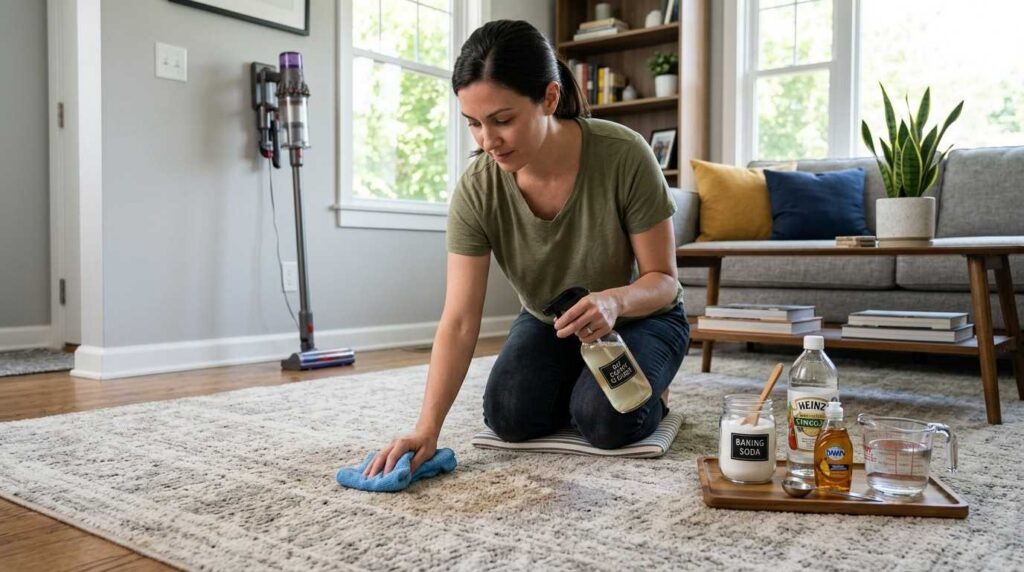
The best homemade carpet cleaning solution combines one cup of white vinegar, two cups of warm water, and one tablespoon of dish soap, applied with a soft brush and blotted with a clean towel. This blend lifts stains, neutralizes odors, and avoids the harsh residues found in many store-bought cleaners. For homeowners in Alexandria, VA, it is a practical first defense for everyday spills, pet accidents, and traffic-area dirt buildup on most synthetic carpets.
The Best Homemade Carpet Cleaning Solution
The most effective homemade carpet cleaner uses white vinegar, warm water, and a small amount of dish soap. Vinegar breaks down stains and neutralizes odor. Dish soap lifts oils. Warm water carries the solution into the fibers without oversaturating the backing. Together, they clean safely on most synthetic carpets.
The Core Recipe That Works on Most Carpets
Mix one cup of white vinegar with two cups of warm water in a spray bottle. Add one tablespoon of clear dish soap. Shake gently to combine without creating heavy foam. Light foam helps lift dirt; heavy foam leaves residue. For tougher stains, sprinkle baking soda on the spot first, then spray the solution. The mild reaction loosens grime trapped deep in the carpet pile.
How to Apply It Safely Without Damaging Fibers
Always test the solution on a hidden corner first. Spray lightly on the stained area, wait three to five minutes, then blot with a clean white towel. Never scrub aggressively — scrubbing pushes stains deeper and frays carpet fibers. Work from the outside of the stain inward. Finish by blotting with cold water to lift any remaining soap, then air dry with windows open for ventilation.
While these steps handle surface stains well, the cleaning process leaves behind moisture and microscopic residues that drift into your air system, where they settle on duct walls and circulate back into living spaces.
When Homemade Cleaning Falls Short
Homemade solutions clean what you can see. They do not reach the dust, dander, and fine particles that sink below the carpet pad or get pulled into the home’s HVAC system. In humid Alexandria climates, leftover moisture from DIY cleaning can also encourage mold growth beneath carpet padding. This becomes a problem when contaminants enter return vents and spread throughout the home.
Hidden Residues That Affect Indoor Air Quality
Vacuuming removes about 80% of surface debris but very little of the fine particulate matter that settles deep. Detergent residue, pet allergens, and dust mites embed in the carpet base and become airborne with every footstep. Over time, these particles cycle through air ducts, reducing indoor air quality even in clean-looking homes. This is when professional cleaning becomes necessary for both carpets and the connected ductwork.
Homemade vs. Professional Cleaning Methods
Homemade cleaning is cost-effective for spot treatment and routine maintenance. Professional services use hot water extraction, truck-mounted vacuums, and industry-approved solutions that reach the carpet backing and remove embedded contaminants. The two approaches work best together: DIY for weekly upkeep and professional cleaning every twelve to eighteen months for a full reset, especially in homes with pets, children, or allergy sufferers.
Conclusion
The best homemade carpet cleaning relies on a simple vinegar, water, and dish soap mixture applied with care and patience. It handles most everyday stains while protecting carpet fibers and family health.
For deeper contamination that affects indoor air quality, homemade methods reach their natural limit, and that is where professional support adds measurable value.
We at AirDuctVet Dryer & Vent Cleaning Services help Alexandria homeowners breathe cleaner air. Call today for honest, transparent service.
Frequently Asked Questions
Is vinegar safe for all carpet types?
Vinegar is safe for most synthetic carpets but can damage wool, silk, or natural fiber rugs. Always test on a hidden area before treating visible stains.
How often should I deep clean my carpets at home?
Spot clean as needed and perform a full homemade deep clean every three to four months. Schedule professional cleaning once a year for best results.
Can baking soda alone clean carpets effectively?
Baking soda absorbs odors and lifts light dirt but cannot remove set-in stains. Combine it with the vinegar solution for stronger cleaning power on tougher spots.
Does homemade carpet cleaning affect my air ducts?
Yes. Residues, moisture, and dislodged particles can travel into return vents and circulate through ductwork, gradually reducing overall indoor air quality.
What is the fastest way to dry a cleaned carpet?
Blot with dry towels, open windows for airflow, and run ceiling fans or a dehumidifier. Fast drying prevents mold and protects the carpet padding.
