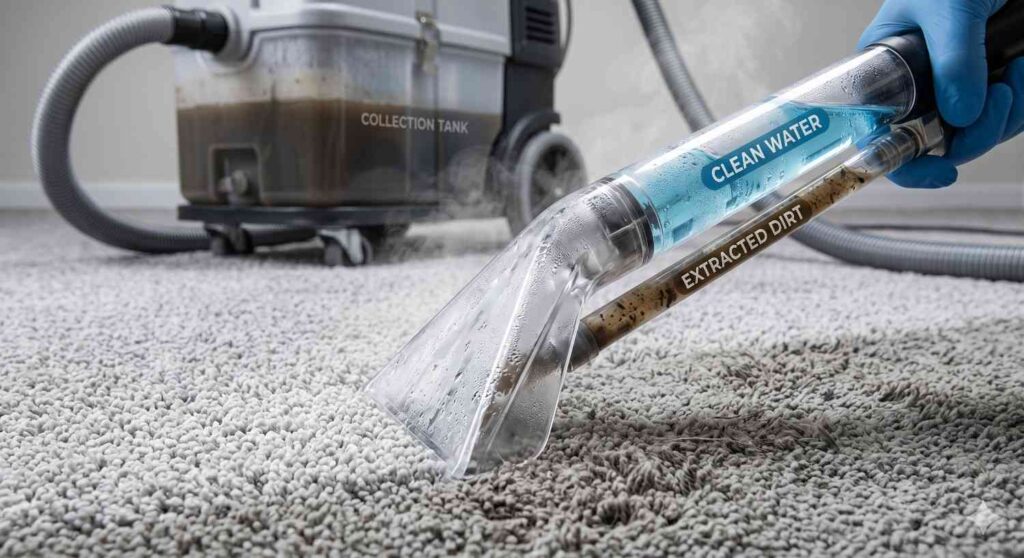
When you steam clean a carpet, the loosened dirt, debris, and contaminated water are extracted by suction and collected in the machine’s dirty water tank — a sealed waste reservoir that is emptied and disposed of after the cleaning session. Most of the visible soil, allergens, and surface contaminants end up in that tank, but the full picture is more nuanced than a simple “it all gets sucked out.”
Understanding what actually happens to dirt during steam cleaning helps you set realistic expectations, evaluate whether your carpets are truly clean, and make smarter decisions about professional versus DIY cleaning.
This guide covers how the extraction process works, where extracted dirt physically goes, what residue can remain, and how carpet cleanliness connects to the broader air quality in your home.
How Steam Cleaning Actually Works
Steam cleaning — more accurately called hot water extraction — is not simply blasting carpets with steam. The process combines pressurized hot water, a cleaning solution, mechanical agitation, and powerful suction to dislodge and remove soil from carpet fibers.
A cleaning wand injects heated water mixed with a cleaning agent deep into the carpet pile. The heat and chemistry work together to break the bond between soil particles and carpet fibers, suspending the loosened debris in the water. That suspended mixture is then immediately pulled back out through the same wand by a vacuum extraction system.
The Role of Heat and Pressurized Water
Heat is the primary driver of cleaning effectiveness. Water heated to between 150°F and 200°F accelerates the emulsification of oils, grease, and organic soil — essentially dissolving the adhesive properties that keep dirt clinging to carpet fibers. The pressurized injection forces this hot water past the surface layer and into the mid-pile where most embedded soil accumulates.
Cleaning solutions added to the water further break down protein-based stains, pet dander, and biological contaminants. The combination of thermal energy and chemical action suspends particles in the water column, making them extractable by suction rather than simply redistributed within the fibers.
How the Suction Mechanism Extracts Dirt
The suction component is what separates effective steam cleaning from surface-level rinsing. Immediately after hot water is injected, a powerful vacuum draws the water — now carrying suspended soil, debris, and dissolved contaminants — back out of the carpet and into the machine’s recovery system.
Truck-mounted units generate significantly higher suction pressure than portable or rental extractors, which is why extraction rate and moisture removal differ substantially between professional and DIY equipment. The stronger the suction, the more suspended dirt is captured and the less moisture is left behind in the carpet backing.
Where Does the Extracted Dirt Actually Go?
The extracted dirt, debris, and contaminated water travel through the cleaning wand and hose directly into the machine’s dirty water tank — also called the recovery tank or waste reservoir. This is a sealed collection chamber that holds everything pulled from the carpet: soil particles, pet hair, dust, allergens, bacteria, cleaning solution, and water.
Once the cleaning session is complete, the technician or operator empties the dirty water tank. The wastewater — which is often visibly dark brown or grey — is disposed of according to local wastewater guidelines. The tank is then rinsed before the next use.
The Dirty Water Tank and Waste Reservoir
The recovery tank is the physical endpoint for everything successfully extracted from your carpet. In a truck-mounted professional unit, this tank can hold 50 to 100 gallons of wastewater, allowing large areas to be cleaned without interruption. Portable extractors and rental machines have much smaller tanks — typically 3 to 10 gallons — requiring more frequent emptying during a cleaning session.
The contents of the tank after cleaning a heavily soiled carpet are a reliable indicator of what was living in your carpet fibers: dark, murky water carrying fine soil particles, biological debris, and whatever contaminants had accumulated since the last cleaning. That visual alone explains why regular extraction cleaning matters for households with pets, children, or allergy sufferers.
What Happens to Dirt That Doesn’t Get Fully Extracted
Not all loosened dirt makes it into the recovery tank. Some soil particles, particularly those embedded deep in the carpet backing or in the lowest layer of the pile, are not fully reached by the water injection or not fully captured by the suction pass. This residual soil remains in the carpet after cleaning.
A related phenomenon called wicking occurs when moisture left in the carpet backing draws dissolved soil back up through the fibers as the carpet dries. This is why some stains or soiled areas appear to return within a day or two of cleaning — the dirt was not removed, it was temporarily pushed down and then wicked back to the surface as the moisture evaporated. Incomplete extraction and insufficient drying time are the two primary causes of wicking.
Does Steam Cleaning Remove All the Dirt?
Steam cleaning removes the majority of surface and embedded dirt, but it does not achieve 100% extraction in a single pass — and claiming otherwise would be misleading. The completeness of extraction depends on three key variables: the suction power of the equipment, the number of cleaning passes made over each area, and how deeply the soil is embedded in the carpet fibers.
A single pass with a rental machine over a heavily soiled carpet will remove far less than two or three passes with a truck-mounted professional unit. Heavily contaminated carpets — those that have not been cleaned in several years or that have absorbed pet accidents, food spills, or construction dust — may require pre-treatment, multiple passes, and in some cases, a second cleaning appointment to achieve thorough extraction.
If you notice signs that your home’s air system needs attention alongside persistent carpet soiling, the two issues are often connected — more on that below.
What Residue Can Remain After Steam Cleaning?
Even after a thorough steam cleaning session, two categories of residue can remain in carpet fibers: cleaning solution residue and biological contaminants that were not fully extracted or neutralized. Both have consequences for carpet appearance and indoor air quality.
Cleaning Solution Residue and Resoiling
Over-application of cleaning detergent, or failure to rinse the carpet thoroughly after the cleaning pass, leaves a sticky chemical residue in the fibers. This residue acts like a magnet for new soil — foot traffic, airborne dust, and pet dander adhere to the sticky fibers far more readily than they would to clean, residue-free carpet.
The result is rapid resoiling: carpets that appear clean immediately after the service but look noticeably dirtier within two to four weeks. This is one of the most common complaints about DIY steam cleaning and low-quality professional services. A proper hot water extraction process uses the correct detergent-to-water ratio and includes a rinse pass to remove cleaning solution residue before the final extraction.
Over-wetting compounds this problem. When too much water is injected and not enough is extracted, the carpet backing stays saturated for an extended period. This prolongs drying time, increases the risk of wicking, and creates conditions where detergent residue concentrates in the fibers as the water evaporates.
Allergens, Bacteria, and Microbial Contaminants
Hot water extraction at proper temperatures — above 150°F — is effective at killing a significant portion of surface bacteria, dust mites, and other biological contaminants. Research from the Carpet and Rug Institute supports hot water extraction as the most effective method for reducing allergen levels in carpet fibers when performed correctly.
However, deeply embedded biological contaminants — particularly those that have penetrated the carpet backing and the subfloor padding — may not be fully reached by the cleaning process. Mold spores present in the backing due to previous moisture events, or pet urine that has soaked through to the padding, are not reliably eliminated by a single steam cleaning session.
The greater microbial risk comes from over-wetting. Carpets that remain damp for more than 24 to 48 hours after cleaning create ideal conditions for mold and mildew growth. Proper extraction, adequate ventilation, and accelerated drying with fans or dehumidifiers are essential to preventing post-cleaning microbial growth.
How Steam Cleaning Affects Your Indoor Air Quality
Carpets function as passive air filters. Over time, they trap airborne particles — dust, pollen, pet dander, mold spores, and fine particulate matter — that would otherwise remain suspended in the air you breathe. Regular steam cleaning removes a significant portion of this accumulated particulate load, which directly benefits indoor air quality in your home.
The relationship works in both directions, however. During the cleaning process itself, agitation of heavily soiled carpet can temporarily release trapped particles back into the air. This is typically short-lived and resolved once the carpet dries, but it is worth noting for households with severe allergy sufferers who may want to vacate the space during and immediately after cleaning.
The Connection Between Carpet Contamination and Your HVAC System
The particles that accumulate in carpet fibers do not stay there permanently. Foot traffic, vacuuming, and air movement continuously dislodge fine particles from carpet surfaces, sending them airborne. These particles are then drawn into your home’s return air vents and circulate through the HVAC system, where they accumulate in the ductwork over time.
This is the direct pathway between dirty carpets and air duct contamination. Homes with heavily soiled carpets — particularly those with pets or high foot traffic — tend to accumulate particulate buildup in their duct systems faster than homes with regularly maintained flooring. Professional air duct cleaning addresses the downstream accumulation that carpet cleaning alone cannot resolve, making the two services complementary rather than interchangeable.
For homeowners managing HVAC system cleaning as part of a broader home maintenance plan, understanding this carpet-to-duct pathway helps prioritize both services appropriately.
Professional vs. DIY Steam Cleaning: Does It Make a Difference?
The difference between professional truck-mounted steam cleaning and a rental extractor from a hardware store is substantial — and it comes down to three factors: water temperature, suction power, and extraction rate.
Truck-mounted units heat water to 200°F or higher and generate suction pressure that is three to five times greater than most portable rental machines. This combination means more soil is loosened, more suspended dirt is captured, and significantly less moisture is left in the carpet after cleaning. Professional-grade equipment typically leaves carpets dry within two to four hours; rental machines often leave carpets damp for eight to twelve hours or longer, increasing the risk of wicking and mold growth.
Rental machines are not without value — they are a reasonable option for lightly soiled carpets or maintenance cleaning between professional appointments. But for deep cleaning, heavily contaminated carpets, or situations where indoor air quality is a concern, professional extraction delivers meaningfully better results. The higher extraction rate means more dirt ends up in the waste tank rather than remaining in the carpet backing.
Technician skill also matters. A professional cleaner knows how to adjust water temperature, cleaning solution concentration, and pass speed for different carpet types and contamination levels — variables that a first-time rental machine user is unlikely to optimize correctly.
How Often Should You Steam Clean Your Carpets?
Most households benefit from professional steam cleaning once or twice per year. The right frequency depends on the specific conditions in your home, and erring toward more frequent cleaning is rarely a mistake for households with elevated contamination factors.
Homes with pets should plan for professional cleaning every three to six months. Pet dander, hair, and accidents accelerate soil accumulation and biological contamination at a rate that annual cleaning cannot adequately address. Households with young children, particularly in high-traffic play areas, benefit from the same increased frequency.
For allergy sufferers, semi-annual professional cleaning combined with monthly vacuuming using a HEPA-filter vacuum provides the most consistent allergen reduction. Landlords and property managers should schedule professional cleaning between tenancies as a baseline standard, with additional cleaning for units that housed pets or experienced heavy use.
Understanding how often air ducts should be cleaned follows a similar logic — both carpet and duct maintenance schedules should reflect the actual contamination load in the home rather than a fixed calendar interval.
Conclusion
Steam cleaning extracts the majority of dirt, allergens, and contaminants from carpet fibers into the machine’s waste reservoir, but extraction completeness depends on equipment quality, technique, and contamination depth. Residue, wicking, and biological contaminants are real limitations that honest cleaning providers acknowledge.
Clean carpets and clean air ducts are part of the same indoor environment — particles that accumulate in carpet fibers eventually find their way into your HVAC system, affecting the air quality throughout your home.
At AirDuctVet Dryer & Vent Cleaning Services, we help Alexandria homeowners, landlords, and property managers maintain healthier indoor environments through professional, transparent cleaning services — contact us today to schedule your air duct inspection.
Frequently Asked Questions
Where exactly does the dirty water go after carpet steam cleaning?
The dirty water, along with all extracted soil and contaminants, is collected in the machine’s recovery tank or waste reservoir. After cleaning, the technician empties and disposes of the wastewater appropriately.
Is steam cleaning the same as hot water extraction?
They are closely related but not identical. True steam cleaning uses dry steam vapor, while hot water extraction — the most common professional method — injects pressurized hot water and then extracts it with suction. Most professional “steam cleaning” services are actually hot water extraction.
Why does my carpet look dirty again a few days after steam cleaning?
This is called resoiling or wicking. It happens when cleaning solution residue left in the fibers attracts new dirt, or when moisture in the carpet backing draws dissolved soil back to the surface as the carpet dries. Proper extraction and rinsing prevent both issues.
Does steam cleaning kill dust mites and allergens in carpet?
Hot water extraction at temperatures above 150°F significantly reduces dust mite populations and allergen levels in carpet fibers. However, deeply embedded biological contaminants in the carpet backing may not be fully eliminated in a single cleaning session.
How long should I stay off the carpet after steam cleaning?
Most professionally cleaned carpets are safe to walk on within two to four hours, though full drying takes longer. Avoid heavy foot traffic for at least six hours, and ensure good ventilation to accelerate drying and prevent mold growth.
Can steam cleaning make indoor air quality worse temporarily?
Yes, briefly. Agitating heavily soiled carpet during cleaning can release trapped particles into the air. This is temporary and resolves once the carpet dries, but allergy sufferers may want to ventilate the space well during and immediately after cleaning.
How does carpet cleanliness affect my air ducts?
Particles dislodged from dirty carpets by foot traffic and air movement become airborne and are drawn into return air vents, accumulating in your duct system over time. Regular carpet cleaning reduces the particulate load entering your HVAC system, complementing professional air duct cleaning.

