
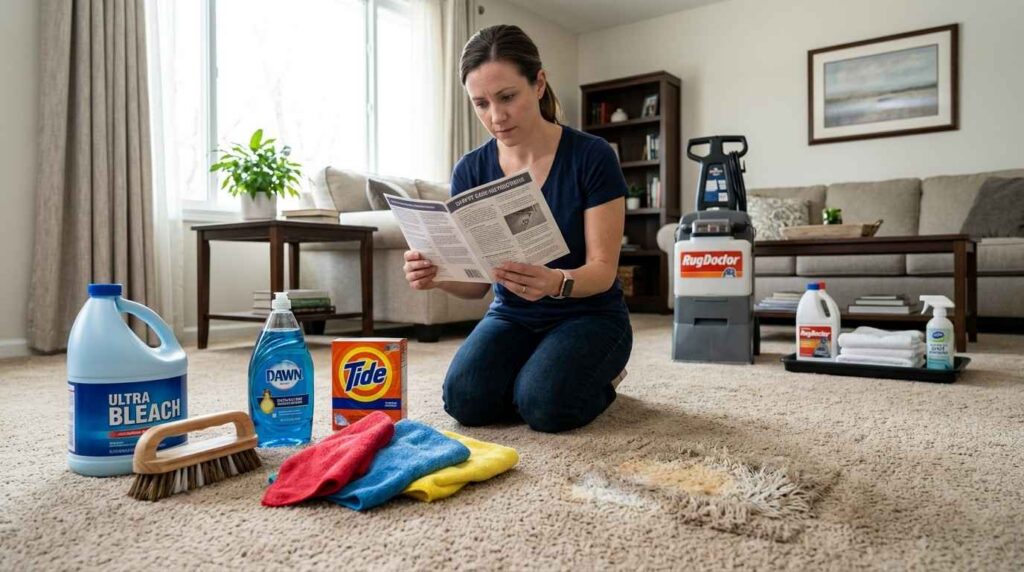
Cleaning Agents and Tools to Avoid on Carpet
You should not clean carpet with bleach, ammonia, hydrogen peroxide on colored fibers, dish soap, laundry detergent, vinegar on wool, or stiff-bristle scrub brushes. Avoid soaking the carpet, using uncontrolled steam, and pouring solvents directly on stains. These products and methods damage fibers, leave residue, and trap moisture that feeds mold.
Bleach and Harsh Chemical Cleaners
Bleach strips dye from nylon, polyester, and wool carpet, leaving permanent light patches that no professional treatment can restore. Ammonia weakens wool fibers and reacts with pet urine to release toxic fumes. Hydrogen peroxide can lighten dark carpets within minutes of contact. Dish soap and laundry detergent leave a sticky residue that attracts dirt faster than before cleaning. Strong solvents like acetone or paint thinner dissolve latex backing, causing the carpet to delaminate. Even “all-purpose” sprays often contain optical brighteners that yellow synthetic fibers under sunlight in homes across Alexandria, VA.
Excess Water and Steam Misuse
Saturating carpet with water is one of the most common homeowner mistakes. Soaked padding takes days to dry, and trapped moisture grows mold within 24 to 48 hours. Consumer steam mops designed for hard floors push water deep into fibers without strong extraction, leaving the same problem. Stiff scrub brushes fray loop-pile carpet and unravel Berber construction. Vacuuming wet carpet ruins the motor and spreads contamination. Heat from carpet dryers set too high can shrink natural fibers and loosen adhesive seams.
The wrong product is only half the problem. How these residues affect indoor air quality often matters more than the visible stain itself.
Why the Wrong Products Damage Carpet Fibers
Carpet is a layered system: face fibers, primary backing, latex adhesive, and secondary backing. Harsh cleaners attack each layer differently. High-pH products like ammonia swell wool cuticles and cause permanent texture loss. Acidic cleaners weaken synthetic fibers over repeated exposure. Solvent-based stain removers dissolve the latex that holds the carpet together, leading to wrinkling and seam failure.
Residue, Discoloration, and Indoor Air Impact
Detergent residue is the hidden culprit behind carpets that re-soil within weeks. Sticky surfactants bind to dust, pet dander, and dirt tracked from outside. That contamination doesn’t stay in the carpet. Foot traffic releases particulates into the air, where your HVAC system pulls them through return vents and redistributes them throughout the home. This is why the connection between carpet care and HVAC system cleanliness is closer than most homeowners realize.
Safer Alternatives for Routine Carpet Care
Use pH-neutral carpet cleaners labeled for your fiber type. Blot spills with a white cloth rather than scrubbing. Apply club soda or a diluted carpet-safe enzymatic cleaner for organic stains. Vacuum twice weekly with a HEPA-filter machine to reduce embedded particulates. Schedule professional hot-water extraction every 12 to 18 months for full-depth cleaning. For pet accidents, enzyme-based treatments break down odor molecules without bleaching dye or weakening the backing.
Conclusion
Avoiding bleach, ammonia, excessive water, and stiff scrubbing protects carpet fibers, prevents permanent discoloration, and stops mold growth before it starts. The right approach preserves both appearance and lifespan.
For homeowners, landlords, and property managers in Alexandria, VA, clean carpets are only part of a healthy home. The air circulating above those fibers carries the same contamination if ducts go unmaintained.
We at AirDuctVet Dryer & Vent Cleaning Services help you complete the picture with transparent pricing and thorough air duct cleaning. Schedule your inspection today.
Frequently Asked Questions
Can I use vinegar to clean my carpet?
Diluted white vinegar works on synthetic carpet for light stains, but it damages wool and natural fibers by stripping protective oils and dulling color over time.
Is baking soda safe for carpet cleaning?
Baking soda is safe for odor absorption but difficult to fully vacuum out. Residue settles into padding and can clog vacuum filters and HVAC returns.
Why does my carpet get dirty faster after cleaning?
Detergent residue from soap-based or DIY cleaners attracts dirt. Sticky surfactants bind to airborne particles and foot-traffic debris within days of cleaning.
Can steam mops clean carpet safely?
Standard steam mops designed for hard floors over-wet carpet without proper extraction. This traps moisture in padding and risks mold growth within two days.
Does carpet cleaning affect indoor air quality?
Yes. Improper cleaning leaves residues and moisture that feed mold, dust mites, and bacteria, which then circulate through HVAC ducts throughout the home.
