
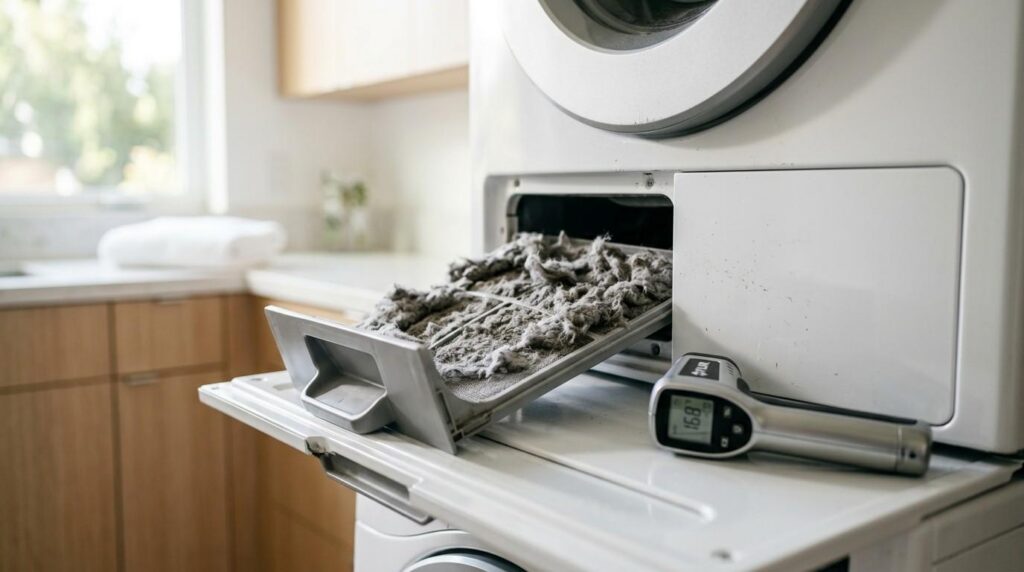
The clothes dryer is the number one appliance responsible for house fires in the United States. Lint buildup inside the dryer drum, lint trap, and vent ducts ignites under high heat, fueling rapid flame spread. For homeowners, landlords, and property managers in Alexandria, VA, understanding this risk is the first step toward prevention. This guide explains why dryers top the list, how fires start, and what maintenance practices keep your property safe.
The Clothes Dryer Is the #1 Appliance Behind House Fires
According to fire safety data from the National Fire Protection Association, clothes dryers cause roughly 2,900 home fires each year, with failure to clean the appliance accounting for the leading factor. Lint, dust, and fabric fibers accumulate in vents and traps, restricting airflow and creating the perfect conditions for combustion when heating elements run hot.
Why Dryers Top the Fire-Risk List
Dryers combine three fire ingredients in one machine: high heat, dry combustible material, and constant airflow. Lint is highly flammable, and even small amounts trapped near the heating element can ignite. Unlike ovens or microwaves, dryers run unattended for long cycles. Many homeowners overlook vent maintenance entirely, allowing years of buildup to compound the hazard inside walls and behind the appliance.
How Lint Buildup Triggers Ignition
When lint clogs the vent line, hot exhaust air cannot escape efficiently. Internal temperatures climb, the heating element overworks, and the trapped lint reaches its ignition point. Fires often start inside the duct itself, then spread rapidly through wall cavities. Restricted airflow also extends drying cycles, signaling a hidden problem long before flames appear in the laundry room.
Understanding the risk explains the cause. Preventing it requires a professional dryer vent cleaning routine that addresses every section of the exhaust path.
How Dryer Vent Cleaning Prevents Appliance Fires
A thorough vent cleaning removes lint from the dryer cabinet, transition hose, full duct run, and exterior vent hood. Industry guidelines recommend professional cleaning at least once per year for most households, and more frequently for large families, pet owners, or properties with long vent runs. Beyond fire prevention, clean vents reduce energy costs, shorten drying cycles, and extend appliance lifespan.
Warning Signs Your Dryer Vent Needs Cleaning
Clothes that take more than one cycle to dry, a hot dryer exterior, a burning smell during operation, or visible lint around the outdoor vent hood all signal restricted airflow. These are early warning signs to watch for before risk escalates into emergency. Acting quickly protects your appliance, your indoor air quality, and your household.
Other High-Risk Appliances Homeowners Should Watch
While dryers lead the rankings, stoves and ranges cause more total kitchen fires, primarily from unattended cooking. Space heaters rank high in winter months due to placement near flammable materials. Microwaves, dishwashers, and refrigerators contribute smaller percentages, often tied to electrical faults or aging components. Routine inspection of cords, vents, and exhaust systems across all major appliances reduces cumulative household fire risk significantly.
Conclusion
The clothes dryer holds the top spot for appliance-related house fires, with lint buildup as the leading cause. Routine vent cleaning eliminates that risk almost entirely.
For homeowners, landlords, and property managers across Alexandria, VA, scheduled maintenance is the most cost-effective protection against preventable fire damage and rising utility bills.
At AirDuctVet Dryer & Vent Cleaning Services, we deliver thorough, transparent vent cleaning that safeguards your property. Schedule your inspection today.
Frequently Asked Questions
How often should I clean my dryer vent?
Most homes need professional dryer vent cleaning once per year. Larger households, pet owners, or homes with long vent runs may require service every six months.
Can I clean my dryer vent myself?
Surface lint trap cleaning is a homeowner task, but full vent line cleaning requires specialized brushes, vacuums, and access tools to remove deep buildup safely and completely.
How much does professional dryer vent cleaning cost?
Pricing typically ranges based on vent length, accessibility, and contamination level. Honest contractors provide upfront quotes after assessing your specific system and configuration.
Are gas dryers more dangerous than electric dryers?
Both carry fire risk from lint buildup. Gas dryers add carbon monoxide concerns, making vent inspection and combustion airflow checks even more critical for household safety.
What other appliances should I have inspected for fire safety?
HVAC systems, water heaters, kitchen exhaust hoods, and aging electrical appliances all benefit from periodic inspection alongside dryer vent maintenance to reduce overall fire risk.

