
Pet Dander in Air Ducts Cary NC: 5 Signs
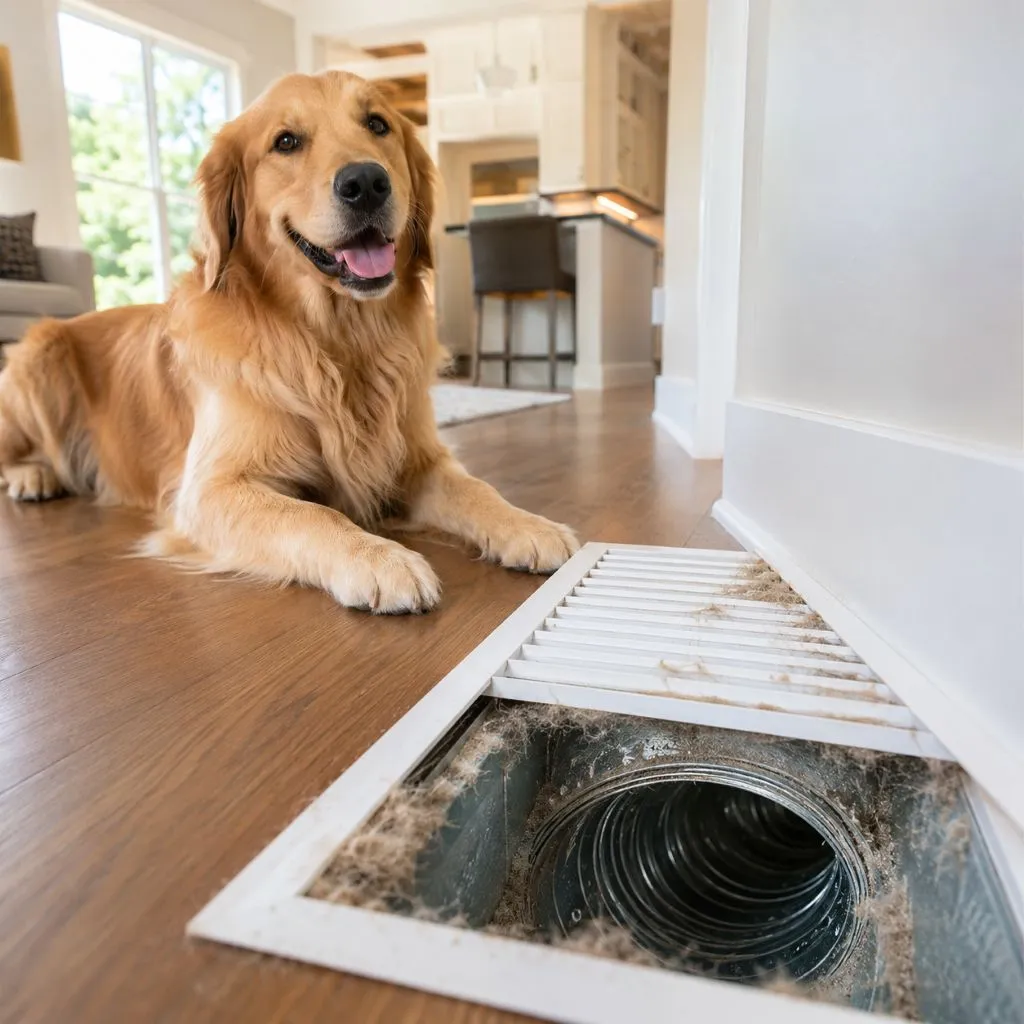
If you’ve got a dog stretched out on the couch or a cat perched on the windowsill, you already know pet hair is a permanent part of home life. What’s less obvious is where all that shedding actually ends up. Pet dander in air ducts Cary NC homes deal with is one of the most overlooked sources of indoor allergens, quietly building up inside your HVAC system long before it shows up as dust on your furniture or a sneeze you can’t explain.
This article walks through five warning signs that point to pet dander buildup in your ductwork, why it happens, and what actually helps.
Why Pet Dander Ends Up in Your Air Ducts
Every time your HVAC system runs, it pulls air from your rooms, cools or heats it, and pushes it back out through the vents. Along the way, that air carries whatever’s floating around, including pet dander, which is made up of tiny flakes of skin that pets shed constantly, along with fur and saliva proteins that stick to those particles. Pet dander in air ducts Cary NC households generate builds up gradually inside the ductwork itself, especially in homes with multiple pets or pets that spend most of their time indoors.
Once dander settles inside the ducts, it doesn’t just sit there quietly. Every heating or cooling cycle stirs some of it back into circulation, which is why homes with pets often deal with more persistent dust and allergy symptoms than homes without them, even with regular vacuuming and cleaning.
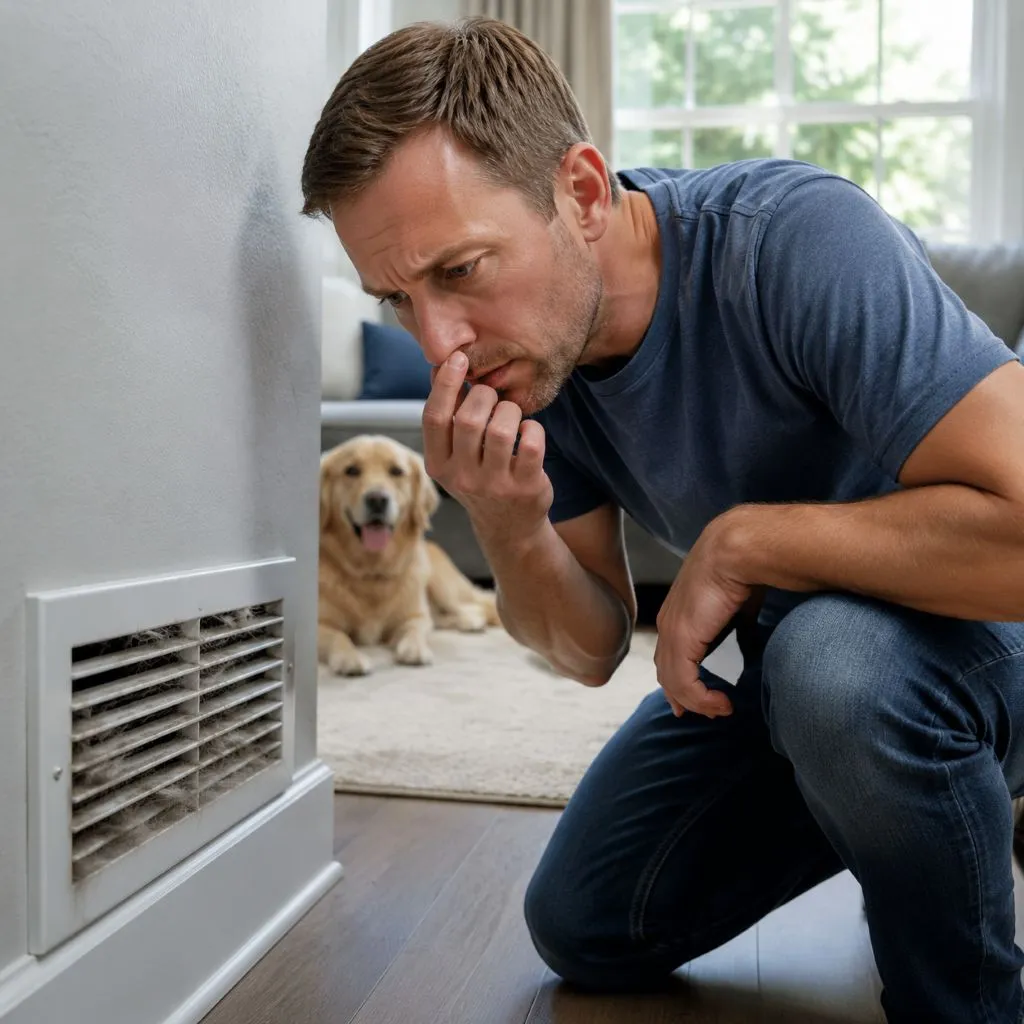
Sign 1: Increased Allergy Symptoms Indoors
If household members are sneezing more, dealing with itchy eyes, or feeling congested specifically while at home, and those symptoms ease up elsewhere, that pattern often points to pet dander in air ducts Cary NC homes are circulating through the HVAC system. This is especially worth paying attention to if the symptoms seem worse than what you’d expect from simply having a pet in the house.
Why This Pattern Matters
Symptoms tied closely to time spent at home, rather than a seasonal pattern, suggest an indoor source rather than outdoor allergens like pollen. Ductwork that’s been collecting dander for a while can make allergy symptoms feel disproportionate to how much shedding you’re actually seeing on furniture.
Sign 2: A Noticeable Pet Odor When the HVAC Runs
A faint but distinct pet smell that gets stronger specifically when your system kicks on is a fairly clear sign that pet dander in air ducts Cary NC homes have built up enough to affect the air being pushed through your vents. This is different from a general pet smell in a room, it’s a smell tied directly to airflow from the vents themselves.
How to Tell the Difference
Stand near a vent when the system starts and compare the smell there to the general smell of the room. If the vent air smells noticeably stronger or more concentrated, that’s a sign the ductwork itself needs attention.
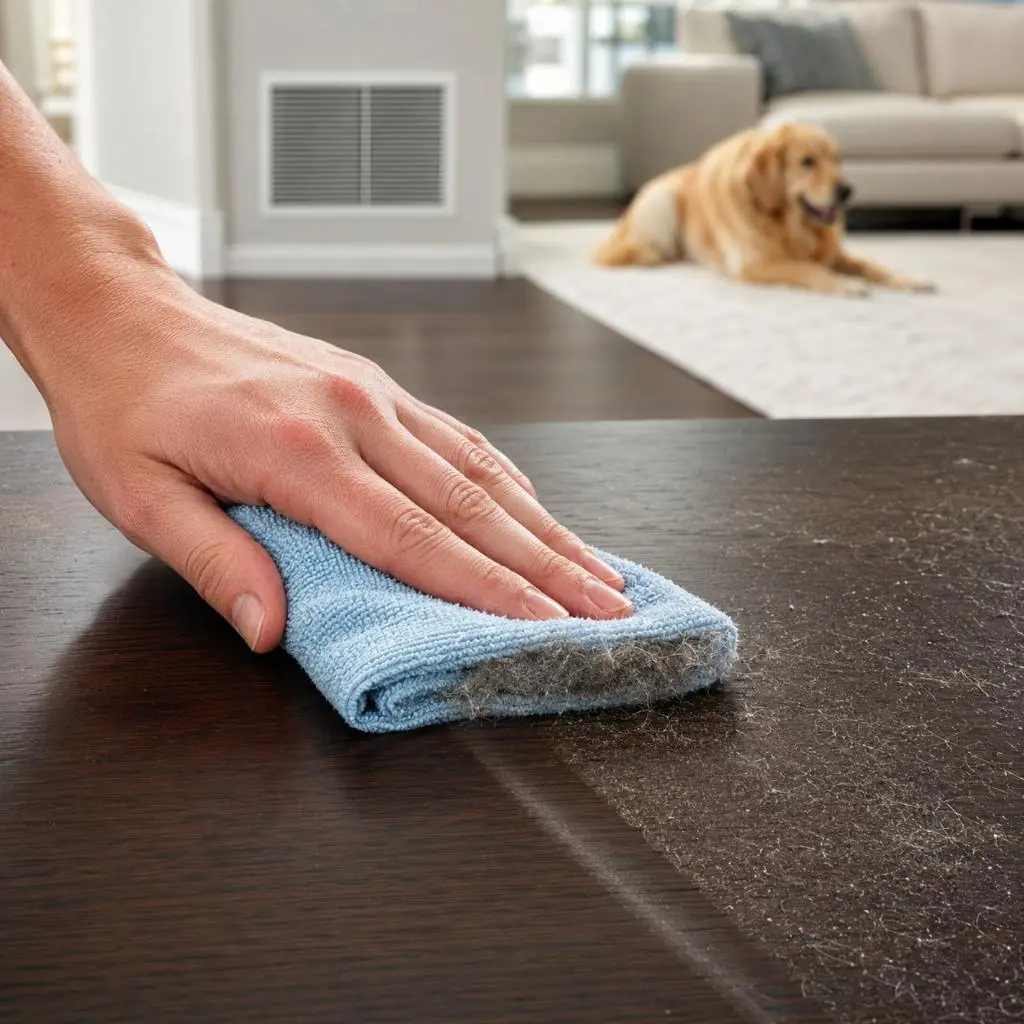
Sign 3: Dust That Returns Quickly After Cleaning
If you’re vacuuming and dusting regularly but surfaces still feel dusty within a day or two, pet dander in air ducts Cary NC homes deal with could be a significant part of the problem. Dander mixes with regular household dust, and when it’s being redistributed through your HVAC system constantly, cleaning the surfaces alone never really gets ahead of the source.
What This Usually Means
This sign often shows up alongside allergy symptoms or a persistent smell, and together they point toward the ductwork rather than just needing to clean more often.
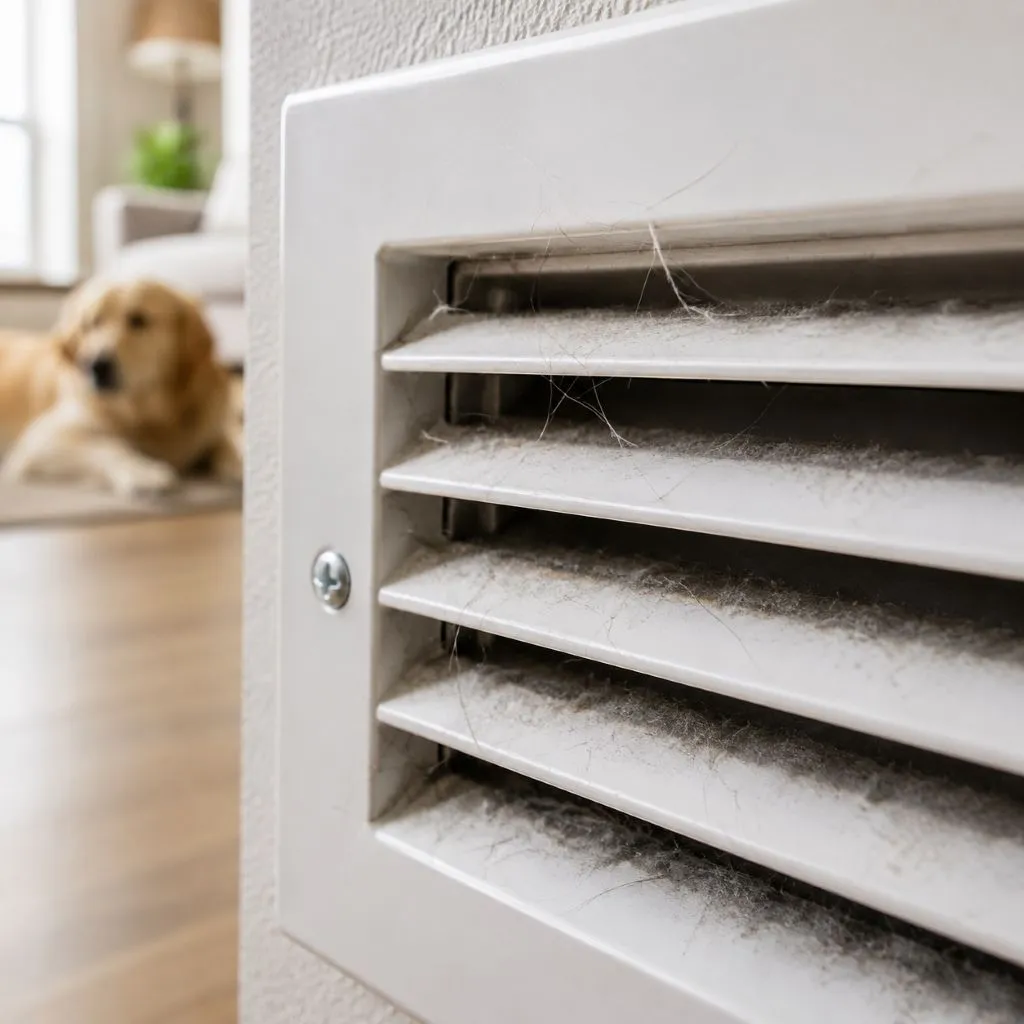
Sign 4: Visible Buildup Around Vent Covers
Take a look at your vent covers, especially return air vents, which pull air back into the system. A layer of fuzzy, grayish buildup around the edges is often a visible sign of pet dander in air ducts Cary NC homes have accumulated over time. Return vents in particular tend to show this more clearly since they’re constantly pulling air, and whatever’s in it, back into the system.
Where to Check First
Check return vents in rooms where pets spend the most time, bedrooms, living rooms, or wherever your pet naps most often, since dander concentrations tend to be highest closest to where shedding happens mo
Sign 5: Reduced Airflow or a Harder Working HVAC System
Dander and pet hair can build up not just in the ducts themselves but on filters and internal components, restricting airflow and making your system work harder than it should. If you’ve noticed weaker airflow from vents or a system that seems to run longer than it used to, pet dander in air ducts Cary NC homes have accumulated could be a contributing factor alongside a simple overdue filter change.
How This Connects to the Other Signs
This sign often shows up last, after dust, odor, and allergy symptoms have already been noticeable for a while, making it a good final confirmation that buildup has reached a level worth addressing directly.
What You Can Do Between Professional Cleanings
A few habits help slow down how quickly dander builds back up. Vacuuming with a HEPA filtered vacuum two to three times a week, grooming pets regularly to reduce shedding, washing pet bedding often, and checking your HVAC filter monthly all help manage the amount of dander making its way into your system in the first place. None of these replace a professional duct cleaning once pet dander in air ducts Cary NC homes have already accumulated, but they slow down how quickly it returns afterward
Why This Matters More for Pet Owners in Cary
Cary’s mix of established neighborhoods and newer developments means a lot of households have settled in with pets already part of the family, and homes here run their HVAC systems for a long cooling season given North Carolina’s humid climate. That extended runtime means more opportunities for pet dander in air ducts Cary NC homes to accumulate compared to regions with shorter, milder seasons where systems run less consistently throughout the year.
If you’re a multi-pet household or have pets that spend most of their time indoors, it’s worth checking for pet dander in air ducts Cary NC homes a bit more proactively than a household without pets would need to.
Conclusion
Pet dander in air ducts Cary NC homes deal with is a common but often overlooked issue, and it usually shows up gradually through a handful of connected signs, worse allergy symptoms at home, a pet smell tied to your vents, dust that keeps coming back fast, visible buildup around vent covers, and an HVAC system that seems to be working harder than it should. Catching even one or two of these early makes it a much simpler fix than waiting until the buildup is significant.
If you’re noticing these signs in your own Cary home, a professional duct cleaning gets to the source rather than just managing the symptoms with more frequent vacuuming. AirDuctVet is veteran-owned and BBB-accredited, with a flat-rate, no-upsell approach to every job, no hidden fees, no pressure to add on services you don’t need, just a thorough cleaning that gets your home’s air back to feeling genuinely clean. Schedule your air duct cleaning today and give your household, pets included, a fresher home to settle into.
FAQ Section
Common signs of pet dander in air ducts Cary NC homes deal with include increased allergy symptoms at home, a pet odor noticeable specifically when the HVAC runs, dust returning quickly after cleaning, visible buildup around vent covers, and reduced airflow from vents.
Households dealing with pet dander in air ducts Cary NC pet owners commonly report, especially multiple pets or pets that spend most of their time indoors, generally benefit from duct cleaning every one to two years, more frequently than the general two to three year recommendation for pet-free homes.
Yes. Dander mixes with dust and other allergens circulating through the system, and constant exposure through HVAC airflow can contribute to symptoms even in people with mild or no direct pet allergies.
A higher rated filter helps reduce ongoing buildup, but it won't remove dander that's already accumulated inside the ductwork, so a professional cleaning is usually needed to address existing buildup.
Yes. Regular grooming reduces the amount of loose fur and dander in the air to begin with, which slows down how quickly your ductwork accumulates buildup between cleanings.
North Carolina's long, humid cooling season means HVAC systems run more consistently throughout the year, giving pet dander more opportunities to circulate and accumulate compared to climates with shorter cooling seasons.
Yes, with a combination of regular grooming, frequent vacuuming with a HEPA filtered vacuum, monthly filter checks, and periodic professional duct cleaning to address buildup that daily habits can't fully prevent.

