The best type of carpet cleaning service depends on your carpet material, soil level, and how quickly you need the space back in use. Hot water extraction is the most widely recommended method for deep cleaning, but dry cleaning, encapsulation, and bonnet cleaning each serve specific situations. Knowing the difference helps you choose the right service, avoid unnecessary upsells, and get real value from every cleaning appointment.
For homeowners, landlords, and property managers in Alexandria, VA, carpet cleaning is a recurring maintenance cost. Choosing the wrong method can leave carpets wetter than expected, damage delicate fibers, or simply fail to remove embedded dirt and allergens.
This guide breaks down every major carpet cleaning method, explains what a professional service should include, covers typical pricing in the Alexandria area, and helps you compare options side by side so you can make a confident, informed decision.
The Main Types of Carpet Cleaning Services Explained
Carpet cleaning is not a single process. There are five primary methods used by professional cleaning companies, and each one works differently depending on the equipment, chemicals, and technique involved. Understanding how each method works is the first step toward choosing the right one for your home or rental property.
Hot Water Extraction (Steam Cleaning)
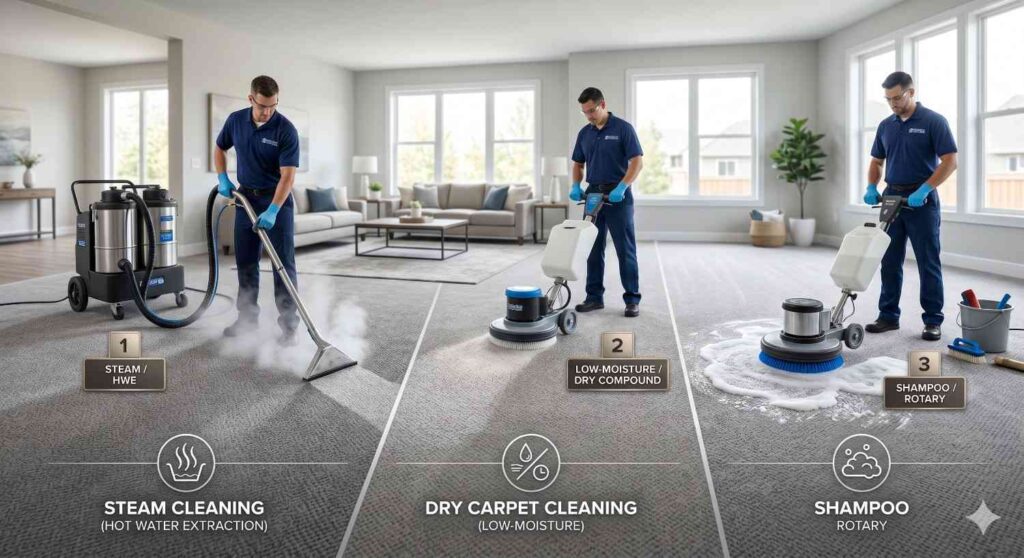
Hot water extraction is the most commonly recommended carpet cleaning method by manufacturers and industry organizations. The process involves injecting hot water mixed with a cleaning solution deep into carpet fibers under high pressure, then immediately extracting the water along with loosened dirt, allergens, bacteria, and debris using a powerful vacuum system.
Despite being called “steam cleaning,” the method does not actually use steam. The water temperature typically ranges between 150°F and 200°F, which is hot enough to break down grease, kill dust mites, and lift embedded soiling without the need for excessive chemical use. The Institute of Inspection, Cleaning and Restoration Certification (IICRC) recognizes hot water extraction as the preferred deep cleaning method for most residential carpets.
The main trade-off is drying time. Carpets cleaned with this method typically require 6 to 24 hours to dry completely, depending on airflow, humidity, and carpet thickness. Professional-grade truck-mounted equipment extracts significantly more moisture than portable units, reducing drying time considerably.
Hot water extraction is best suited for heavily soiled carpets, homes with pets or children, and situations where deep sanitization is the priority.
Dry Carpet Cleaning
Dry carpet cleaning uses a minimal amount of moisture combined with specialized cleaning compounds or powders. The compound is worked into the carpet fibers using a machine with counter-rotating brushes, where it absorbs dirt and debris. The compound is then vacuumed away, leaving the carpet clean and nearly dry immediately after the process.
This method is ideal for commercial spaces, rental properties between tenants, or any situation where minimal downtime is required. Carpets are typically ready for foot traffic within 30 to 60 minutes. However, dry cleaning does not penetrate as deeply as hot water extraction, making it less effective for heavily soiled or contaminated carpets.
Bonnet Cleaning
Bonnet cleaning is a surface-level cleaning method primarily used in commercial settings such as hotels and office buildings. A rotating pad (the “bonnet”) soaked in a cleaning solution is used to buff the surface of the carpet, absorbing dirt from the top layer of fibers.
This method is fast and produces visually clean results quickly, but it does not address deep-seated soil or allergens. Residue from the cleaning solution can also attract dirt more quickly after cleaning, meaning carpets may appear dirty again sooner than with other methods. Bonnet cleaning is generally not recommended for residential deep cleaning.
Encapsulation Cleaning
Encapsulation uses synthetic detergents that crystallize into a powder as they dry. The cleaning solution surrounds and encapsulates dirt particles within the carpet fibers. Once dry, the crystallized residue along with the trapped dirt is vacuumed away.
This method uses very little water, dries quickly (usually within one to two hours), and leaves minimal residue compared to traditional shampooing. Encapsulation has largely replaced shampooing in commercial maintenance programs because it is more efficient and produces less re-soiling. It works well as a maintenance cleaning method between deep extractions but is not a substitute for hot water extraction when deep cleaning is needed.
Shampooing
Carpet shampooing was one of the earliest professional cleaning methods. It involves applying a foamy chemical shampoo to the carpet, agitating it with a rotary machine, and then vacuuming up the dried residue. While it can produce visibly clean results, shampooing tends to leave behind sticky residue that attracts new dirt quickly.
Modern encapsulation and hot water extraction methods have largely replaced shampooing because they are more effective and leave less residue. Shampooing is rarely the recommended choice for residential carpets today, though some older cleaning companies may still offer it as a primary service.
How to Choose the Best Carpet Cleaning Method for Your Home
Choosing the right carpet cleaning method is not just about price. The best choice depends on three key factors: the type of carpet you have, how dirty it is, and how quickly you need it dry. Getting this decision right protects your carpet investment and ensures you get results that last.
Carpet Fiber Type and Material
Different carpet fibers respond differently to moisture, heat, and cleaning chemicals. Nylon and polyester carpets are the most durable and can typically handle hot water extraction without issue. Wool carpets require more careful handling because excessive moisture or high heat can cause shrinkage or fiber damage. Natural fiber carpets such as sisal or jute should generally be cleaned with low-moisture methods to prevent warping and mold growth.
Before booking any cleaning service, confirm that the company understands your carpet’s fiber composition and uses appropriate methods. A reputable contractor will ask about your carpet type before recommending a cleaning approach.
Level of Soiling and Contamination
Light surface soiling from regular foot traffic can often be addressed with encapsulation or dry cleaning. Moderate to heavy soiling, pet accidents, allergen buildup, or visible staining requires the deeper penetration of hot water extraction. If your carpet has not been professionally cleaned in more than 12 to 18 months, or if there are pets or young children in the home, hot water extraction is almost always the right choice.
Contamination level also affects cost. Heavily soiled carpets require longer cleaning times, more passes with the equipment, and sometimes pre-treatment with specialized spotting agents, all of which factor into the final price.
Drying Time Requirements
If you are cleaning a rental property between tenants and need the unit ready quickly, a low-moisture method like dry cleaning or encapsulation may be more practical. If you are cleaning your primary residence and can plan around a longer drying window, hot water extraction will deliver superior results.
Proper ventilation, ceiling fans, and open windows can significantly reduce drying time after hot water extraction. Professional companies using truck-mounted equipment also extract more water during the cleaning process, which shortens the drying period compared to portable machines.
What Does a Professional Carpet Cleaning Service Include?
A professional carpet cleaning service should be more than just running a machine over your floors. Understanding what a thorough service includes helps you evaluate quotes accurately and avoid paying for a rushed, incomplete job.
Pre-Inspection and Spot Treatment
A quality carpet cleaning appointment begins with a walkthrough of the areas to be cleaned. The technician should identify high-traffic zones, visible stains, pet urine spots, and any areas of concern before cleaning begins. Pre-treatment solutions are applied to heavily soiled areas and stains to break down the soil before the main cleaning process.
This step is not optional in a professional service. Skipping pre-treatment on stained or heavily soiled areas significantly reduces the effectiveness of the cleaning, particularly for pet stains and grease-based soiling.
Deep Cleaning and Extraction
The main cleaning phase should use appropriate equipment for the method selected. For hot water extraction, truck-mounted equipment is generally superior to portable units because it generates higher water pressure, higher temperatures, and stronger suction. The technician should make multiple passes over each area, including forward and backward strokes, to ensure thorough soil removal.
Furniture moving (for smaller items) and edge cleaning along baseboards should also be included in a complete service. If a company quotes a very low price and rushes through the cleaning in a fraction of the expected time, the results will reflect it.
Post-Cleaning Review and Protection
After cleaning, the technician should walk through the cleaned areas with you to review results and address any remaining spots. Some companies offer carpet protector application (such as Scotchgard or similar products) as an add-on service, which creates a barrier against future staining.
Carpet protector is a legitimate optional service, but it should be presented as an option with a clear explanation of the benefit and cost, not as a mandatory add-on. Grooming the carpet pile with a carpet rake after cleaning is another professional finishing step that helps fibers dry evenly and restores the carpet’s appearance.
How Much Does Carpet Cleaning Cost in Alexandria, VA?
Carpet cleaning prices in Alexandria, VA vary based on the method used, the size of the area being cleaned, and the condition of the carpet. Understanding typical pricing ranges helps you evaluate quotes fairly and recognize when a price is suspiciously low.
Average Pricing by Cleaning Method
| Cleaning Method | Average Cost Per Room | Average Cost Per Sq Ft | Best For |
| Hot Water Extraction | $40 – $80 per room | $0.20 – $0.40 | Deep cleaning, pet homes, heavy soiling |
| Dry Cleaning | $50 – $90 per room | $0.25 – $0.45 | Low-moisture needs, quick turnaround |
| Encapsulation | $30 – $60 per room | $0.15 – $0.30 | Maintenance cleaning, commercial use |
| Bonnet Cleaning | $25 – $50 per room | $0.10 – $0.25 | Surface refresh, commercial settings |
| Shampooing | $30 – $60 per room | $0.15 – $0.30 | Light soiling (less common today) |
Most professional carpet cleaning companies in the Alexandria area price by the room or by the square foot. Whole-home cleaning packages for a standard three-bedroom home typically range from $150 to $350 depending on the method and the company. Heavily soiled carpets, pet odor treatment, or stain removal services will add to the base price.
Factors That Affect the Final Cost
Several variables influence what you will actually pay for carpet cleaning:
Room size and total square footage are the most direct cost drivers. Larger rooms take longer to clean and use more cleaning solution and water.
Carpet condition and soil level affect how much pre-treatment and cleaning time is required. A carpet that has not been cleaned in several years will cost more to restore than one maintained on a regular schedule.
Furniture moving may be included in some quotes and charged separately in others. Clarify this before booking.
Add-on services such as carpet protector application, pet odor treatment, or stain removal for specific spots are typically priced separately. These are legitimate services, but they should be optional and clearly explained.
Equipment type matters. Companies using truck-mounted hot water extraction equipment typically charge more than those using portable units, but the results and drying times are generally better.
Number of rooms or total area often affects per-room pricing. Many companies offer lower per-room rates for larger jobs.
Red Flags and Unnecessary Upsells to Avoid
The carpet cleaning industry has a well-documented history of bait-and-switch pricing, where companies advertise very low prices (sometimes $9.99 or $19.99 per room) and then pressure customers into expensive add-ons once they arrive. Here is what to watch for:
A quote that seems unusually low compared to market rates almost always means the base service is minimal and the technician will attempt to upsell additional treatments on-site. Legitimate professional cleaning companies price their services to reflect the actual cost of labor, equipment, and materials.
Pressure to add carpet protector, deodorizer, or stain treatment to every room without inspecting the carpet first is a warning sign. These services have genuine value in specific situations, but they should not be applied universally to every job.
Vague pricing that does not specify what is included (pre-treatment, furniture moving, number of passes) makes it difficult to compare quotes accurately. Always ask for a written estimate that itemizes what is included.
Steam Cleaning vs. Dry Cleaning: Which Is Better?
The steam cleaning versus dry cleaning debate is one of the most common questions homeowners ask when booking carpet care. The honest answer is that neither method is universally better. Each has clear advantages depending on the situation.
Side-by-Side Comparison Table
| Factor | Hot Water Extraction (Steam) | Dry Cleaning |
| Cleaning Depth | Deep (penetrates carpet backing) | Surface to mid-level |
| Drying Time | 6 to 24 hours | 30 to 60 minutes |
| Best For | Heavy soiling, allergens, pet homes | Quick turnaround, light maintenance |
| Effectiveness on Stains | High | Moderate |
| Allergen Removal | Excellent | Moderate |
| Risk to Delicate Fibers | Moderate (if done incorrectly) | Low |
| Cost | Moderate to high | Moderate |
| IICRC Recommended | Yes (for deep cleaning) | For maintenance use |
| Residue Left Behind | Minimal (with proper extraction) | Minimal |
| Frequency Recommended | Every 12 to 18 months | Every 6 to 12 months for maintenance |
For most residential situations, hot water extraction delivers superior results for deep cleaning. Dry cleaning is the better choice when fast drying is essential or when the carpet requires only a maintenance refresh between deeper cleanings. Many professional carpet care programs combine both methods: dry cleaning or encapsulation for regular maintenance and hot water extraction for annual or biannual deep cleaning.
How Often Should You Have Your Carpets Professionally Cleaned?
The frequency of professional carpet cleaning depends on how the space is used and who lives in it. General guidelines from carpet manufacturers and the IICRC suggest professional cleaning every 12 to 18 months for average residential use. However, several factors call for more frequent service.
Homes with pets should schedule professional cleaning every 6 to 12 months. Pet dander, hair, and urine residue accumulate quickly in carpet fibers and contribute to poor indoor air quality and persistent odors. Homes with young children, allergy sufferers, or anyone with respiratory sensitivities benefit from more frequent cleaning as well.
High-traffic areas such as hallways, living rooms, and stairs accumulate soil faster than bedrooms and may need attention more often than the rest of the home. Rental properties should be professionally cleaned between every tenancy to maintain the carpet’s condition and protect the property’s value.
Waiting too long between cleanings allows soil to become embedded deep in the carpet backing, where it acts as an abrasive and accelerates fiber wear. Regular professional cleaning is not just about appearance. It extends the life of the carpet and maintains a healthier indoor environment.
Conclusion
Choosing the best carpet cleaning service comes down to matching the right method to your carpet type, soil level, and practical needs. Hot water extraction remains the gold standard for deep residential cleaning, while dry cleaning and encapsulation serve important roles in maintenance and quick-turnaround situations. Understanding what each method does, what a professional service should include, and what fair pricing looks like puts you in control of the decision.
At AirDuctVet Dryer & Vent Cleaning Services, we believe every home service should come with honest pricing, clear explanations, and results you can see. Whether you are a homeowner, landlord, or property manager in Alexandria, VA, you deserve a contractor who respects your time and your budget.
Contact AirDuctVet Dryer & Vent Cleaning Services today to get a transparent, no-pressure quote and find out exactly what your carpet cleaning service will include, what it will cost, and what results you can expect.
Frequently Asked Questions
What is the most effective carpet cleaning method?
Hot water extraction, also called steam cleaning, is widely considered the most effective method for deep residential carpet cleaning. It penetrates deep into carpet fibers to remove embedded dirt, allergens, bacteria, and pet dander. The IICRC recommends it as the preferred method for thorough carpet restoration.
Is steam cleaning safe for all carpet types?
Hot water extraction is safe for most synthetic carpets including nylon and polyester. Wool, natural fiber, and some delicate carpets require lower moisture methods to prevent shrinkage or fiber damage. Always confirm your carpet’s fiber type with the cleaning technician before the service begins.
How long does carpet take to dry after professional cleaning?
Carpets cleaned with hot water extraction typically take 6 to 24 hours to dry completely. Drying time depends on airflow, humidity, carpet thickness, and the quality of the extraction equipment used. Truck-mounted systems extract more moisture than portable units, which shortens drying time significantly.
What is the difference between steam cleaning and dry cleaning for carpets?
Steam cleaning (hot water extraction) uses heated water injected under pressure to deep clean carpet fibers, requiring several hours of drying time. Dry cleaning uses minimal moisture with specialized compounds that are vacuumed away after drying, leaving carpets ready for use within 30 to 60 minutes. Steam cleaning provides deeper results while dry cleaning offers faster turnaround.
How much does professional carpet cleaning cost in Alexandria, VA?
Professional carpet cleaning in Alexandria, VA typically costs between $40 and $90 per room depending on the method used and the condition of the carpet. Whole-home packages for a standard three-bedroom home generally range from $150 to $350. Heavily soiled carpets, pet odor treatment, and stain removal services may add to the base price.
How do I know if a carpet cleaning company is trustworthy?
A trustworthy carpet cleaning company provides written estimates that clearly itemize what is included, uses IICRC-certified technicians, and does not pressure you into add-on services before inspecting your carpet. Be cautious of companies advertising unusually low per-room prices, as these often involve bait-and-switch tactics once the technician arrives.
Can carpet cleaning remove pet odors and allergens?
Yes. Hot water extraction is particularly effective at removing pet dander, allergens, and odor-causing bacteria from carpet fibers. For severe pet urine odors, a specialized enzyme-based pre-treatment is typically applied before the main cleaning to break down odor compounds at the source. Regular professional cleaning every 6 to 12 months is recommended for homes with pets.

