
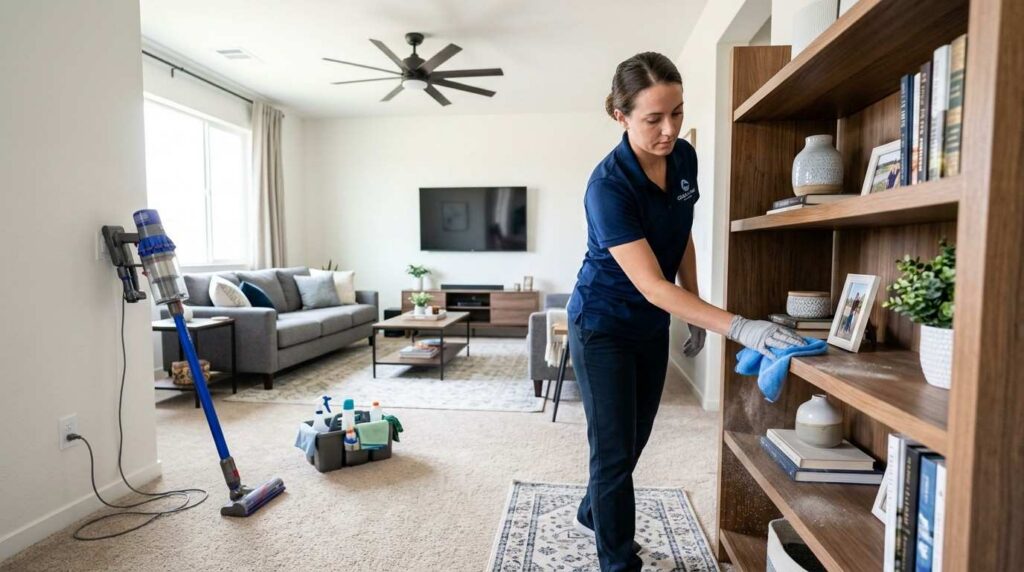
Professional cleaners dust first, then vacuum. This sequence prevents loosened dust, allergens, and debris from settling onto already-cleaned floors. By following a top-down approach, professionals capture airborne particles efficiently and protect indoor air quality. For Alexandria, VA homeowners, landlords, and property managers, understanding this order helps you recognize a thorough, standards-based service from a rushed one, and connects directly to how HVAC systems and air ducts collect that same household dust over time.
The Professional Answer: Dust First, Vacuum Second
Professional cleaners always dust before vacuuming. Dusting releases particles into the air and onto surfaces below. Vacuuming afterward captures everything that has settled, leaving floors genuinely clean. Reversing the order forces you to vacuum twice or leaves a fresh layer of dust on freshly cleaned carpets and hard floors.
This sequence reflects an industry-wide cleaning standard built on physics, not preference. Loose particles fall. Gravity dictates the workflow. Professionals working in residential, commercial, and post-construction settings follow this order because it produces measurable results in less time, with less rework.
Why Dusting Comes Before Vacuuming
Dusting agitates settled particles on shelves, baseboards, ceiling fans, vents, and furniture surfaces. Those particles do not vanish. They drift downward and land on flooring within minutes. Vacuuming last collects this fallout in a single pass. If you vacuum first, you simply reset the cycle once dusting begins, wasting effort and leaving carpets dusty again.
The Top-Down Cleaning Principle
Professionals clean from the highest point in a room to the lowest. Ceiling fans, light fixtures, and upper shelves come first. Mid-level surfaces follow. Floors come last. This principle keeps each cleaned zone clean. It also reduces cross-contamination between rooms, which matters in homes with allergy sufferers, pets, or sensitive HVAC filtration.
Understanding the order is one part of the picture. The deeper concern is how settled dust travels into air ducts and circulates back into your living space through the HVAC system.
How This Sequence Affects Indoor Air Quality
The dust-then-vacuum order directly influences the air you breathe. Particles disturbed during cleaning either land on hard surfaces and get captured, or become airborne and enter return vents. Once inside the duct system, dust accumulates on coils, blower components, and duct walls. Every time the HVAC unit cycles on, that buildup recirculates.
Following professional indoor air quality standards means combining proper surface cleaning sequences with regular HVAC maintenance.
Connection to HVAC Systems and Air Ducts
Homes that follow correct cleaning sequences still see dust accumulate inside ductwork over time. Vents, registers, and return grilles collect fine particles that surface cleaning cannot reach. Professional air duct cleaning addresses this hidden layer, removing buildup that ordinary dusting and vacuuming leave behind in Alexandria, VA homes.
When Professionals Adjust the Standard Sequence
There are situations where the order shifts slightly. Heavy debris on floors, such as drywall dust after renovations, often requires an initial vacuum pass to prevent damage to dusting tools and surfaces. Pet hair on upholstery may be vacuumed before dusting nearby surfaces. After fire, smoke, or significant contamination, technicians may use HEPA-filtered equipment in a different sequence.
These adjustments are exceptions, not the rule. They also signal moments when homeowners should consider signs of heavy dust buildup at home and whether duct cleaning belongs in the service plan.
Conclusion
Professional cleaners dust first and vacuum second because gravity pulls loosened particles downward, and floors must be cleaned last to remain truly clean.
For Alexandria homeowners, landlords, and property managers, this sequence also explains why dust keeps reappearing inside HVAC systems despite regular surface cleaning.
We help you go beyond surface cleaning. Contact AirDuctVet Dryer & Vent Cleaning Services for transparent, standards-based air duct cleaning that protects your indoor air.
Frequently Asked Questions
Should I dust or vacuum first when cleaning my home?
Dust first, then vacuum. Dusting releases particles that settle on floors, and vacuuming last captures everything in a single, efficient pass.
Does the cleaning order affect indoor air quality?
Yes. Cleaning top-down minimizes airborne dust that enters return vents, reducing buildup inside HVAC ducts and improving the air circulating through your home.
How often should air ducts be cleaned alongside regular dusting?
Most homes benefit from professional air duct cleaning every three to five years, more often with pets, allergies, renovations, or visible vent dust.
Can vacuuming first ever be correct?
Only in specific cases like renovation debris, heavy pet hair on upholstery, or contamination cleanup. Standard residential cleaning always follows dust-then-vacuum order.
Why does dust keep returning after I clean?
Surface cleaning cannot reach dust trapped inside ductwork. Each HVAC cycle redistributes that hidden buildup, which is why professional duct cleaning makes a noticeable difference.
