
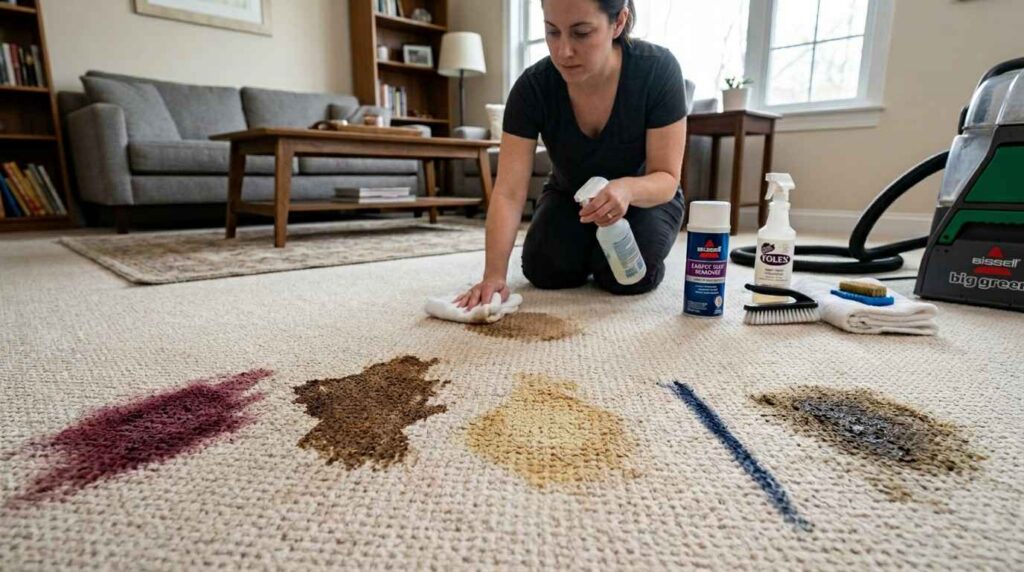
To clean a deeply dirty carpet, vacuum thoroughly, pre-treat heavy stains with an enzymatic cleaner, then use a hot-water extraction machine with carpet shampoo to lift embedded dirt and dry the fibers fully. Deep carpet cleaning is a four-stage process: dry soil removal, pre-treatment, extraction, and drying. Each stage matters because skipping one leaves residue, odors, or moisture that quickly attract new grime. Done correctly, a deep clean restores both appearance and indoor freshness.
The Step-by-Step Process to Clean a Deeply Dirty Carpet
A deeply dirty carpet needs four stages performed in order: thorough dry vacuuming, targeted pre-treatment, hot-water extraction with a quality detergent, and complete drying within 6–12 hours. Skipping or rushing any stage traps soil, leaves residue, or invites mildew. The full sequence is what separates a surface clean from a true deep clean.
Pre-Treatment and Vacuuming
Start with slow, overlapping vacuum passes in two directions. This removes the dry soil that abrasive cleaning would otherwise grind into the fibers. Next, identify heavy stains, pet spots, and traffic lanes. Apply an enzymatic pre-treatment for organic stains and a solvent-based spotter for grease or ink. Let the pre-treatment dwell for 5 to 10 minutes so it can break down bonds at the fiber base. Do not scrub aggressively, which distorts fibers and spreads stains outward instead of lifting them.
Deep Cleaning and Stain Extraction
Use a hot-water extraction machine, often called a steam cleaner, with a low-residue carpet detergent. Move in slow forward strokes to apply solution, then slow backward strokes with suction only to pull moisture and loosened soil out. Repeat extraction passes on problem zones until the recovery water runs nearly clear. Finish by setting fans, opening windows, and running a dehumidifier. Carpets must dry fully within 12 hours to prevent mold, musty odor, and resoiling from sticky residue left behind.
A clean carpet is only part of the picture, because indoor air quality often suffers in parallel when the systems around the carpet hold the same contaminants.
When Carpet Cleaning Connects to Indoor Air Quality
Carpets act as the largest filter in your home, catching dust, dander, pollen, and skin cells. Your HVAC system circulates those same particles through ductwork every time it runs. Cleaning the carpet without addressing the air pathways means the fibers reload within weeks. Homeowners in Alexandria, VA often notice musty odors or persistent dust returning after a fresh carpet cleaning, which signals the contamination source is upstream in the ducts, not the floor itself.
Hidden Contaminants Carpets Share With Air Ducts
Pet hair, dust mites, allergens, and microscopic debris settle into carpets and ducts at the same rate. When the blower runs, ducts release particles that resettle on freshly cleaned fibers. Addressing both surfaces in the same maintenance window extends the value of each service and stabilizes indoor air quality longer.
When to DIY vs. Call a Professional in Alexandria, VA
DIY carpet cleaning works for routine refreshes, small rooms, and light staining. Rental machines from a hardware store cost $30 to $50 per day and handle surface dirt adequately. Deeply soiled carpets, pet-damaged padding, or whole-home cleanings benefit from professional truck-mounted extraction, which generates stronger suction and faster drying. The same logic applies to duct systems, where cost factors that shape professional cleaning include system size, contamination level, and accessibility. Honest contractors explain scope and pricing clearly before any work begins.
Conclusion
Cleaning a deeply dirty carpet requires patience, the right sequence, and full drying to truly restore the fibers and the room.
For homeowners, landlords, and property managers, pairing carpet care with clean ducts protects indoor air quality and the long-term value of every cleaning dollar spent.
When you are ready for transparent pricing and professional results, AirDuctVet Dryer & Vent Cleaning Services is here to help you breathe easier at home.
Frequently Asked Questions
Can baking soda clean a deeply dirty carpet?
Baking soda helps neutralize odors and absorb light moisture, but it cannot extract embedded dirt. Use it as a pre-vacuum treatment, not a replacement for hot-water extraction.
How long does a deeply dirty carpet take to dry?
Properly extracted carpets dry in 6 to 12 hours with good airflow. Longer drying signals over-wetting or weak suction and increases the risk of mildew.
How often should heavily used carpets be deep cleaned?
High-traffic carpets benefit from deep cleaning every 6 to 12 months. Homes with pets, children, or allergies should aim closer to twice yearly.
Does carpet cleaning improve indoor air quality?
Yes, but only partially. Carpets hold allergens, while ducts recirculate them. Cleaning both gives lasting indoor air quality improvements rather than short-term relief.
Can old stains come out of a deeply dirty carpet?
Many old stains lift with enzymatic pre-treatment and repeated extraction. Permanent dye or bleach damage cannot be reversed and may require spot repair or replacement.
