
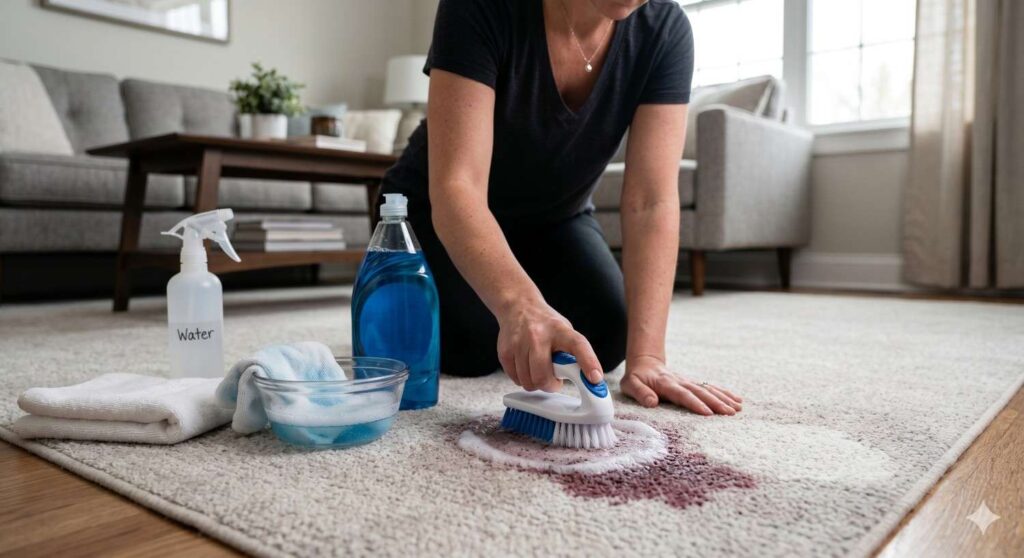
Yes, you can use Dawn dish soap on carpet in a pinch — but only in very small, heavily diluted amounts for grease-based stains, and only if you rinse the area completely afterward. Used incorrectly, Dawn leaves behind a sticky residue that attracts more dirt, traps moisture, and can quietly damage your carpet fibers over time.
Understanding why dish soap behaves differently on carpet than on dishes helps you make a smarter call before you reach for the bottle. This guide covers when Dawn works, when it doesn’t, the real risks involved, and safer alternatives that protect your carpet and your home’s air quality.
What Makes Dawn Dish Soap Different From Carpet Cleaners?
Dawn is engineered to cut through grease on hard, non-porous surfaces like dishes and cookware. Carpet is the opposite — it is a porous, fiber-based textile that absorbs liquids deeply and holds onto chemical compounds long after the surface looks clean. That fundamental difference is why a product that works brilliantly on a frying pan can cause real problems on a wool or nylon rug.
Purpose-built carpet cleaners are formulated with carpet fibers in mind. They are designed to lift soil without saturating the backing, rinse out cleanly, and leave no residue that attracts future dirt. Dawn was never designed to do any of those things.
Surfactant Concentration and Sudsing Risk
A surfactant is a cleaning compound that breaks the surface tension between water and grease, allowing them to mix and be wiped away. Dawn contains a high concentration of surfactants — which is exactly what you want when scrubbing a greasy pan, but a serious problem when applied to carpet.
High surfactant concentration causes excessive foaming inside carpet fibers. That foam is extremely difficult to rinse out completely, especially without professional extraction equipment. Even a small amount of leftover soap film deep in the fiber pile creates a sticky layer that acts like a magnet for dust, dirt, and debris — meaning the spot you cleaned can look dirtier within days than it did before you started.
pH Levels and Carpet Fiber Compatibility
Dawn dish soap has a pH of approximately 9, making it mildly alkaline. Most carpet-safe cleaners are formulated to be pH-neutral (around 7) or only slightly acidic, because carpet fibers — particularly wool and some natural blends — are sensitive to alkaline compounds.
Repeated exposure to alkaline cleaners can cause color fading, fiber weakening, and surface texture changes in wool carpets. Synthetic fibers like nylon and polyester are more tolerant, but even they can show long-term wear when cleaned repeatedly with products outside their recommended pH range. If your carpet has any natural fiber content, alkaline dish soap is a genuine risk.
Can You Use Dawn Dish Soap on Carpet Stains?
The honest answer is: sometimes, and only under specific conditions. Dawn can be effective on fresh, grease-based stains — cooking oil, butter, salad dressing, or similar food spills — when used in a very diluted form and rinsed out thoroughly. For most other stain types, it is either ineffective or actively counterproductive.
When Dawn Might Work (and When It Won’t)
Dawn has a reasonable chance of helping with:
- Fresh grease or oil stains (cooking oil, butter, motor oil tracked in)
- Greasy food spills (pizza, salad dressing, fried foods)
- Lipstick or cosmetic stains with an oil base
Dawn is unlikely to work well — and may make things worse — for:
- Pet urine or feces stains (require enzyme-based cleaners to break down organic compounds)
- Blood stains (cold water and enzyme cleaner; heat or soap can set the stain permanently)
- Wine, coffee, or tea (tannin-based stains respond better to oxidizing agents)
- Mud or clay (dry first, then vacuum; soap adds moisture that worsens the problem)
- Old or set stains of any type (surfactants cannot reverse chemical bonding that has already occurred)
For pet stains specifically, enzyme cleaner vs. dish soap for carpet stains <!–NEW PAGE NEEDED–> is a comparison worth understanding before you treat — enzyme cleaners break down the uric acid compounds that cause both the stain and the odor, something Dawn simply cannot do.
Step-by-Step Method If You Choose to Use It
If you have a fresh grease stain and Dawn is your only option, follow these steps carefully to minimize risk:
- Blot the stain immediately. Use a clean white cloth or paper towel to absorb as much of the spill as possible. Press down firmly — do not rub or scrub, which spreads the stain and pushes it deeper into the fiber.
- Mix a diluted solution. Add one drop — not a squeeze, one drop — of Dawn to two cups of cold water. The solution should be barely sudsy.
- Apply sparingly. Dampen a clean white cloth with the solution and blot the stain from the outside edge inward. Never pour the solution directly onto the carpet.
- Blot, don’t scrub. Continue blotting with light pressure. Replace the cloth as it picks up the stain. Stop when no more color transfers to the cloth.
- Rinse thoroughly. This is the most critical step. Use a separate cloth dampened with plain cold water and blot the area repeatedly to remove all soap residue. Rinse more than you think is necessary.
- Absorb remaining moisture. Press a dry towel firmly onto the area and weigh it down with a heavy object for 15–20 minutes.
- Dry completely. Use a fan directed at the area or open a window. Do not walk on the area until it is fully dry. Incomplete drying is one of the primary causes of mold growth under carpet padding.
What Are the Risks of Using Dawn on Carpet?
Even when used correctly, Dawn carries risks that purpose-built carpet cleaners are specifically designed to avoid. Understanding these risks helps you decide whether the convenience is worth it — and helps you recognize when a DIY attempt has created a bigger problem than the original stain.
Residue Buildup and Re-Soiling
The most common and immediate risk is residue buildup. Because Dawn’s surfactant concentration is far higher than carpet-safe formulas, even a well-rinsed application often leaves a thin soap film bonded to the carpet fibers. This film is invisible to the eye but highly adhesive to airborne particles, foot traffic soil, and dust.
The result is re-soiling — the treated area becomes a dirt magnet and darkens faster than the surrounding carpet. Homeowners often interpret this as the stain “coming back,” when in reality it is new soil accumulating on the residue layer. How to remove dish soap residue from carpet <!–NEW PAGE NEEDED–> requires a specific rinsing process that goes beyond standard blotting, and in some cases needs professional extraction to fully resolve.
Moisture Damage and Mold Risk
Over-wetting is a serious risk with any DIY carpet cleaning, and Dawn increases that risk because the sudsing action encourages people to apply more product and more water than necessary. When moisture penetrates through the carpet pile into the backing and padding beneath, it creates conditions that support mold and mildew growth — often invisible from the surface for weeks.
Mold under carpet padding is a significant indoor air quality problem. Mold spores released into the air circulate through your home’s HVAC system, depositing in air ducts and spreading to other rooms. If you suspect moisture has reached the carpet backing after a DIY cleaning attempt, DIY carpet cleaning mistakes that cause mold <!–NEW PAGE NEEDED–> outlines the warning signs and what to do before the problem spreads to your ventilation system.
Carpet Warranty and Protectant Damage
Many carpet manufacturers specify approved cleaning products in their warranty documentation. Using non-approved cleaners — including household dish soap — can void your warranty if damage occurs, even if the damage appears months later and seems unrelated to the cleaning.
Additionally, if your carpet has been treated with a stain protectant like Scotchgard or a manufacturer-applied fiber treatment, alkaline cleaners like Dawn can degrade that protective coating. Once the protectant is stripped, the carpet becomes significantly more vulnerable to future staining and fiber damage. Check your carpet’s care label and warranty documentation before using any product not specifically listed as approved.
Better Alternatives to Dawn for Carpet Cleaning
The good news is that safer, more effective options are readily available — many of which you likely already have at home or can find at any grocery store for a few dollars.
Purpose-Built Carpet Cleaning Solutions
Enzyme-based carpet cleaners are the gold standard for most household stains, particularly anything organic — pet accidents, food spills, blood, and similar stains. Enzymes break down the molecular structure of the stain rather than simply lifting it from the surface, which means they address both the visible mark and any underlying odor. Products like Rocco & Roxie Professional Strength Stain & Odor Eliminator are widely available and formulated specifically for carpet fibers.
For general spot cleaning, pH-neutral carpet cleaning sprays (look for “carpet-safe” or “fiber-safe” on the label) provide effective cleaning without the residue risk or pH concerns associated with dish soap. These products are designed to rinse cleanly and leave no sticky film behind.
Natural DIY Alternatives (Vinegar, Baking Soda)
For homeowners who prefer non-chemical options, a solution of equal parts white vinegar and cold water is an effective spot cleaner for many common stains, including coffee, tea, and light food spills. White vinegar is mildly acidic (pH around 2.5), which makes it effective at neutralizing alkaline-based stains and odors without damaging most carpet fibers.
Baking soda works differently — it is best used as a dry deodorizer rather than a stain remover. Sprinkle it generously over a dry stained area, let it sit for 15–30 minutes to absorb odors and loose soil, then vacuum thoroughly. For tougher stains, a paste of baking soda and a small amount of hydrogen peroxide (3% concentration) can lift light discoloration from synthetic fibers, though you should always test on a hidden area first.
Neither vinegar nor baking soda carries the residue or over-foaming risks associated with dish soap, making them meaningfully safer choices for routine carpet maintenance.
When Should You Call a Professional Carpet or HVAC Cleaner?
DIY carpet cleaning has a clear ceiling. It works reasonably well for fresh, small, surface-level stains on synthetic fibers. It becomes inadequate — and sometimes counterproductive — for large stains, set stains, organic contamination, or any situation where moisture has penetrated below the surface pile. Knowing when to call a professional carpet cleaner <!–NEW PAGE NEEDED–> versus handling it yourself is one of the most practical decisions a homeowner or landlord can make.
Professional hot water extraction (commonly called steam cleaning) uses high-temperature water injected deep into the carpet pile and immediately extracted along with dissolved soil, bacteria, and cleaning solution. This process removes residue that DIY methods leave behind, dries faster than surface-wet DIY methods, and reaches the carpet backing where mold risk originates. For rental properties, high-traffic areas, or carpets that have been DIY-cleaned multiple times, professional extraction is the reset that restores the carpet to a genuinely clean baseline.
How Chemical Residue Affects Indoor Air Quality
What happens in your carpet does not stay in your carpet. Residue from cleaning products — including dish soap, commercial cleaners used incorrectly, and even some “natural” solutions — can off-gas volatile organic compounds (VOCs) into your home’s air, particularly in warm or humid conditions. These compounds are then drawn into your HVAC system through return air vents, where they can accumulate in ductwork alongside dust, allergens, and other particulates.
Homes where carpets have been repeatedly cleaned with residue-leaving products often show elevated particulate levels in their air ducts — a problem that carpet cleaning alone cannot fix. How carpet residue affects indoor air quality <!–NEW PAGE NEEDED–> is a topic that connects directly to why scheduling professional air duct cleaning services alongside a deep carpet clean is a smart combination for homeowners focused on whole-home air quality. If your home has experienced significant carpet moisture events, mold concerns, or years of DIY cleaning buildup, an indoor air quality inspection from a qualified HVAC professional can identify whether your ductwork has been affected.
Conclusion
Dawn dish soap can address a fresh grease stain in a pinch, but its high surfactant concentration, alkaline pH, and sudsing behavior make it a poor long-term choice for carpet care — with real risks to fiber integrity, moisture levels, and indoor air quality.
Safer alternatives exist for every stain type, from enzyme cleaners for organic spills to vinegar solutions for everyday spots, and professional hot water extraction for anything beyond surface-level treatment.
When your carpet cleaning concerns extend to what’s circulating through your home’s air, contact AirDuctVet Dryer & Vent Cleaning Services for a professional assessment — because clean carpets and clean air ducts work together to protect the air your family breathes every day.
Frequently Asked Questions
Is Dawn dish soap safe to use on all carpet types?
No. Dawn is mildly alkaline and can damage wool, natural fiber, and some blended carpets. It is safest on synthetic fibers like nylon or polyester, but even then, residue risk applies to all carpet types.
How much Dawn dish soap should I use on carpet?
Use one drop of Dawn mixed into two cups of cold water — nothing more. Excess soap dramatically increases residue buildup and makes thorough rinsing nearly impossible without professional extraction equipment.
Can Dawn dish soap cause mold in carpet?
Yes, indirectly. Dawn’s sudsing action encourages over-wetting, and if moisture reaches the carpet backing or padding, it creates conditions where mold and mildew can grow — often invisibly for several weeks before symptoms appear.
What happens if I don’t rinse Dawn out of my carpet completely?
Leftover soap residue creates a sticky film on carpet fibers that attracts dirt and dust, causing the cleaned area to re-soil faster than the surrounding carpet. The spot can appear dirtier within days than it was before cleaning.
Will using Dawn on my carpet void the warranty?
Possibly. Many carpet manufacturers specify approved cleaning products in their warranty terms. Using non-approved household cleaners like dish soap can void your warranty if fiber damage or discoloration occurs, even if it appears later.
What is the best DIY alternative to Dawn for carpet stains?
Enzyme-based carpet cleaners are the most effective DIY option for most stains, especially organic ones. For a natural alternative, equal parts white vinegar and cold water works well on coffee, tea, and light food stains without residue risk.
When should I stop DIY carpet cleaning and call a professional?
Call a professional when the stain is large, set, or organic; when moisture may have reached the carpet backing; when DIY attempts have left residue buildup; or when the carpet has not had a professional deep clean in more than 12–18 months.
