
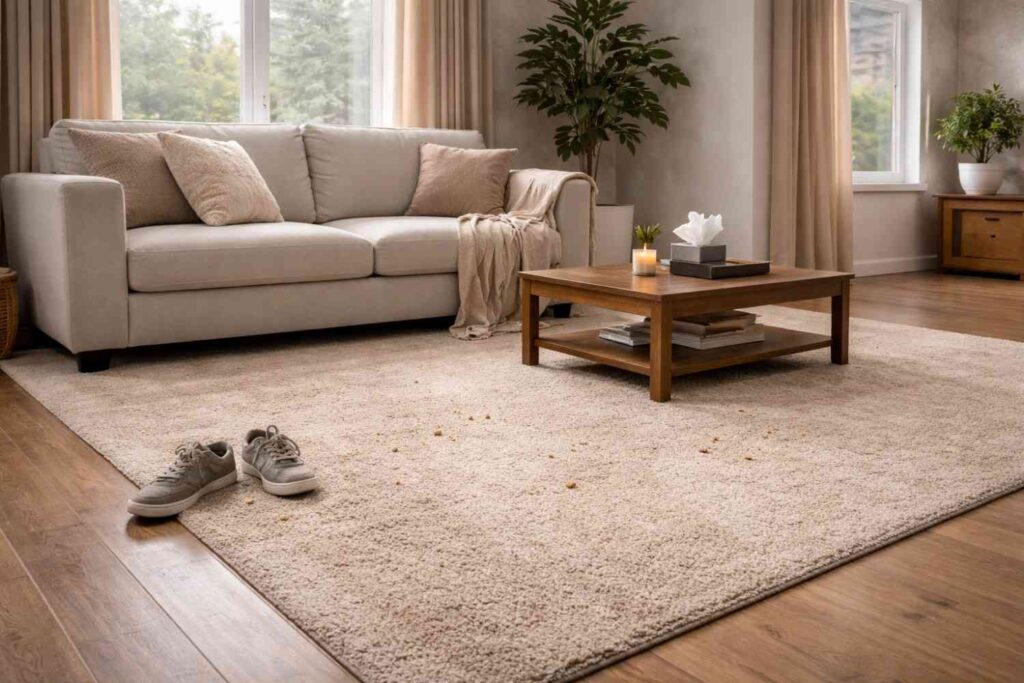
That stale, sweaty, foot-like odor in your living room usually traces back to bacteria thriving inside your HVAC system, dirty air ducts, trapped moisture, or organic buildup in carpets and fabrics. It is not just unpleasant. It signals that your indoor air quality may be compromised, and the source is often hidden inside your walls.
This guide breaks down every common cause of that foot smell, shows you how to identify the real culprit, and explains exactly when a professional air duct cleaning makes the difference.
What Causes a Foot Smell in Your Living Room?
The “feet” smell in a living room is almost never coming from actual feet. It is the result of biological and chemical processes happening in places you cannot see. Understanding the root causes helps you target the right fix instead of masking the odor with air fresheners that do nothing for the underlying problem.
Bacteria and Organic Buildup in Your HVAC System
The same bacteria responsible for foot odor, specifically isovaleric acid-producing microbes, thrive in warm, dark, damp environments. Your HVAC system checks every one of those boxes. Dust, dead skin cells, and pet dander collect on evaporator coils, in drain pans, and along interior ductwork surfaces. When your system cycles on, it pushes air across these contaminated surfaces and distributes that sour, sweaty smell directly into your living room.
This is especially common in homes where the HVAC filter has not been changed in several months. A clogged filter cannot trap particulates effectively, so organic matter passes through and settles deeper into the system.
Dirty Air Ducts Circulating Trapped Odors
Air ducts act as the respiratory system of your home. Over time, they accumulate layers of dust, pollen, insect debris, rodent droppings, and even construction residue. Each time your heating or cooling system runs, it forces air through these contaminated channels.
The result is a persistent musty or foot-like odor that seems to come from nowhere. Many Alexandria, VA homeowners notice this smell intensifies after returning from vacation or after the house has been sealed up for several days. That is because stagnant air allows bacterial colonies inside the ducts to multiply without disruption.
Moisture, Mold, and Mildew in Ductwork
Condensation inside ductwork is one of the most common and most overlooked causes of indoor odor. When cool air passes through ducts in a warm attic or crawl space, moisture forms on the interior surfaces. That moisture creates a breeding ground for mold and mildew, both of which produce volatile organic compounds (VOCs) that smell musty, sour, or like dirty socks.
In the Alexandria, VA climate, where summers are humid and winters require constant heating, this condensation cycle repeats throughout the year. Without proper insulation or sealing, your ductwork becomes a persistent odor source.
Hidden Sources of Foot Odor in Alexandria, VA Homes
Not every foot smell originates in the HVAC system. Several household sources can produce or amplify the same type of odor, and they are easy to overlook.
Carpet, Upholstery, and Fabric Off-Gassing
Carpets and upholstered furniture absorb moisture, body oils, food particles, and pet residue over time. In a humid environment, these materials become incubators for bacteria and mold spores. The odor they release is often described as stale, sweaty, or foot-like.
Older carpets with degraded padding are particularly problematic. The padding traps moisture underneath, where it cannot dry, and the bacterial breakdown of organic material produces that characteristic sour smell. If the odor seems strongest near the floor or when you sit on certain furniture, fabrics are likely contributing.
Pet Dander and Biological Contaminants
Pets introduce a significant amount of biological material into your home. Dander, saliva, urine traces, and fur all carry bacteria. These contaminants settle into carpets, get pulled into your HVAC return vents, and circulate through the duct system.
Even well-groomed pets contribute to this cycle. The combination of pet-related bacteria and the warm, enclosed environment of your ductwork accelerates odor production. Homes with multiple pets or pets that spend time on furniture typically experience stronger odors.
Clogged Dryer Vents Pushing Odors Indoors
A clogged dryer vent does more than reduce drying efficiency. When lint, moisture, and fabric residue build up inside the vent line, they create a damp, warm environment where bacteria and mold flourish. If the vent is partially blocked, humid air and odors can back up into your laundry area and migrate through the house.
In homes where the laundry room shares a wall with the living room or connects through a common hallway, a clogged dryer vent can be the direct source of that foot smell. This is a safety concern as well. The U.S. Fire Administration reports that failure to clean dryer vents is a leading cause of residential dryer fires.
How Dirty Air Ducts Make Your Living Room Smell
Understanding the mechanism helps you see why surface cleaning and air fresheners fail to solve the problem. The odor is systemic, not superficial.
How Contaminants Accumulate Inside Ductwork
Every time your HVAC system runs, it pulls air from your living spaces through return vents. That air carries dust, skin cells, cooking particles, pet dander, and airborne bacteria. A portion of these particles bypasses the filter and settles inside the ductwork.
Over months and years, these deposits build up in layers. Junctions, bends, and horizontal runs collect the most material. Moisture from condensation or humidity binds these particles together, creating a biofilm on duct surfaces. This biofilm is the primary source of persistent odor. It does not dry out easily, and it feeds bacterial colonies that produce the foot-like smell.
Why the Smell Gets Worse in Summer and Winter
Seasonal changes directly affect duct odor intensity. In summer, high humidity in Alexandria, VA increases condensation inside ductwork. Your air conditioning system runs longer cycles, pushing more air across contaminated surfaces and distributing odors more aggressively.
In winter, heating systems warm the air inside ducts, which activates dormant bacteria and accelerates the breakdown of organic material. Homes that are sealed tightly for energy efficiency trap these odors inside with no fresh air dilution. The result is a concentrated, stale smell that peaks during the seasons when you use your HVAC system most.
Signs Your Air Ducts Are the Problem
Several indicators point to ductwork as the odor source:
- The smell is present in multiple rooms, not just one area
- The odor intensifies when the HVAC system kicks on
- You notice dust buildup around supply vents and registers
- Allergy symptoms or respiratory irritation increase indoors
- The smell persists despite cleaning carpets, furniture, and surfaces
- Visible mold or discoloration appears around vent openings
If three or more of these signs apply, your air ducts are very likely the primary contributor.
How to Get Rid of the Foot Smell in Your Living Room
Eliminating the odor requires addressing the source, not just the symptom. Here is a practical approach, starting with what you can do yourself and progressing to professional solutions.
DIY Steps You Can Take Today
Start with the most accessible fixes:
- Replace your HVAC filter. If it has been more than 60 to 90 days, a dirty filter is allowing contaminants to pass through. Use a filter rated MERV 8 or higher for better particulate capture.
- Clean your return and supply vents. Remove vent covers and wash them with warm, soapy water. Vacuum inside the visible portion of the duct opening.
- Deep clean carpets and upholstery. Use a carpet cleaner with an enzymatic formula designed to break down organic odor sources. Steam cleaning is more effective than dry vacuuming for embedded bacteria.
- Check your dryer vent. Disconnect the vent hose from the back of the dryer and inspect for lint buildup. Clean what you can reach, but note that full vent line cleaning typically requires professional equipment.
- Reduce indoor humidity. Use a dehumidifier to keep relative humidity below 50%. This slows bacterial and mold growth throughout your home.
These steps can reduce the odor, but they will not eliminate it if the source is deep inside your ductwork or HVAC system.
When to Call a Professional Air Duct Cleaning Service
Call a professional when:
- DIY cleaning does not resolve the smell within a week
- You have not had your air ducts cleaned in three or more years
- You see visible mold inside ducts or around vents
- You recently completed a renovation that generated dust and debris
- You moved into a home with no record of previous duct cleaning
- Multiple household members experience allergy symptoms or respiratory issues
Professional air duct cleaning reaches contaminants that are impossible to access with household tools. A qualified technician uses specialized equipment to dislodge and extract buildup from the entire duct system, including trunk lines, branch runs, and the air handler.
What Professional Air Duct Cleaning Includes
A thorough professional cleaning should cover:
- Inspection of the full duct system, including a camera inspection when needed
- Source removal cleaning using negative air pressure (HEPA-filtered vacuum) and mechanical agitation tools like brushes and air whips
- Supply and return duct cleaning for every register in the home
- Air handler and evaporator coil cleaning to remove buildup at the system’s core
- Dryer vent cleaning if included in the service scope
- Sanitizing treatment (optional) for mold or heavy bacterial contamination
The National Air Duct Cleaners Association (NADCA) recommends source removal as the only effective cleaning method. Avoid companies that offer “blow and go” services using only a shop vacuum and compressed air. These methods do not remove embedded contaminants.
How Much Does It Cost to Fix a Smelly Living Room?
Cost depends on what is causing the smell and what services are needed. Here is a realistic breakdown for Alexandria, VA homeowners.
Air Duct Cleaning Cost Factors in Alexandria, VA
Several variables determine the final price of air duct cleaning:
| Factor | Impact on Cost |
| Home size (square footage) | Larger homes have more ductwork, more vents, and longer runs |
| Number of vents/registers | Most companies price per vent or by system size |
| Contamination level | Heavy buildup, mold, or pest debris requires more time and specialized treatment |
| Duct accessibility | Ducts in tight crawl spaces or multi-story homes take longer to service |
| System type | Flex duct, sheet metal, and fiberglass board each require different techniques |
| Add-on services | Sanitizing, coil cleaning, and dryer vent cleaning may be separate line items |
For a typical single-family home in Alexandria, VA, professional air duct cleaning ranges from approximately $350 to $600 for a standard system. Homes with severe contamination, extensive ductwork, or additional services may see costs between $600 and $1,000+.
Dryer Vent Cleaning and HVAC Service Pricing
Dryer vent cleaning is often bundled with air duct cleaning or offered as a standalone service. Typical pricing in the Alexandria area:
| Service | Typical Price Range |
| Dryer vent cleaning | $100 to $200 |
| Air duct cleaning (standard home) | $350 to $600 |
| Evaporator coil cleaning | $100 to $250 (often included) |
| Sanitizing/antimicrobial treatment | $75 to $150 (optional add-on) |
| Full HVAC cleaning package | $450 to $800 |
These ranges reflect legitimate, thorough service from qualified contractors. Prices significantly below these ranges often indicate incomplete service or bait-and-switch tactics.
How to Avoid Overpriced or Misleading Quotes
The air duct cleaning industry has a well-documented problem with deceptive pricing. Here is how to protect yourself:
Red flags to watch for:
- “Whole house for $99” ads. This price point is not possible for legitimate source removal cleaning. These offers typically result in aggressive upselling once the technician is in your home.
- Per-room pricing with no system inspection. A reputable company prices based on your actual system, not a generic per-room formula.
- Pressure to add unnecessary services. UV lights, ozone treatments, and duct sealants are sometimes pushed as essentials when they are not needed.
What to look for in a trustworthy provider:
- NADCA membership or adherence to NADCA standards
- Clear, written estimates before work begins
- Willingness to explain exactly what the service includes
- Positive reviews from local homeowners
- No high-pressure sales tactics
Getting two to three quotes from different providers gives you a realistic picture of fair pricing for your specific system.
How to Prevent Your Living Room from Smelling Like Feet
Prevention costs far less than remediation. These habits keep odors from returning after you have addressed the source.
Regular HVAC Maintenance and Filter Replacement
Change your HVAC filter every 60 to 90 days. Homes with pets, smokers, or high dust levels should change filters every 30 to 60 days. Schedule a professional HVAC tune-up at least once per year, ideally before the cooling season begins.
During a tune-up, the technician should inspect the evaporator coil, drain pan, and blower compartment for buildup. These components are common odor sources that homeowners cannot easily access or clean themselves.
Scheduling Routine Air Duct and Dryer Vent Cleaning
NADCA recommends air duct cleaning every three to five years for most homes. Homes with pets, allergy sufferers, smokers, or recent renovations may benefit from more frequent cleaning.
Dryer vent cleaning should happen at least once per year. If your dryer takes longer than one cycle to dry a normal load, or if the exterior vent flap does not open during operation, schedule a cleaning immediately.
Controlling Humidity and Ventilation in Your Home
Keep indoor relative humidity between 30% and 50%. Use exhaust fans in bathrooms and kitchens during and after moisture-producing activities. Make sure your dryer vents to the exterior, not into a garage, attic, or crawl space.
In Alexandria’s humid summers, a whole-house dehumidifier or portable units in problem areas can make a significant difference. Proper ventilation prevents the moisture accumulation that feeds mold, mildew, and odor-causing bacteria throughout your home.
Does Air Duct Cleaning Really Improve Indoor Air Quality?
This is one of the most common questions homeowners ask, and the answer depends on your specific situation.
What the EPA and NADCA Say About Duct Cleaning
The EPA states that duct cleaning has not been conclusively shown to prevent health problems in all cases, but it recommends cleaning when there is visible mold growth, vermin infestation, or excessive dust and debris. The EPA also notes that dirty ducts are one of several sources of indoor air contamination.
NADCA takes a more direct position, recommending regular cleaning as part of overall HVAC maintenance. Their standards require source removal methods and HEPA-filtered equipment to ensure contaminants are captured, not just redistributed.
The practical takeaway: if your ducts are visibly dirty, if you smell persistent odors, or if household members experience unexplained allergy symptoms, cleaning your ducts addresses a documented contamination source.
Real Results Alexandria Homeowners Can Expect
After a professional air duct cleaning, most homeowners notice:
- Immediate reduction or elimination of musty and stale odors
- Less dust accumulation on furniture and surfaces
- Improved airflow from supply vents
- Reduced allergy and respiratory symptoms for sensitive individuals
- A general sense that the air in the home feels “cleaner” and fresher
Results vary based on the severity of contamination and whether other odor sources (carpet, dryer vent, mold in walls) are also addressed. A thorough cleaning combined with proper HVAC maintenance delivers the most lasting improvement.
Why Alexandria, VA Homeowners Trust AirDuctVet
Choosing the right contractor matters as much as deciding to get your ducts cleaned. The wrong provider can leave your system just as dirty, or worse, damage your ductwork.
Transparent Pricing and Honest Service Scope
AirDuctVet Dryer & Vent Cleaning Services provides clear, written estimates before any work begins. We explain exactly what is included, what is optional, and what your system actually needs based on a real inspection. There are no hidden fees, no bait-and-switch pricing, and no pressure to buy services you do not need.
Our pricing reflects the true cost of thorough, professional cleaning using proper equipment and trained technicians. We would rather give you an honest quote and earn your trust than offer an unrealistically low price that leads to disappointment.
Industry-Approved Cleaning Methods We Use
We follow NADCA’s Air Duct Cleaning Standard (ACR), using source removal methods with HEPA-filtered negative air machines and mechanical agitation tools. Every job includes cleaning all supply and return ducts, registers, and the air handler components.
For homes with mold concerns, we offer antimicrobial treatments applied after cleaning to inhibit regrowth. Our technicians are trained to identify issues beyond surface-level dirt, including duct damage, insulation problems, and improper vent configurations that contribute to odor and air quality issues.
Conclusion
A living room that smells like feet is almost always a sign of bacterial buildup, moisture problems, or contaminated air ducts circulating hidden odors through your HVAC system. Identifying the source is the first step toward a permanent fix.
Professional air duct cleaning, combined with regular maintenance and humidity control, eliminates the root cause rather than masking symptoms. Alexandria, VA homeowners deserve honest answers and fair pricing when addressing indoor air quality concerns.
We at AirDuctVet Dryer & Vent Cleaning Services are ready to inspect your system, explain exactly what we find, and deliver a thorough cleaning at a transparent price. Contact us today to schedule your appointment.
Frequently Asked Questions
Why does my living room smell like feet even after I clean it?
Surface cleaning removes visible dirt but does not reach contaminants inside your air ducts and HVAC system. Bacteria and mold deep in the ductwork continue circulating odors every time the system runs, which is why the smell returns after cleaning.
Can dirty air ducts cause a bad smell in my house?
Yes. Air ducts accumulate dust, bacteria, mold, and organic debris over time. When your HVAC system operates, it pushes air across these contaminated surfaces and distributes odors throughout your home, including your living room.
How often should I have my air ducts cleaned in Alexandria, VA?
NADCA recommends every three to five years for most homes. Homes with pets, allergy sufferers, smokers, or recent renovations may need cleaning more frequently. If you notice persistent odors or increased dust, schedule an inspection sooner.
Is the foot smell in my house dangerous?
The smell itself is not toxic, but it often indicates mold, bacteria, or poor indoor air quality that can aggravate allergies, asthma, and respiratory conditions. Addressing the source protects both comfort and health.
How do I know if mold in my air ducts is causing the smell?
Look for visible mold or dark discoloration around vent registers, a musty odor that intensifies when the HVAC runs, and increased allergy symptoms indoors. A professional inspection with a camera can confirm mold presence inside the ductwork.
Will an air freshener fix the foot smell in my living room?
No. Air fresheners mask odors temporarily without addressing the source. If bacteria, mold, or organic buildup in your ducts or carpets is causing the smell, it will return as soon as the fragrance fades.
How much does it cost to get rid of a foot smell caused by dirty air ducts?
Professional air duct cleaning for a standard Alexandria, VA home typically costs between $350 and $600. The final price depends on system size, contamination level, accessibility, and whether additional services like dryer vent cleaning or sanitizing are needed.
